

Whether you’re exploring aviation as a hobby or pursuing a professional pilot career, understanding the FAA medical certificate process is an important first step. This guide explains the three classes of FAA medical certificates, which certificate you may need based on your training goals, and what to expect during the certification process using current FAA guidance.

What Is an FAA Medical Certificate?
An FAA medical certificate is an official certificate issued by an FAA-designated Aviation Medical Examiner (AME) that verifies an applicant meets the medical standards established by the Federal Aviation Administration (FAA) for the class of medical certificate they are applying for.
The Federal Aviation Administration (FAA) oversees the medical certification process, including FAA medical certificate requirements, eligibility standards, and Aviation Medical Examiner authorization. Because regulations and policies can change, prospective pilots should always refer to the FAA’s official guidance for the most current certification requirements.
For many prospective pilots, obtaining an FAA medical certificate before beginning flight training provides confidence and helps identify any certification issues early. It can also reduce the likelihood of delays before reaching important training milestones, including solo flight.
The Three Classes Explained
The Federal Aviation Administration issues three classes of medical certificates. Each class corresponds to different pilot privileges and has its own medical standards and validity period established by FAA regulations.
First Class Medical Certificate
An FAA first class medical certificate is required for pilots exercising Airline Transport Pilot (ATP) privileges. It has the highest medical standards because it is intended for airline transport operations.
Although most student pilots do not need a First Class Medical Certificate, some aspiring airline pilots choose to obtain one early to better understand their medical eligibility before pursuing a professional aviation career.
Second Class Medical Certificate
A Second Class Medical Certificate is required for pilots exercising commercial pilot privileges, including many operations conducted for compensation or hire.
Students pursuing a professional pilot career typically obtain a Second Class Medical Certificate as they progress through commercial flight training.
Third Class Medical Certificate
A Third Class Medical Certificate is the certificate most private pilot students need before flying solo.
If your goal is recreational flying or earning a Private Pilot Certificate, a Third Class Medical Certificate is typically the appropriate certificate. Many students obtain it early in their training to help avoid delays before reaching solo flight.
FAA Medical Certificate Duration
One of the most common questions prospective pilots ask is about FAA medical certificate duration. How long a medical certificate remains valid depends on the certificate class, the pilot’s age, and the privileges being exercised under FAA regulations.
Because validity periods differ based on these factors, always refer to the FAA’s official guidance for the current duration that applies to your medical certificate.
Keeping your FAA medical certificate current is essential to maintaining eligibility to exercise pilot privileges throughout your flight training and beyond.
Which Class Do You Need?
The class of FAA medical certificate you need depends on the pilot privileges you plan to exercise.
Private Pilot Students
Students working toward a Private Pilot Certificate typically obtain a Third Class Medical Certificate before flying solo.
If your goal is to fly for personal travel or recreation, a Third Class Medical Certificate is generally the appropriate certificate for exercising private pilot privileges.
If you’re ready to start your private pilot training, The Flight Academy’s Private Pilot License program can help you understand the FAA medical certificate requirements and guide you through each stage of flight training.
Commercial Pilot Path
Pilots exercising commercial pilot privileges generally need a Second Class Medical Certificate.
Pilots exercising ATP privileges need an FAA first class medical certificate.
The required medical certificate depends on the pilot privileges you intend to exercise under FAA regulations.
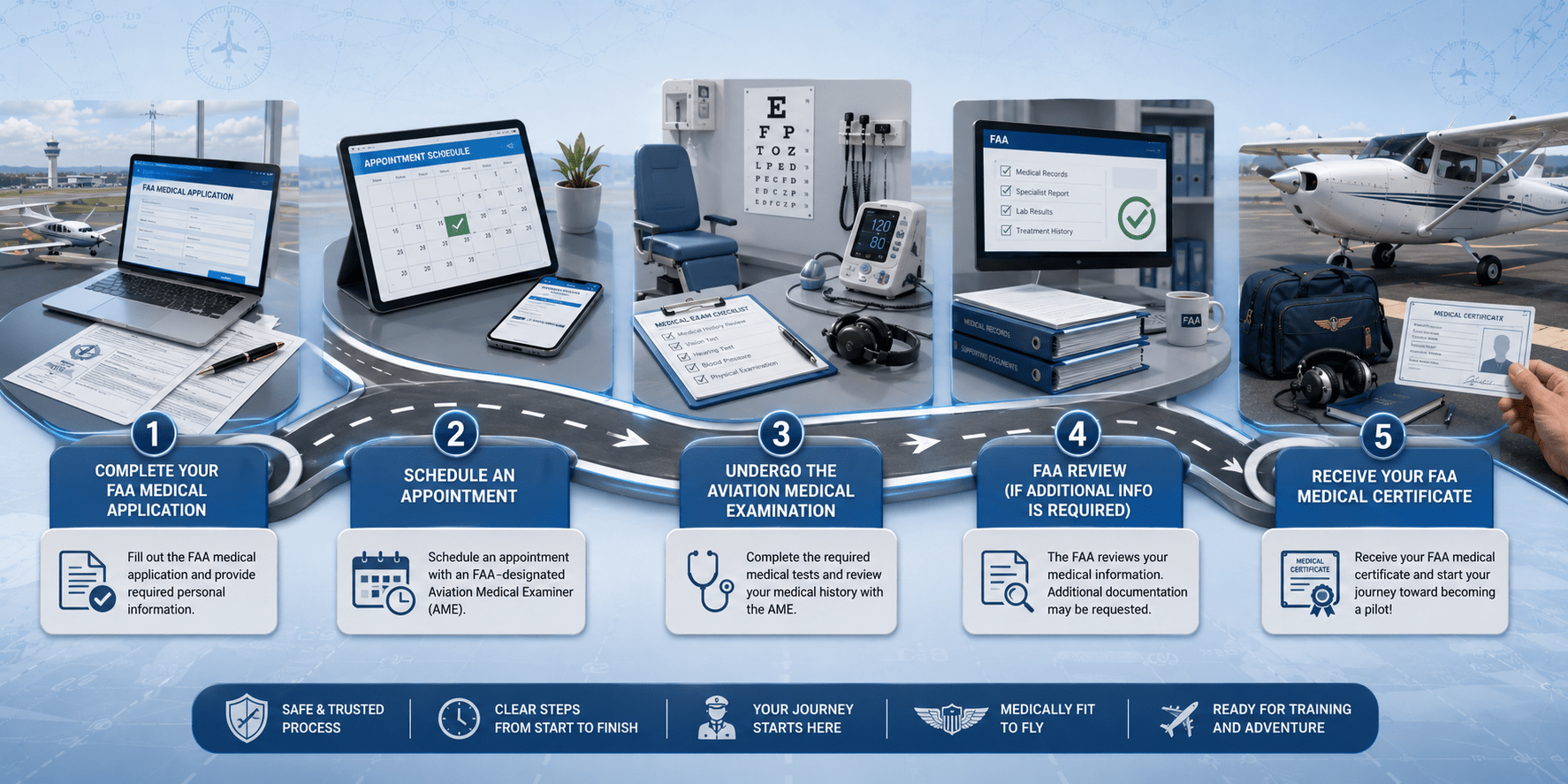
How to Schedule Your AME Exam
The FAA requires applicants for an FAA medical certificate to complete their medical examination with an Aviation Medical Examiner (AME), a physician designated by the FAA to conduct aviation medical examinations.
Scheduling your AME exam typically involves:
- Completing the FAA MedXPress application before your appointment.
- Scheduling an appointment with an FAA-designated AME.
- Attending your medical examination.
- Providing additional information if requested during the medical certification process.
During the examination, the AME reviews your medical history and performs the evaluations required for the class of medical certificate you are applying for.
Many student pilots complete their FAA medical examination early in their training. Doing so can help identify any additional documentation requested during the medical certification process before reaching solo flight or other training milestones.
Common Questions About Disqualification
Many prospective pilots worry that a past medical condition will automatically prevent them from obtaining an FAA medical certificate. Medical certification decisions are based on FAA medical standards and certification procedures.
Some medical conditions may require additional documentation or further FAA review before a certification decision can be made. In some cases, the FAA may issue a medical certificate through the Special Issuance process when an applicant meets the applicable certification requirements.
Neither a flight school nor general educational resources can determine whether an individual qualifies for an FAA medical certificate. If you have questions about your medical history or eligibility, consult an Aviation Medical Examiner (AME) or review the FAA’s official medical certification guidance.
If you are planning your flight training, see the full path to becoming a pilot to learn what to expect at each stage of training.
Frequently Asked Questions
Do I need a medical certificate before I start flight training?
Many students begin ground instruction before obtaining an FAA medical certificate. Students may also receive dual flight instruction before obtaining a medical certificate. However, a student pilot must hold a valid medical certificate before conducting a solo flight. Obtaining your medical certificate early can help prevent delays as you progress through flight training.
How long does an FAA medical certificate last?
FAA medical certificate duration depends on the class of medical certificate, the pilot’s age on the date of the examination, and the pilot privileges being exercised.
- First Class Medical Certificate: Valid for 12 calendar months for first-class privileges if the pilot is under age 40, or 6 calendar months if age 40 or older. After those periods, the certificate may continue to be valid for second- or third-class privileges, depending on the pilot’s age and the operation being conducted.
- Second Class Medical Certificate: Valid for 12 calendar months for second-class privileges. After that period, the certificate may continue to be valid for third-class privileges, depending on the pilot’s age.
- Third Class Medical Certificate: Valid for 60 calendar months if the pilot has not reached age 40 on or before the date of the examination, or 24 calendar months if the pilot is age 40 or older.
What happens if I don’t pass my medical exam?
If an Aviation Medical Examiner (AME) cannot issue a medical certificate at the time of your examination, your application may be deferred to the FAA for further review. Depending on the circumstances, the FAA may request additional medical documentation or determine whether you qualify for a Special Issuance medical certificate. Eligibility is determined on an individual basis under FAA certification procedures, and no outcome is guaranteed. For more information, refer to the FAA’s Special Issuance guidance.
Can I start training before I get my medical certificate?
Yes. Students may begin ground instruction and receive dual flight instruction before obtaining an FAA medical certificate. However, a student pilot must hold a valid medical certificate before conducting a solo flight. Completing the medical certification process early can help prevent delays later in training.
Ready to Begin Your Flight Training?
Understanding the FAA medical certificate process is an important first step toward becoming a pilot. Whether you’re planning to earn a Private Pilot Certificate or pursue a professional aviation career, The Flight Academy can help you understand the training process and prepare for each stage of your flight training.
Ready to talk to our team about getting started? Contact The Flight Academy to discuss your training goals and the steps to begin your flight training.