
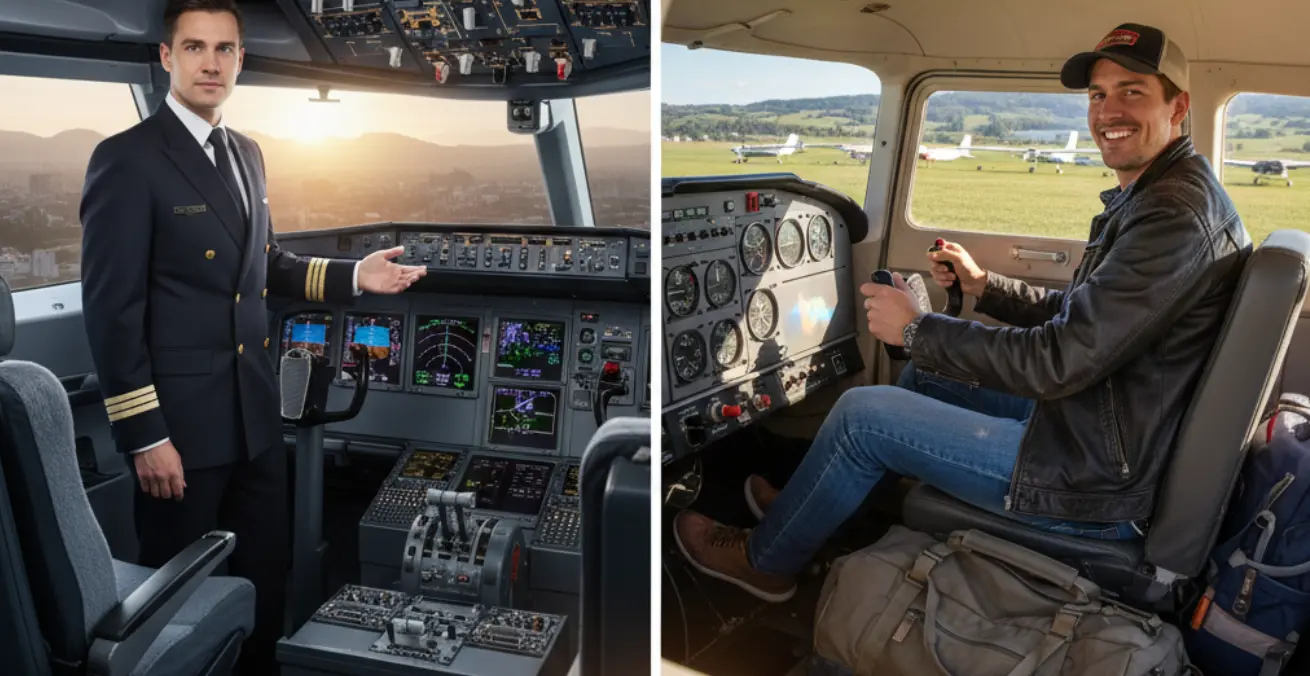
Choosing the Right Flight Path for Your Aviation Career Goals
Quick Summary / Key Takeaways
- Private pilots fly for personal travel or recreation, while commercial pilots are legally allowed to be compensated for flying under FAA regulations.
- Commercial training requires significantly more experience, with a minimum of 250 total flight hours compared to the 40-hour minimum for private pilot training LA, though most students exceed these minimums for proficiency.
- Commercial pilots must hold at least a second-class medical certificate when exercising commercial privileges, while private pilots typically operate under a third-class medical.
- A Private Pilot Certificate is the foundation of your aviation journey and is required before progressing into commercial-level training and professional operations.
- Training in environments like flight school Van Nuys helps both private and commercial students build strong communication and situational awareness skills in complex, real-world airspace.
Introduction

Standing on the ramp at Van Nuys and watching aircraft move through a busy pattern often raises the same question for new aviators: which path should you take first, private or commercial? The difference between a commercial pilot vs private pilot path comes down to your goals. A Private Pilot Certificate is designed for personal flying, whether that means weekend trips or building foundational skills. A Commercial Pilot License, on the other hand, is built for those who want to fly professionally and be compensated for their work. Understanding this distinction early helps you approach training with clear direction.
While both paths begin with the same fundamentals, the expectations quickly diverge. Private pilot training LA focuses on safety, basic aircraft control, and decision-making, while commercial training requires higher precision, more advanced maneuvers, and significantly more flight experience. In a pilot training Los Angeles environment, especially around flight school Van Nuys, students also gain exposure to complex airspace, consistent weather, and real-world communication with air traffic control. This combination builds strong habits that support both recreational flying and long-term career progression.
In this guide, we break down the key differences between private vs commercial pilot training, including flight hour requirements, medical standards, costs, and career opportunities. If you’re looking to learn to fly Los Angeles, it helps to start with a clear, step-by-step understanding of your options. At The Flight Academy, training is structured and personalized, giving you the support you need to choose the right path with confidence.
Private vs Commercial Pilot License Requirements (FAA Comparison)
| License Type | FAA Minimum Flight Hours | Medical Requirement | Primary Use |
|---|---|---|---|
| Private Pilot (PPL) | 40 hours (typical 60–75) | Third Class | Personal travel and recreation |
| Commercial Pilot (CPL) | 250 hours | Second Class (for privileges) | Paid flying / professional operations |
| Instrument Rating (Add-On) | ~40 hours instrument time | Same as underlying license | Flying in low visibility (IFR) |
| Airline Transport Pilot (ATP) | 1,500 hours | First Class | Airline captain / airline operations |
Training Path, Time Commitment, and Cost Overview (PPL to CPL Progression)
| Training Phase | Typical Cost Range (Los Angeles) | Typical Timeline | Training Outcome |
|---|---|---|---|
| Private Pilot License | $15,000–$20,000 | 3–6 months | Foundational skills, personal flying |
| Instrument Rating | $8,000–$12,000 | 2–4 months | IFR capability, improved safety |
| Commercial Pilot License | $25,000–$40,000 (including hour building) | 6–12+ months | Eligibility for paid flying |
| Multi-Engine Add-On | $3,000–$6,000 | 1–3 weeks | Qualification for multi-engine aircraft |
Before You Choose: Preparing for Private vs Commercial Pilot Training
- Obtain an FAA medical certificate from an Aviation Medical Examiner, choosing the appropriate class based on your goals (third class for private flying, second class if you plan to pursue commercial training).
- Research reputable options for flight school Los Angeles, especially in high-activity areas like flight school Van Nuys, where you can compare instructor experience, aircraft availability, and training structure.
- Plan your training budget carefully, including aircraft rental, instruction, and testing fees, so you understand the full commitment from private pilot training LA through commercial progression.
- Begin with essential tools such as a quality aviation headset and basic flight planning materials, which support both training efficiency and communication in the cockpit.
After You Start Training: Building Experience and Advancing Your Pilot Path
- Log all flight time accurately in a digital or physical logbook, as this record is critical for meeting FAA requirements for both private and commercial certificates.
- Maintain your currency by completing a flight review every 24 calendar months, and meet additional requirements if you plan to carry passengers.
- Build experience consistently through regular flight lessons Van Nuys or local flying opportunities, helping you progress from private to commercial-level proficiency.
- Consider adding an instrument rating as you advance, as it expands your flying capabilities, improves safety, and is strongly recommended for commercial pilot development.
Table of Contents

Section 1: PRIVATE VS COMMERCIAL PILOT: CORE DIFFERENCES EXPLAINED
Section 2: TRAINING REQUIREMENTS AND CERTIFICATION DIFFERENCES (PPL vs CPL)
Section 3: CAREER OPPORTUNITIES AND TRAINING PATH FROM PRIVATE TO COMMERCIAL
Frequently Asked Questions
Section 1: PRIVATE VS COMMERCIAL PILOT: CORE DIFFERENCES EXPLAINED
FAQ 1: What is the main difference between a private pilot and a commercial pilot?
The primary difference between a private pilot and a commercial pilot comes down to compensation and the level of responsibility. A private pilot is not allowed to be paid for flying and can only share certain operating expenses, such as fuel or rental costs, on a pro-rata basis. In contrast, a commercial pilot is legally permitted to fly for compensation or hire under FAA regulations. This distinction defines how each license can be used, whether for personal travel or professional aviation work.
A Commercial Pilot License (CPL) also requires a higher level of training, precision, and knowledge compared to private pilot training LA. Commercial training builds on foundational skills and focuses on advanced maneuvers, aircraft control, and real-world operational standards. As a result, commercial pilots are prepared for roles such as flight instruction, aerial survey, or charter operations, while private pilots primarily fly for recreation or personal transportation.
FAQ 2: Can I fly for money with a private pilot license?
No, you cannot fly for compensation or hire with a Private Pilot Certificate. FAA regulations limit private pilots to non-commercial operations, meaning you can only fly for personal use or recreation. You are allowed to share certain operating expenses, such as fuel, oil, airport fees, and aircraft rental, on a pro-rata basis, but you must pay at least your equal share and cannot make a profit from any flight.
If your goal is to earn income from flying, you will need to continue your training and obtain a Commercial Pilot License. This is the next step after private pilot training LA and involves meeting higher flight hour requirements and demonstrating more advanced skills. In a structured pilot training Los Angeles environment, students typically build experience and proficiency before transitioning into commercial training, ensuring they meet FAA standards for professional operations.
Section 2: TRAINING REQUIREMENTS AND CERTIFICATION DIFFERENCES (PPL vs CPL)
FAQ 3: How many flight hours are required for a commercial pilot license?
A Commercial Pilot License (CPL) requires a minimum of 250 total flight hours under FAA Part 61, compared to the 40-hour minimum required for a Private Pilot Certificate. These hours must include specific experience such as cross-country flying, night operations, and advanced training in areas like complex or technically advanced aircraft. This increase in required time reflects the higher level of skill, precision, and decision-making expected from pilots who will be flying for compensation.
In a structured pilot training Los Angeles environment, building these hours typically takes time and consistency, often over a year depending on your training schedule and availability. Many students progress from private pilot training LA into commercial training by continuing regular flight lessons Van Nuys, gradually gaining the experience needed to meet FAA requirements while developing real-world proficiency.
FAQ 4: What are the medical requirements for a commercial pilot?
To exercise the privileges of a Commercial Pilot License, you must hold at least a second-class FAA medical certificate. This certification confirms that you meet stricter health standards than those required for private pilots, including vision, hearing, and overall physical condition. A second-class medical is specifically required when flying for compensation or hire, and it is valid for commercial privileges for 12 calendar months.
If you plan to advance further into airline operations, you will eventually need a first-class medical certificate, which has the highest standards and more frequent renewal requirements. In a structured pilot training Los Angeles environment, many students plan their medical certification early in their training to ensure they meet long-term career requirements. Starting with the appropriate medical class helps you avoid delays as you progress from private pilot training LA into commercial-level operations.
FAQ 5: Is the training for a CPL much harder than for a PPL?
Yes, Commercial Pilot License (CPL) training is more demanding than Private Pilot training because it requires a higher level of precision, consistency, and understanding. While private pilot training LA focuses on building safe, fundamental flying skills, commercial training builds on that foundation and introduces advanced maneuvers such as chandelles, lazy eights, and steep spirals, all performed within tighter FAA Airman Certification Standards (ACS) tolerances. You are expected to demonstrate smoother control, better energy management, and stronger decision-making throughout each phase of flight.
The academic portion is also more detailed, with deeper study of regulations, aerodynamics, and weather interpretation. In a structured pilot training Los Angeles environment, especially with consistent flight lessons Van Nuys, this progression is designed to be gradual, helping you transition from basic proficiency to a professional level of performance. The goal of CPL training is not just safety, but mastery and reliability in real-world operations.
Section 3: CAREER OPPORTUNITIES AND TRAINING PATH FROM PRIVATE TO COMMERCIAL
FAQ 6: What kind of jobs can I get with a commercial pilot license?
A Commercial Pilot License allows you to be compensated for flying and opens the door to a range of entry-level aviation roles. Common paths include becoming a Certified Flight Instructor (CFI), conducting aerial photography or survey work, flying for certain Part 135 charter operations (with appropriate qualifications), or performing banner towing. In many pilot training Los Angeles environments, especially around busy airports like Van Nuys, becoming a flight instructor is one of the most common first steps, as it allows you to build flight time while reinforcing your own skills.
These early roles are important because they help you accumulate the experience needed for more advanced opportunities, including airline careers. To qualify for an Airline Transport Pilot (ATP) certificate, most pilots need at least 1,500 total flight hours, and commercial flying jobs provide a structured way to reach that milestone. Training in a flight school Van Nuys setting also exposes you to real-world operations, helping you develop the professionalism and consistency expected in commercial aviation.
FAQ 7: How long does it take to transition from private to commercial?
The transition from a Private Pilot Certificate to a Commercial Pilot License typically takes about 6 to 12 months with consistent training, though the timeline depends on how often you fly and how quickly you build experience. The FAA requires a minimum of 250 total flight hours for a commercial certificate under Part 61, so much of this phase is focused on structured hour-building, cross-country flying, and refining advanced skills. Many pilots also complete their instrument rating during this period, which is strongly recommended for safety and career progression, although it is not strictly required for the commercial certificate itself.
In a pilot training Los Angeles environment, consistent scheduling and favorable weather can help you progress more efficiently. Students who fly multiple times per week through structured flight lessons Van Nuys tend to complete this transition faster while maintaining strong proficiency. The key is steady, disciplined training that builds both experience and confidence to meet commercial-level standards.
FAQ 8: Why is training in Los Angeles beneficial for aspiring pilots?
Training in Los Angeles gives you exposure to some of the most active and structured airspace in the country, which helps build strong communication, navigation, and situational awareness skills early in your training. Operating near airports like Van Nuys, with close proximity to Class B airspace around LAX and multiple Class C and D airports, requires clear radio work and precise coordination with air traffic control. This environment naturally develops habits that align with FAA standards and prepares you for real-world flying conditions.
At a flight school Van Nuys location like The Flight Academy, students benefit from consistent weather, high traffic volume, and a professionally managed training environment. This combination allows you to train more frequently and gain experience in complex scenarios that many pilots only encounter later in their careers. For those pursuing pilot training Los Angeles, this level of exposure helps build confidence and readiness for both advanced ratings and commercial operations.