
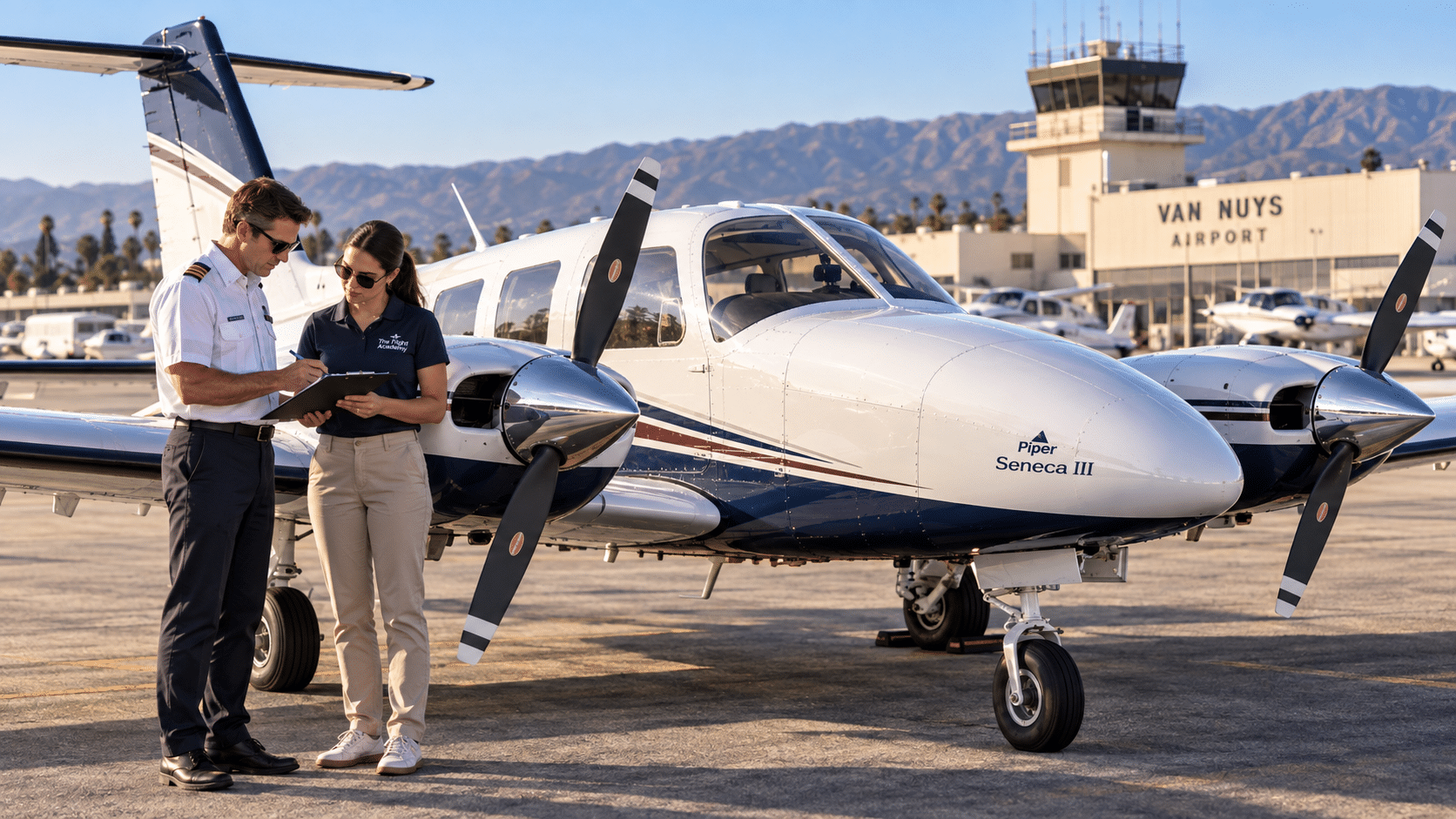
For rated pilots stepping into faster or more capable aircraft, understanding the difference matters for FAA compliance and safe operation.
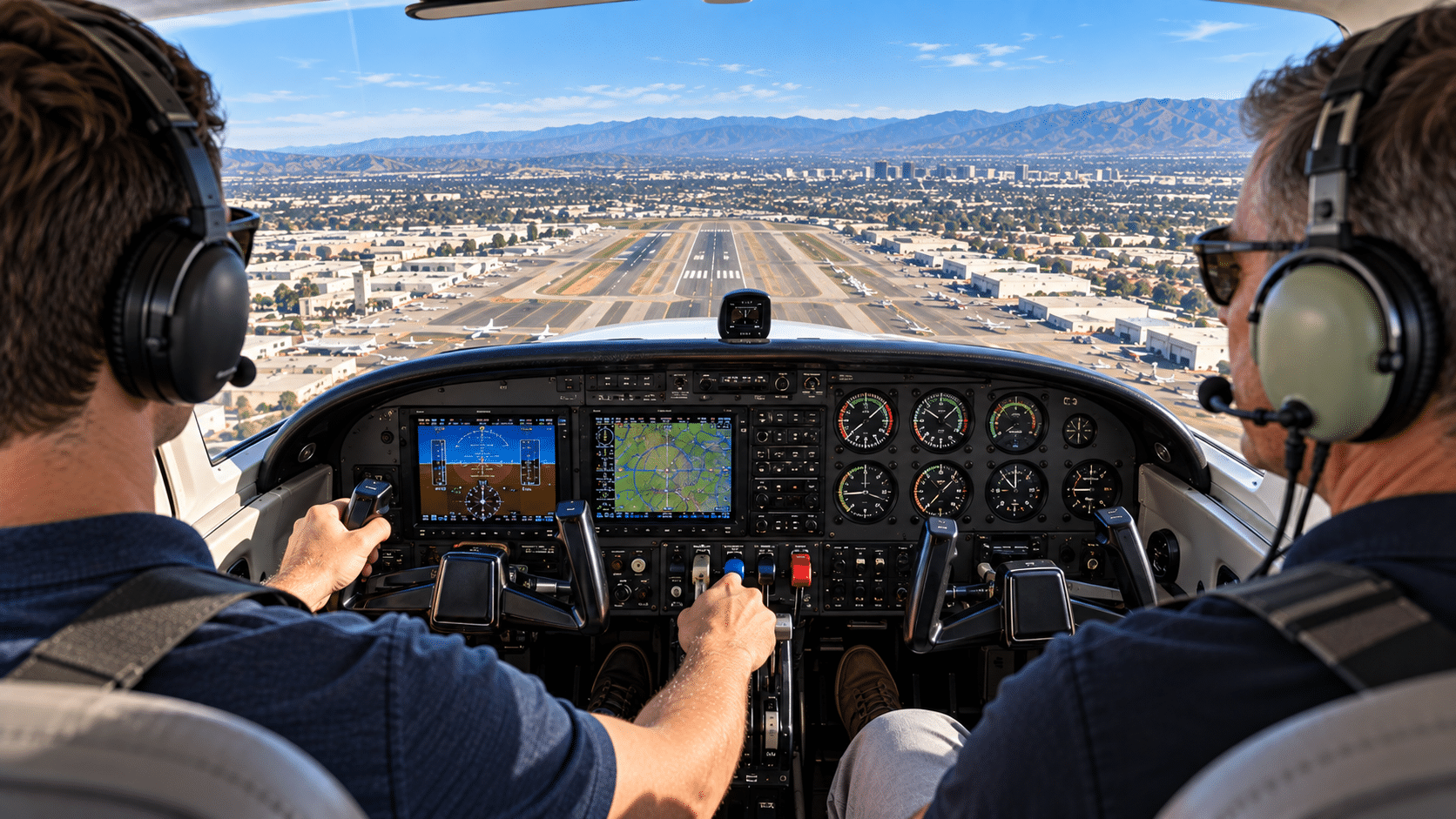
What Is a High Performance Endorsement?
A high-performance endorsement is required to act as pilot in command of an airplane with an engine rated at more than 200 horsepower. The trigger is the engine’s rated horsepower, not the airplane’s cruising speed or how fast it feels to fly.
Many pilots associate “high performance” with speed. Under 14 CFR 61.31, horsepower is what matters. An airplane can require a high-performance endorsement even when its top speed is not particularly high. The regulation also requires ground and flight training from an authorized instructor, followed by a one-time logbook endorsement confirming proficiency.
What You’ll Learn During Training
Higher-powered aircraft require more deliberate power management and directional control, especially during takeoff and climb. Training can include:
- Managing higher-power takeoffs and climb performance
- Recognizing torque, P-factor, and left-turning tendencies at higher power settings
- Controlling airspeed and energy during descents and approaches
- Monitoring engine operation and observing aircraft operating limitations
- Applying power smoothly while maintaining coordinated aircraft control
The training is not simply about learning to use a larger engine. It focuses on how the additional power affects aircraft control, performance, and pilot workload during normal flight operations.
What Is a Complex Endorsement?
A complex endorsement is required to act as pilot in command of an airplane equipped with all three of the following:
- Retractable landing gear
- Flaps
- A controllable-pitch propeller
All three features must be present for the airplane to meet the FAA definition of a complex airplane. Retractable gear alone does not make an airplane complex, and neither does a controllable-pitch propeller by itself.
Why Complex Aircraft Require Specialized Training
Complex airplanes add systems that require more deliberate cockpit management. Training focuses on landing gear operation, propeller control, and disciplined checklist use.
Training commonly covers:
- Landing gear operation and emergency extension procedures
- Proper use and adjustment of a controllable-pitch propeller
- Coordinating engine power and propeller settings
- Checklist discipline during aircraft configuration and landing
- Gear checks and procedures that help prevent gear-up landings
The goal is to make these additional systems and procedures part of the pilot’s normal cockpit routine before the required endorsement is issued.
Do You Need One, Both, or Neither?
One of the biggest misconceptions is that a high-performance endorsement and a complex endorsement automatically come together. They do not. Each endorsement has its own aircraft-specific trigger.
Here’s how the requirements break down:
| Aircraft configuration | High Performance | Complex |
|---|---|---|
| 180 HP fixed-gear trainer | No | No |
| 230 HP fixed-gear airplane | Yes | No |
| 180 HP retractable aircraft with controllable-pitch propeller | No | Yes |
| 285 HP retractable aircraft with controllable-pitch propeller | Yes | Yes |
The requirement depends on the aircraft’s characteristics, not the pilot’s career stage. If you plan to act as pilot in command of a qualifying airplane, you must have the applicable endorsement before acting as PIC in that aircraft.
You can also read Is a Tailwheel Endorsement Worth It? Hours, Cost, and What the Training Actually Involves for information about another aircraft endorsement.
Complex Endorsements and the Commercial Checkride
This is a common question for pilots working toward a commercial certificate: Do you still need a complex endorsement for the commercial checkride?
Not necessarily. The FAA no longer requires an applicant for an initial commercial pilot certificate with an airplane single-engine rating to provide a complex airplane for the practical test. The aircraft used for the test must still meet the applicable requirements for the certificate and be capable of completing the required Areas of Operation. The current Commercial Pilot Airplane ACS governs the practical test.
The training requirement is separate. Under 14 CFR 61.129(a)(3)(ii), a commercial single-engine applicant must complete 10 hours of training in a complex airplane, a turbine-powered airplane, a technically advanced airplane (TAA), or a combination of those aircraft. The regulation does not require all 10 hours to be completed in a complex airplane.
Why Pilots Still Pursue the Endorsement
Even when a complex airplane is not required for the commercial practical test, the endorsement can still matter when a pilot plans to fly one. Under 14 CFR 61.31, a pilot must receive the required ground and flight training and a one-time instructor endorsement before acting as pilot in command of a complex airplane.
The endorsement can be useful for pilots who:
- Rent aircraft with retractable landing gear, flaps, and controllable-pitch propellers
- Buy or join a partnership involving a complex airplane
- Want experience managing complex aircraft systems before moving into more advanced aircraft
- Need to meet an operator’s or insurer’s transition-training expectations
For a pilot pursuing a commercial certificate, the complex endorsement is therefore a separate qualification from the practical-test aircraft requirement. It can provide useful aircraft-specific training even when the checkride itself does not require a complex airplane.
Pilots who want to understand the training path can also review Commercial Pilot License (CPL) course for the broader commercial certificate requirements.
How Many Hours Does Each Endorsement Take?
One of the most common questions is about minimum flight time.
The answer is straightforward: there is no FAA minimum hour requirement for either endorsement.
Training is conducted to proficiency. Your authorized instructor provides the required ground and flight training and determines when you have demonstrated the proficiency needed for the endorsement. Once that proficiency is demonstrated, the instructor provides the appropriate logbook endorsement.
What does “to proficiency” mean in practice?
Every pilot brings different experience to the training. Aircraft familiarity also matters. As a practical planning range, high-performance training typically takes about 2 to 4 flight hours, while complex training typically takes about 5 to 10 flight hours.
These are not FAA minimums. Actual training time can vary based on your previous experience, familiarity with the aircraft, and ability to demonstrate the required skills.
Ground instruction is also part of the training. Depending on the aircraft and the pilot’s experience, this can cover aircraft systems, operating limitations, performance planning, emergency procedures, and the specific procedures required to manage the aircraft during flight.
What the Training Covers
These endorsements are focused training events. The goal is to demonstrate consistent aircraft control and proper use of the systems that distinguish a higher-performance or complex airplane.
High-Performance Training
High-performance training focuses on power management and the handling effects of an engine rated above 200 horsepower. Training can include:
- Managing higher-power takeoffs and climbs
- Recognizing torque, P-factor, and left-turning tendencies at higher power settings
- Coordinating power changes with airspeed and aircraft attitude
- Monitoring engine temperatures and operating limitations
- Applying power smoothly during go-arounds and other high-power operations
The objective is precise aircraft control and deliberate power management, not aggressive flying.
Complex Aircraft Training
Complex training focuses on managing retractable landing gear, a controllable-pitch propeller, and the procedures required to operate those systems correctly. Training can include:
- Operating the landing gear during normal and abnormal procedures
- Using and adjusting the constant-speed propeller
- Coordinating manifold pressure and RPM
- Following before-landing and after-takeoff checklist procedures
- Recognizing and responding to landing gear system problems
- Building consistent cockpit habits that help prevent gear-up landings
The training emphasizes disciplined checklist use and proper aircraft configuration. These habits are particularly important during takeoff, approach, and landing, when configuration errors can have serious consequences.
For pilots ready to complete this training, complex aircraft and high-performance endorsement training provides aircraft-specific instruction for the applicable endorsements.
What Each Endorsement Costs
The total investment depends on aircraft rental time, flight instructor time, and how quickly you demonstrate the required proficiency. Neither endorsement has a fixed FAA number of training hours.
For training in The Flight Academy’s Piper Seneca III, the published aircraft rate is $450 per hour. Based on the typical training ranges discussed above, aircraft rental alone would be approximately:
| Training | Typical flight time | Aircraft rental at $450/hr |
|---|---|---|
| High-performance | 2 to 4 hours | $900 to $1,800 |
| Complex | 5 to 10 hours | $2,250 to $4,500 |
| Both endorsements | Varies | Depends on training required |
These figures cover aircraft rental time only. Instructor charges and any additional training time are separate, so your final cost will depend on the training needed to demonstrate proficiency.
Completing both endorsements in the same qualifying aircraft can be more efficient than completing them separately. Aircraft familiarization, systems instruction, and transition flying can overlap, which may reduce duplicated training time.
For an experienced pilot, the value is in thorough aircraft-specific training and demonstrated proficiency before acting as PIC in a qualifying aircraft. The goal is not simply to complete the endorsement, but to be prepared to operate the aircraft’s higher-power or complex systems safely and consistently.
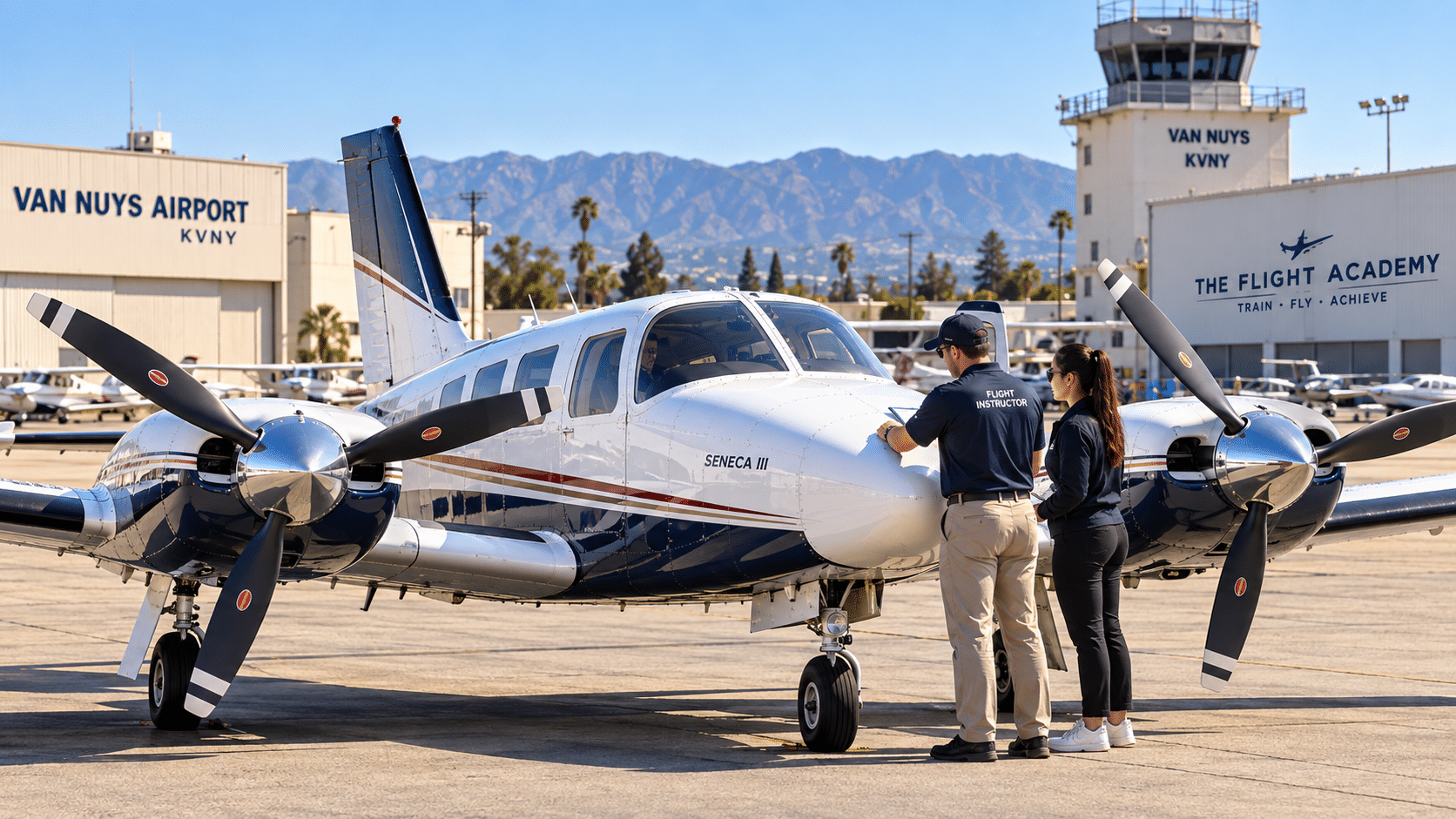
Training for Both in Van Nuys
For certificated pilots in Los Angeles and the San Fernando Valley, completing both endorsements in the Piper Seneca III at Van Nuys Airport allows the required training to be completed in one aircraft. The Seneca III has two 220-horsepower engines, retractable landing gear, and constant-speed propellers, giving pilots an opportunity to address the high-performance and complex-aircraft requirements during the same training program.
Training focuses on demonstrating proficiency in the aircraft’s specific systems and handling characteristics rather than completing a preset number of hours. An authorized flight instructor provides the required ground and flight training and determines when the pilot has demonstrated the proficiency needed for each endorsement.
For pilots ready to complete both endorsements, the Complex Aircraft & High Performance Endorsement course provides training in the Seneca III at Van Nuys.
Frequently Asked Questions
What makes an aircraft high performance?
Under 14 CFR 61.31, an airplane is considered high performance when it has an engine rated at more than 200 horsepower. The requirement is based on the engine’s rated horsepower, not the airplane’s speed, weight, or overall performance.
What makes an aircraft complex?
A complex airplane has all three of these features: retractable landing gear, flaps, and a controllable-pitch propeller. All three must be present for the FAA’s complex-airplane definition to apply. Retractable landing gear alone does not make an airplane complex.
Do you need a complex endorsement for the commercial checkride?
Not necessarily. For an initial commercial pilot certificate with an airplane single-engine rating, the FAA does not require the applicant to provide a complex airplane for the practical test. The complex endorsement is still required before acting as PIC of a qualifying complex airplane. Rental policies and insurance requirements may also require additional aircraft-specific training.
How many hours do you need for a high-performance endorsement?
There is no FAA minimum number of flight hours for a high-performance endorsement. Training is completed to proficiency, and an authorized instructor provides the endorsement after determining that the pilot has demonstrated the required proficiency. As a practical planning range, high-performance training may take about 2 to 4 flight hours, depending on the pilot’s experience and familiarity with the aircraft.
Can you get both endorsements in the same aircraft?
Yes, when the aircraft meets both definitions. It must have an engine rated at more than 200 horsepower and also have retractable landing gear, flaps, and a controllable-pitch propeller. Completing both endorsements in one qualifying aircraft can reduce repeated aircraft familiarization and transition time.
Does a high-performance endorsement expire?
No. A high-performance endorsement is a one-time logbook endorsement and does not expire. It is separate from FAA currency requirements, which determine whether a pilot is current for activities such as carrying passengers.
Ready to Add a High Performance or Complex Endorsement?
If you’re already a certificated pilot and need a high performance endorsement, a complex endorsement, or both, The Flight Academy provides aircraft-specific training at Van Nuys Airport. Explore high-performance and complex endorsement training to see how the training is structured and what to expect.