
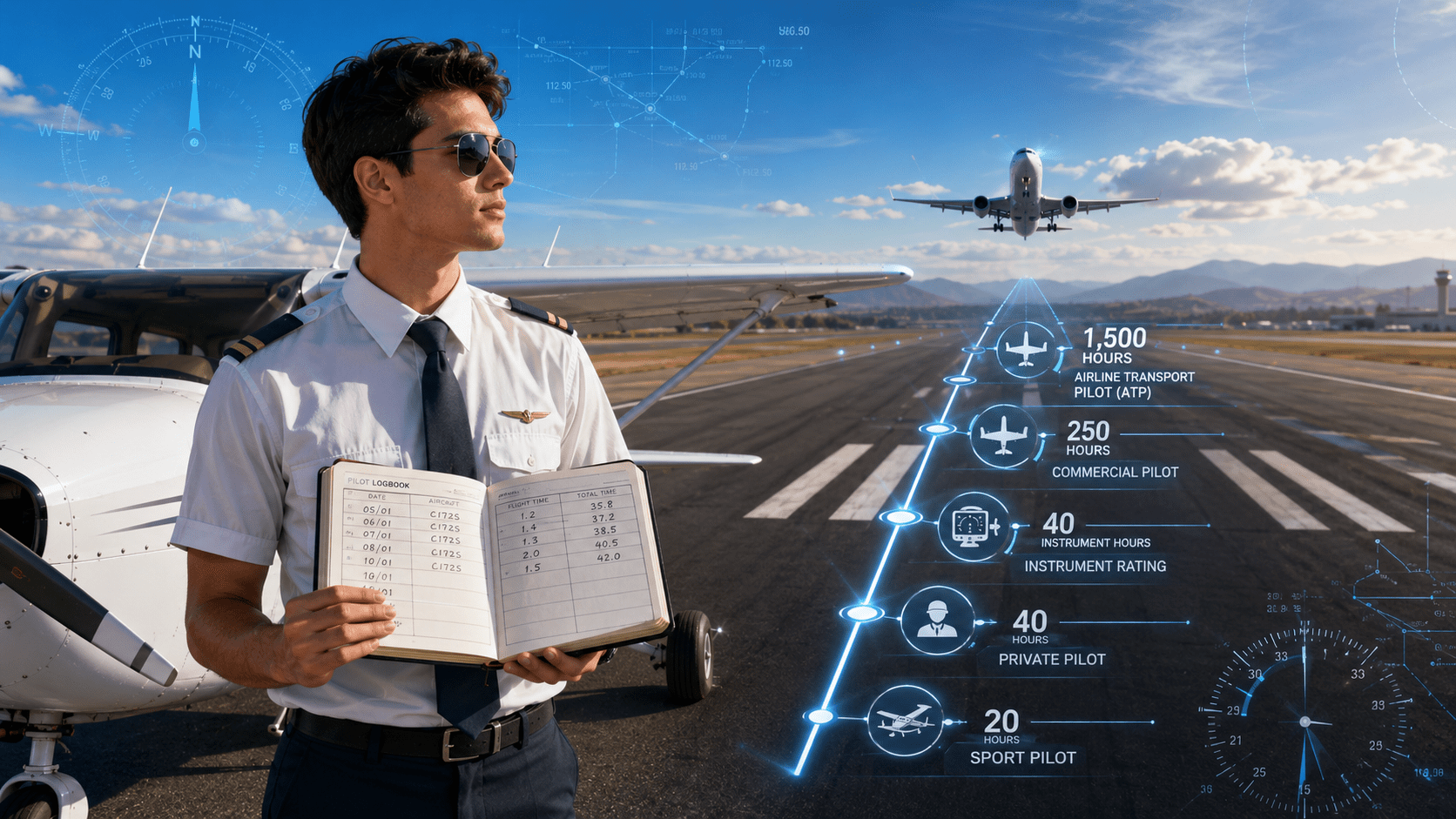
The answer depends on the pilot certificate you want to earn. The Federal Aviation Administration (FAA) establishes minimum flight-hour requirements for each pilot certificate under 14 CFR Part 61. However, FAA minimums do not reflect how many hours most students log before earning their certificate. For example, while the FAA requires a minimum of 40 flight hours for a Private Pilot Certificate under Part 61, the FAA reports that the average applicant completes training with approximately 75 hours of flight time.
Understanding that difference is important. FAA minimums establish the regulatory requirements for certification, while the total flight hours needed to become a pilot vary based on factors such as lesson frequency, weather, aircraft availability, and individual progress toward proficiency.
This guide focuses specifically on how many flight hours to become a pilot rather than the overall training timeline. If you’re looking for information about how long flight training typically takes from start to finish, see the full training timeline.
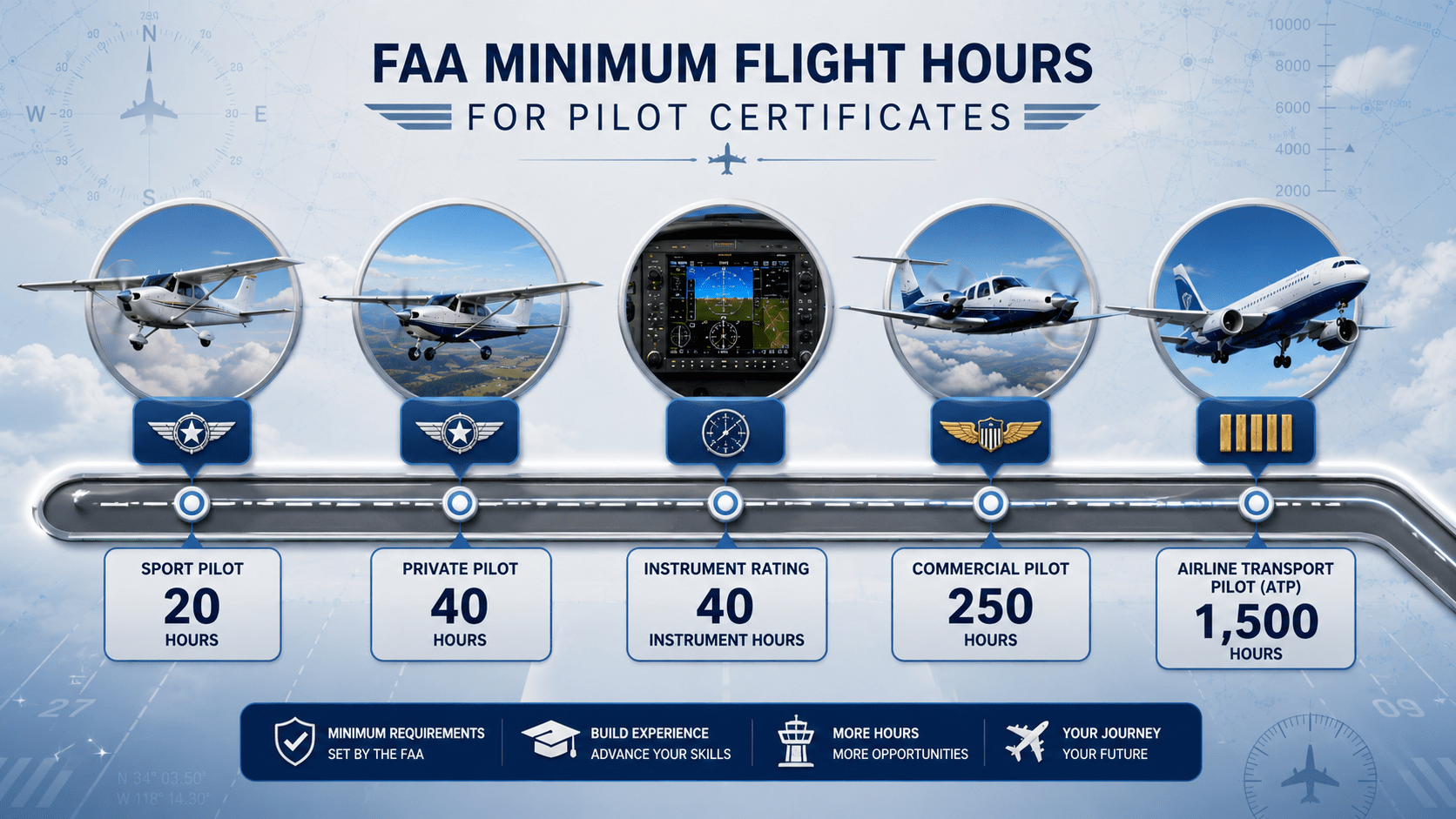
FAA Minimum Hours by Certificate Type
The Federal Aviation Administration (FAA) establishes minimum flight-hour requirements for different pilot certificates and ratings under 14 CFR Part 61. These minimums represent the regulatory requirements for certification. However, many students log more flight hours before they are ready for the practical test.
| Certificate or Rating | FAA Minimum Flight Hours (Part 61) |
|---|---|
| Sport Pilot Certificate | 20 hours |
| Private Pilot Certificate | 40 hours |
| Instrument Rating | 40 hours of actual or simulated instrument time |
| Commercial Pilot Certificate | 250 hours |
| Airline Transport Pilot (ATP) Certificate | 1,500 hours |
These FAA minimums answer common questions such as how many flight hours to become a private pilot and how many flight hours to become a commercial pilot. However, meeting the minimum flight-hour requirement does not guarantee practical test readiness. Flight training is proficiency-based, so many students log more than the FAA minimum before earning their certificate.
Why Most Students Fly More Than the Minimum
It’s common for students to log more than the FAA minimum flight hours before earning their certificate. This is not a sign that something is wrong. Flight training is proficiency-based, and students must demonstrate the knowledge and flight skills required by the Airman Certification Standards (ACS) before passing the FAA practical test.
Several factors can influence the total flight hours needed.
Lesson Frequency
Students who fly consistently often retain skills more effectively than those who take long breaks between lessons. Regular training helps reduce the time spent reviewing previous lessons and allows students to progress more efficiently.
Weather Conditions
Although Southern California generally offers favorable flying weather, weather conditions can still delay scheduled lessons. Longer gaps between flights may require additional practice to regain proficiency.
Aircraft Availability
Consistent access to aircraft and instructors helps students maintain a regular training schedule and continue progressing without unnecessary interruptions.
Individual Learning Pace
Every student progresses at a different pace. Some students master flight maneuvers more quickly, while others require additional practice before advancing to the next stage of training.
Checkride Readiness
Before taking the FAA practical test, students must demonstrate proficiency in the knowledge and skill elements required by the Airman Certification Standards (ACS). Additional flight training may be needed to achieve that proficiency rather than simply meet the minimum flight-hour requirement.
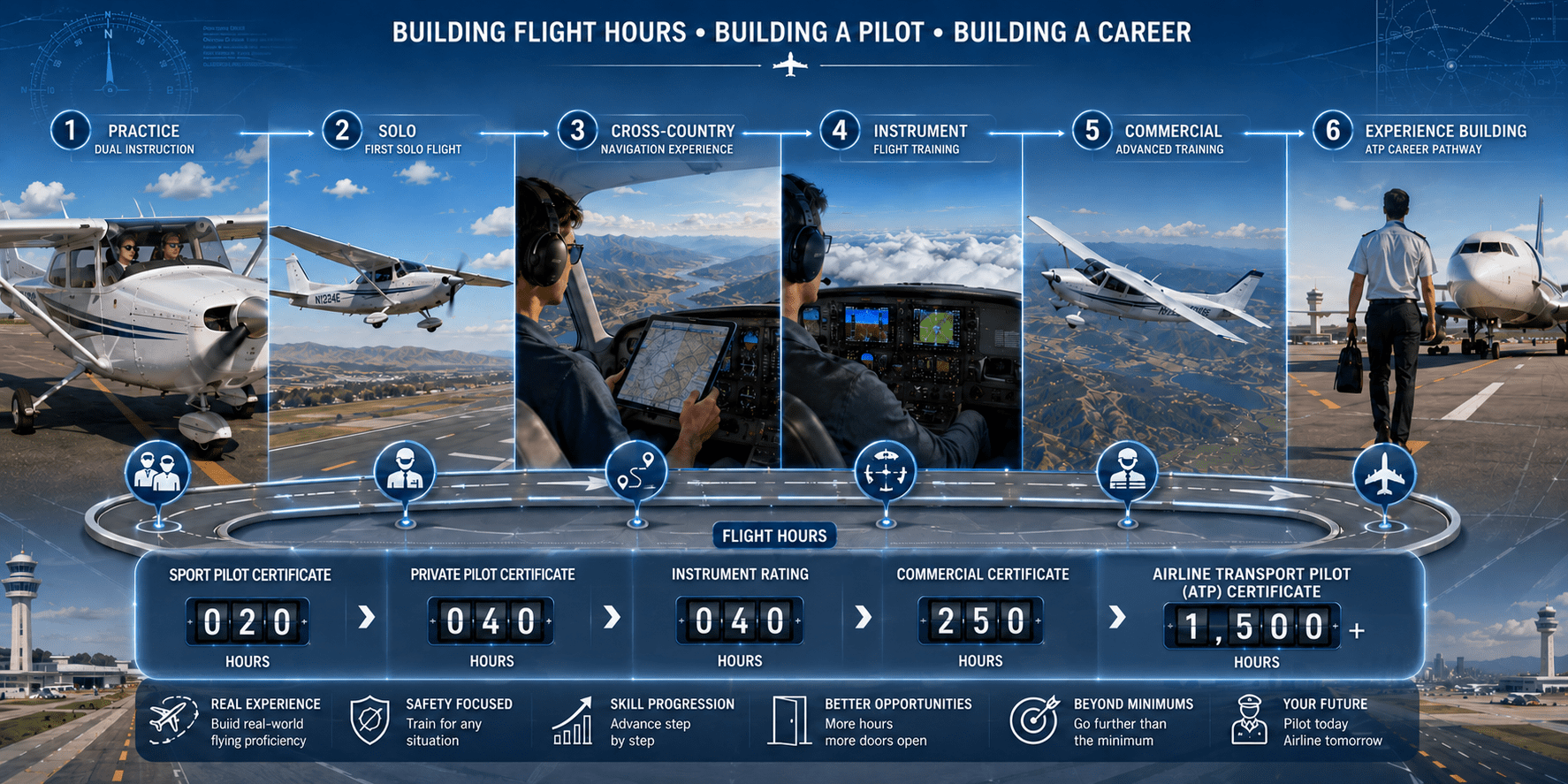
Realistic Hour Ranges by Certificate
Many prospective pilots want to know not only the FAA minimums but also how many hours of flight time to become a pilot in typical training. While every student’s experience is different, actual flight hours vary based on proficiency rather than the minimum required for certification.
Private Pilot Certificate
The FAA minimum under Part 61 is 40 flight hours. However, many students log more than the minimum before they are ready for the FAA practical test. The total flight hours vary based on lesson frequency, preparation between lessons, and individual progress.
If your goal is recreational flying or personal travel, the Private Pilot Certificate is the first major step. See private pilot training details.
Instrument Rating
An Instrument Rating builds on the skills developed during private pilot training by teaching pilots to fly by reference to flight instruments. Although the FAA establishes minimum instrument training requirements, many students require additional training to demonstrate proficiency for the practical test.
Commercial Pilot Certificate
For students pursuing a professional flying career, the Commercial Pilot Certificate requires significantly more aeronautical experience. If you’re wondering how many flight hours to become a commercial pilot, the FAA minimum under Part 61 is 250 flight hours. Many students continue building flight experience beyond the minimum before earning their certificate. Explore commercial pilot training.
Airline Transport Pilot (ATP) Certificate
Pilots pursuing airline careers typically work toward an Airline Transport Pilot (ATP) Certificate after meeting the required aeronautical experience. For most applicants, the FAA minimum is 1,500 total flight hours, although qualifying Restricted ATP pathways are available under specific FAA eligibility requirements.
How to Stay Closer to the Minimum
Although there is no guarantee that every student will complete training at the FAA minimum flight-hour requirement, these habits can help you make steady progress:
- Train consistently. Schedule flight lessons regularly to reinforce previously learned skills and reduce the amount of review needed between lessons.
- Study between lessons. Review aeronautical knowledge, procedures, and lesson materials before each flight to make better use of time in the aircraft.
- Prepare before each flight. Review checklists, lesson objectives, and planned flight maneuvers before arriving for your lesson.
- Communicate with your instructor. Discuss your progress, ask questions, and address areas that need additional practice so training can be adjusted to your learning needs.
- Focus on proficiency. Flight training is based on demonstrating proficiency, not reaching the minimum flight-hour requirement as quickly as possible.
FAQ
What’s the FAA minimum for a private pilot license?
Under 14 CFR Part 61, the minimum aeronautical experience required for a Private Pilot Certificate is 40 flight hours. Many students log additional flight hours before demonstrating the proficiency required to pass the FAA practical test.
How many hours for a commercial pilot license?
Under 14 CFR Part 61, the minimum aeronautical experience required for a Commercial Pilot Certificate is 250 flight hours. Many students log additional flight hours before meeting the proficiency standards required for certification.
Can you become a pilot faster than the minimum hours?
Completing flight training at or near the FAA minimum flight-hour requirement is possible, but it is uncommon. Students who train consistently, study between lessons, and experience fewer scheduling interruptions may complete training more efficiently. However, certification is based on demonstrated proficiency rather than the number of flight hours logged.
How many hours do most students actually need?
Most students log more than the FAA minimum flight hours before earning their certificate. The total varies based on lesson frequency, weather, aircraft and instructor availability, and individual progress. There is no typical number of flight hours that applies to every student.
Ready to Start Your Flight Training?
Understanding how many flight hours to become a pilot is an important first step. Your training timeline and total flight hours will depend on your schedule, proficiency, and consistent progress throughout flight training.
A discovery flight is an opportunity to fly with a certified flight instructor, experience flight training firsthand, and learn what your path to earning a pilot certificate could look like at The Flight Academy.
Book a discovery flight and start your flight training timeline with The Flight Academy.