
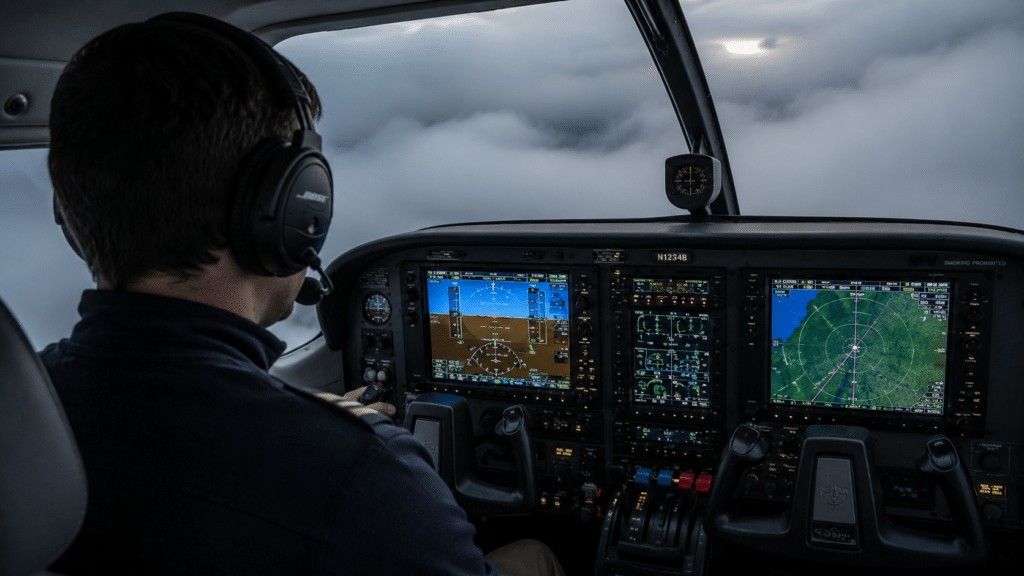
Earning an Instrument Rating is one of the most valuable steps you can take after your Private Pilot License. It expands where, when, and how you can fly, especially in changing weather and more complex airspace. If you’re researching the requirements for instrument rating, it’s important to understand both the FAA rules and what IFR training actually looks like day to day.
An Instrument Rating is not a standalone license. It’s added to your existing pilot certificate and follows specific IFR requirements, including flight hours, knowledge testing, and a practical exam. In this guide, we’ll walk through exactly how to get instrument rating training started, including eligibility, hour breakdowns, Part 61 vs Part 141 training, and what to expect while training out of Van Nuys.
What Is an Instrument Rating (and Why Pilots Add It)
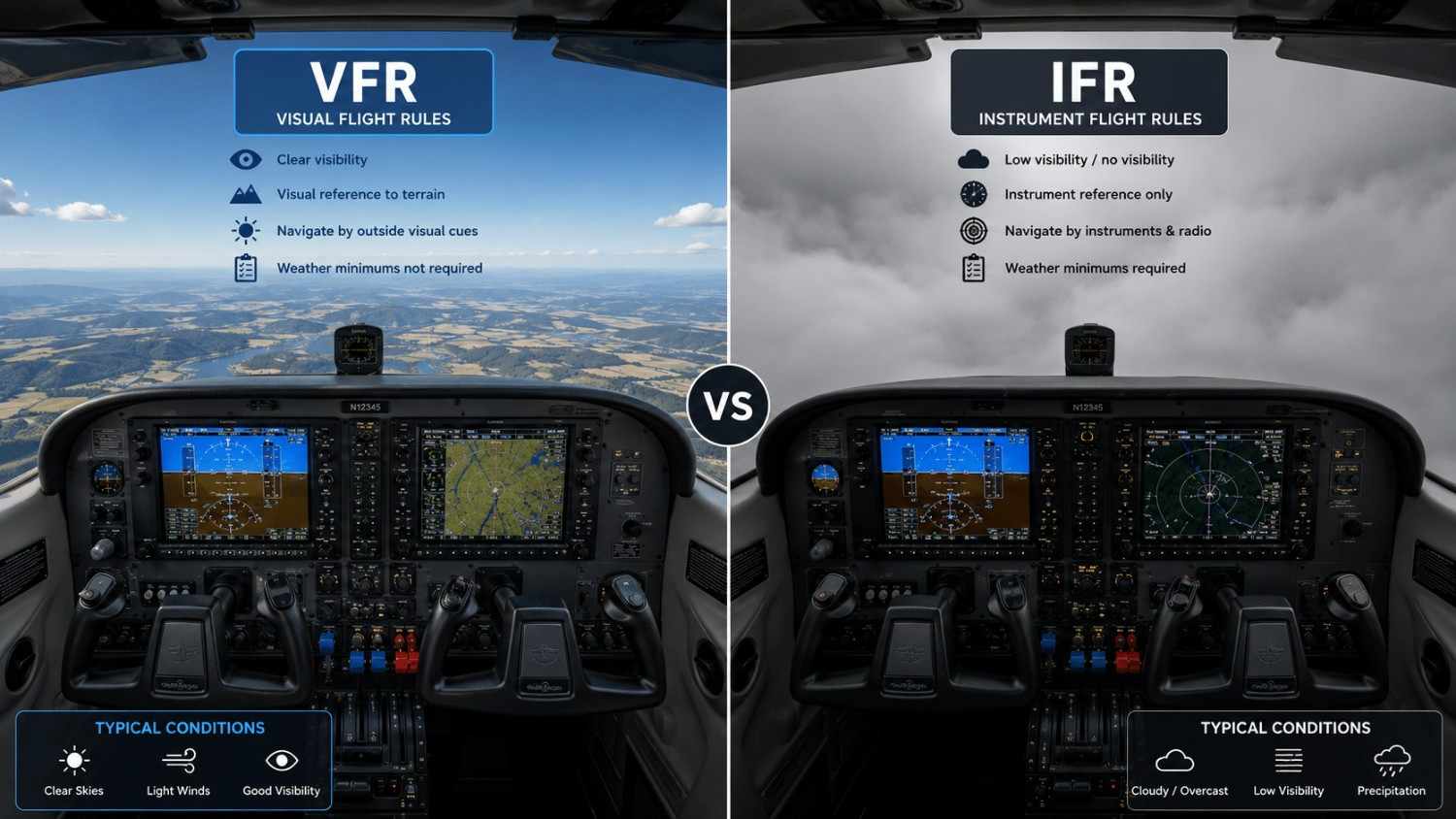
An Instrument Rating allows you to fly under Instrument Flight Rules (IFR), meaning you can operate in reduced visibility and navigate primarily by reference to instruments rather than outside visual cues. This includes flying in Instrument Meteorological Conditions (IMC) while working directly with air traffic control.
For most pilots, the value comes down to safety, flexibility, and capability. Instead of being limited to clear-weather flying, you gain the ability to plan and complete flights with more confidence, especially on longer cross-country trips. It’s also required for operating in Class A airspace above 18,000 feet and is a necessary step for pilots pursuing Commercial or ATP certificates.
The rating can be added to airplane, helicopter, and powered-lift categories. It also removes certain limitations. For example, Commercial pilots without an Instrument Rating are restricted from carrying passengers beyond 50 nautical miles during daytime VFR operations. Understanding these IFR requirements early helps clarify how to get IFR rating training that matches your long-term flying goals.
Eligibility Prerequisites
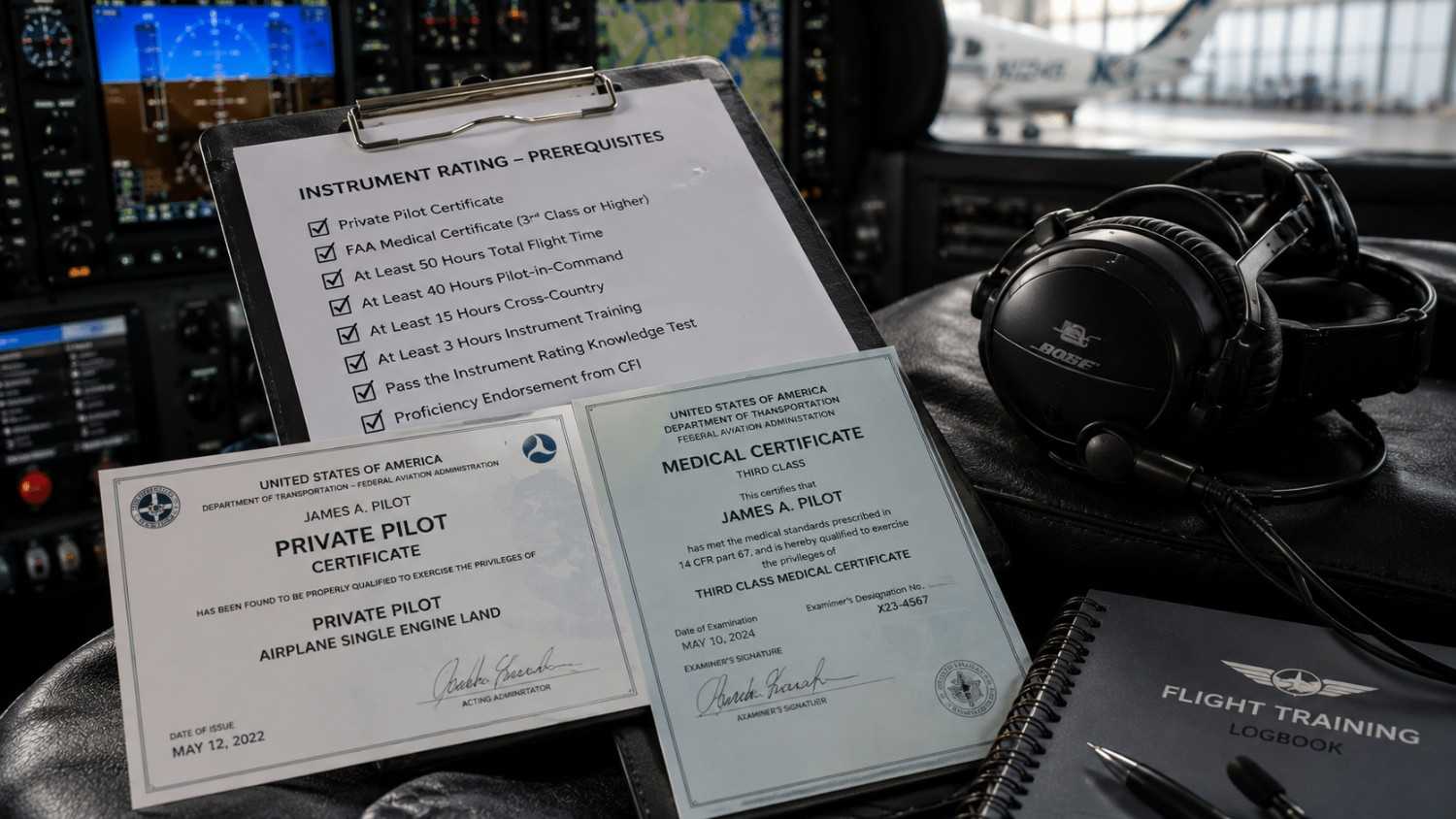
Before starting training, you’ll need to meet the FAA instrument rating prerequisites under 14 CFR 61.65(a). You must hold, or be concurrently applying for, a Private Pilot Certificate in the same category and class of aircraft.
You’ll also need to:
- Read, speak, write, and understand English
- Hold a valid third-class medical certificate or qualify under BasicMed for eligible IFR operations
- Complete the required ground and flight training with instructor endorsements
- Pass the FAA knowledge test and practical test
From a practical standpoint, many pilots begin IFR training soon after completing their PPL while their skills are still current. At a flight school Van Nuys pilots choose for consistent training access, students often progress best when they commit to a regular schedule over several months. Long gaps between lessons or weak radio and weather proficiency can slow overall progress.
FAA Flight Hour Requirements (Part 61, Airplane)
Once you meet the eligibility requirements, the next step is understanding the flight experience required under Part 61. The FAA defines the minimums in 14 CFR 61.65(d), but most pilots train beyond those numbers before reaching checkride readiness.
To meet the instrument rating hours required, you’ll need:
- 50 hours of cross-country PIC time, including at least 10 hours in airplanes
- 40 hours of actual or simulated instrument time
- 15 hours of instrument training with a CFII
- 3 hours of instrument training within 2 calendar months before the checkride
You’ll also complete one IFR cross-country flight of at least 250 nautical miles that includes:
- An instrument approach at each airport
- Three different types of approaches, such as ILS, VOR, and GPS/RNAV
For pilots asking how many hours for instrument rating training typically takes, many Part 61 students finish closer to 50–60 hours of instrument time. The FAA minimums are a foundation, but most pilots continue training until they can fly procedures consistently and safely.
Simulator Credit
Part of your IFR training requirements can be completed in approved simulators or training Part of your IFR training requirements can be completed in approved simulators or training devices:
- Up to 10 hours in a BATD
- Up to 20 hours in an AATD, FTD, or full flight simulator
- Up to 30 hours in an FTD or FFS under Part 142
These devices are commonly used for repetitive procedure work like holds, approach sequencing, and abnormal scenarios where pilots can pause, reset, and refine technique efficiently.
Part 61 vs Part 141: Two Training Paths
When planning your training, you’ll choose between Part 61 and Part 141 programs. Both meet FAA standards and satisfy the same IFR rating requirements. The difference is how the training is structured.
Part 61 training offers more scheduling flexibility. At The Flight Academy, students can train around work, school, or personal schedules while progressing at a pace that fits their availability. The minimum requirement includes 40 hours of instrument time and a 250 nautical mile IFR cross-country flight with three different approaches.
Part 141 training follows a structured FAA-approved syllabus with a reduced minimum of 35 hours of instrument training for an initial Instrument Rating. These programs are commonly used in accelerated or full-time training environments.
- Choose Part 61 if you need flexibility and prefer a customized training pace
- Choose Part 141 if you prefer a more structured, full-time training environment
The difference isn’t about which path is easier. Part 141’s reduced hour minimum reflects curriculum structure, not reduced proficiency standards. The best choice depends on your schedule, learning style, and training consistency.
Ground Training and the Knowledge Test
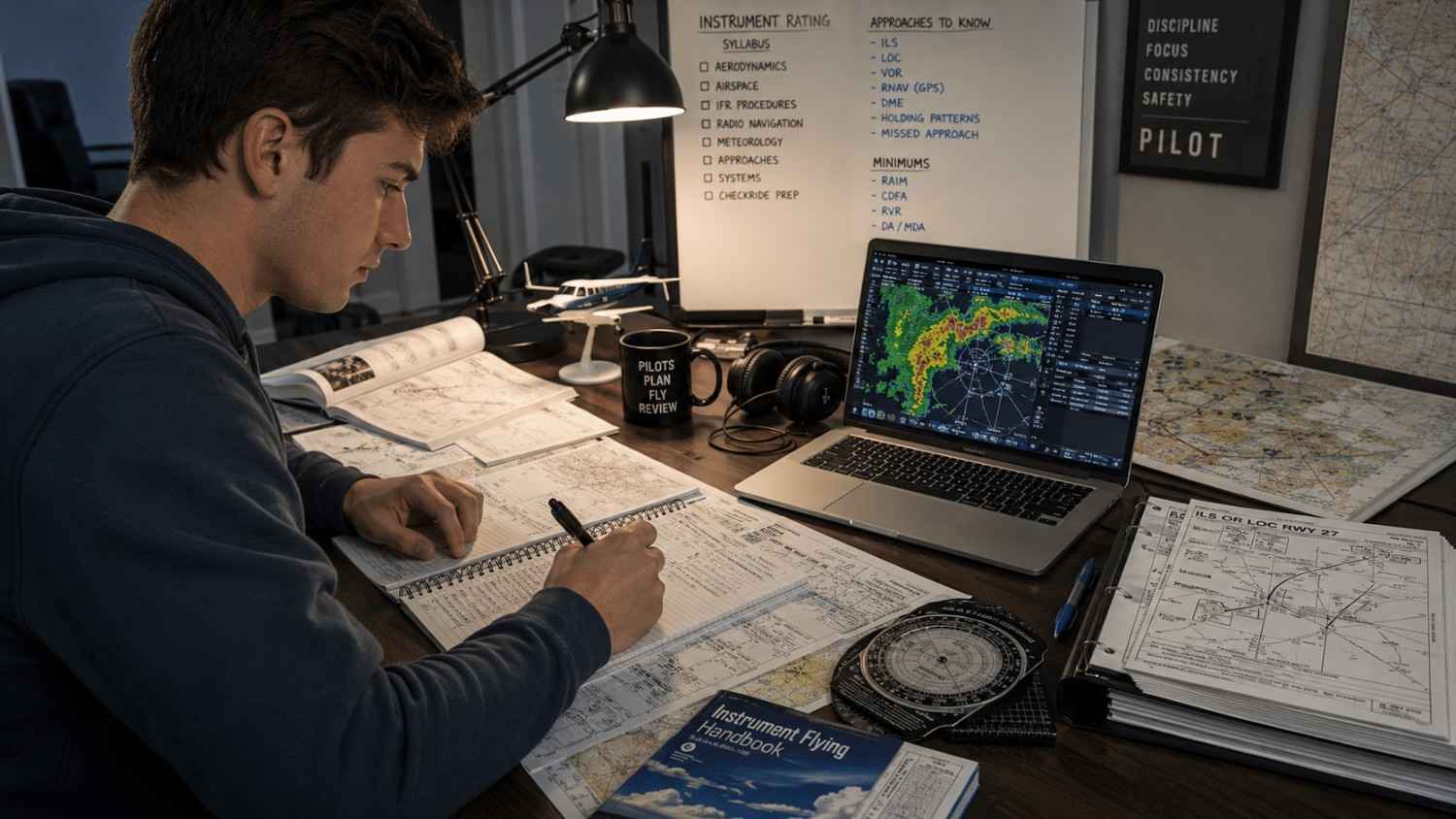
Before your checkride, you’ll need to complete ground training and pass the FAA knowledge test. This covers the academic side of the requirements for instrument rating, including:
- IFR regulations and procedures
- ATC systems and IFR communication
- Instrument navigation, approach procedures, and the FAA Instrument Procedures Handbook
- En route and approach chart interpretation
- Aviation weather, including icing, fog, and thunderstorms
- Aircraft systems for instrument flight
- Aeronautical decision-making and spatial disorientation
- IFR flight planning
The knowledge test includes:
- 60 multiple-choice questions
- 2.5-hour time limit
- 70% passing score
- Valid for 24 calendar months
You’ll need an instructor endorsement before scheduling the test. If you’ve recently completed the private pilot written exam guide, the testing process will feel familiar, although the IFR question pool goes deeper into weather, systems, procedures, and instrument flight planning.
Flight Training: What You’ll Do in the Airplane
Flight training is where your instrument skills come together. Under 14 CFR 61.65(c), you’ll develop proficiency in:
- Preflight preparation and IFR procedures
- ATC clearances and communication
- Flight by reference to instruments
- Navigation systems and tracking
- Instrument approaches and missed approaches
- Holding procedures
- Emergency operations, including partial-panel and unusual-attitude recoveries
A large portion of your training involves repetition and procedure work. You’ll fly under a view-limiting device, practice multiple approaches at different airports, and learn to manage workload while staying ahead of the aircraft during IFR operations.
Training at Van Nuys (KVNY) also provides exposure to complex Southern California airspace early in the process. Pilots train in Class D airspace under Class B with quick access to Class B, Class C, and multiple IFR-capable airports throughout the LA Basin.
This environment helps students build confidence communicating with ATC, managing real-world IFR routing, and adapting to the airspace conditions many Southern California pilots encounter regularly.
The IFR Checkride (Practical Test)
All of your training leads to the final evaluation: the Instrument Rating checkride. This practical test is conducted by a Designated Pilot Examiner (DPE) or FAA inspector and follows the FAA Instrument Rating ACS.
The checkride includes:
- Oral exam (typically 2+ hours): regulations, weather, flight planning, instrument procedures, and aircraft systems
- Flight test (typically 2–3 hours): departures, en route procedures, precision and non-precision approaches, holding, missed approaches, and partial-panel scenarios
Before receiving a sign-off, you must complete 3 hours of instrument training within the previous 2 calendar months with a CFII under 14 CFR 61.65(d)(2)(ii). This training is usually focused on refining weak areas identified during progress checks and mock evaluations.
After passing the checkride, the DPE issues a temporary airman certificate while the FAA processes and mails the permanent certificate.
Realistic Timeline from PPL to IFR Ticket
For most pilots, the timeline depends heavily on training consistency. At The Flight Academy, a typical Part 61 progression often looks like this:
- Months 1–2: Ground training and the first 10–15 hours of instrument time
- Months 3–4: Instrument approaches, holding procedures, and navigation systems
- Months 5–6: IFR cross-country training, the 250 nautical mile training flight, and mock checkrides
- Final phase: 3-hour CFII prep window and the practical test
Although the FAA minimum is 40 hours of instrument time, most Part 61 students finish closer to 50–60 hours before reaching consistent checkride-level proficiency.
Accelerated programs can compress training into 10–14 days, but they typically require a full-time schedule, a current PPL, and strong weather and ATC proficiency before training begins.
At-a-glance path:
- Ground school
- Pass the knowledge test
- Begin instrument training
- Build required flight time
- Complete the IFR cross-country
- Checkride preparation
- Practical test
Currency: Staying IFR-Legal After the Rating
Once you’ve earned the rating, the focus shifts to maintaining proficiency and staying current under 14 CFR 61.57(c).
Within every 6 calendar months, you must complete:
- Six instrument approaches
- Holding procedures
- Intercepting and tracking courses through electronic navigation systems
These IFR requirements can be completed in actual IMC, simulated instrument conditions with a safety pilot, or an approved ATD, FTD, or full flight simulator.
If more than 6 additional calendar months pass without meeting the currency requirements, you’ll need to complete an Instrument Proficiency Check (IPC) with a qualified instructor to regain IFR currency. Many pilots also schedule an annual IPC as part of a regular safety practice, even when they remain legally current.
Start Your IFR Training at The Flight Academy in Van Nuys
At The Flight Academy, we focus on preparing pilots for real-world IFR flying, not just the At The Flight Academy, we focus on preparing pilots for real-world IFR flying, not just the practical test. We’re a family-owned flight school Los Angeles pilots train with at Van Nuys Airport (KVNY), offering consistent one-on-one CFII instruction throughout the Instrument Rating process.
Our Instrument Rating training includes:
- Dedicated CFII instruction
- A mix of in-airplane training and AATD procedure work
- Training continuity from Private Pilot through IFR
Founded by Sam and Moe Tarakji, our philosophy is simple: train beyond minimum standards so pilots are confident operating in real IFR conditions.
Already flying as a Private Pilot in Southern California? Talk to our instructors about the next IFR cohort through learn to fly or reach out through contact to discuss your Instrument Rating goals.
Frequently Asked Questions
What are the prerequisites for an Instrument Rating?
To meet the instrument rating prerequisites, you need a Private Pilot Certificate, English proficiency, and a valid medical certificate or BasicMed qualification where applicable. You’ll also need instructor endorsements and must pass both the FAA knowledge and practical tests.
How many hours are required for the Instrument Rating?
The FAA requires 40 hours of instrument time, 50 hours of cross-country PIC time, and 15 hours of instruction with a CFII. Most pilots complete closer to 50–60 hours of instrument time before reaching checkride readiness.
How long does it take to earn an Instrument Rating?
Most students complete training in roughly 4–8 months with a consistent schedule. Accelerated programs can be completed in 10–14 days but usually require full-time availability and strong preparation beforehand.
What’s the difference between Part 61 and Part 141 instrument training?
Part 61 training is more flexible and allows pilots to train at their own pace, while Part 141 follows a structured FAA-approved syllabus with a 35-hour minimum. Both satisfy the same FAA instrument rating requirements, and the best option depends on your schedule and learning style.
Do I need a medical certificate to fly IFR?
Yes. Pilots need at least a third-class medical certificate or BasicMed qualification for eligible IFR operations within the United States.
How do I stay current after earning my Instrument Rating?
Under 14 CFR 61.57(c), pilots must complete six instrument approaches, holding procedures, and intercepting and tracking tasks within every 6 calendar months. If currency lapses beyond an additional 6 months, an Instrument Proficiency Check (IPC) is required.
This content is provided for informational and educational purposes only and does not constitute flight instruction, operational approval, or regulatory guidance. All flight training is conducted in accordance with FAA regulations and must be completed with a certified flight instructor. Individual training requirements, costs, and timelines may vary.