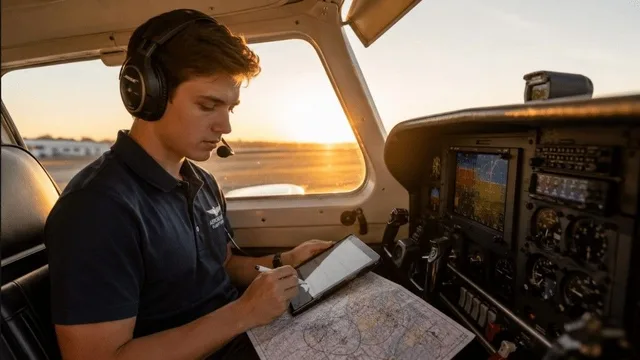
Under 14 CFR 61.65, FAA Instrument Rating (IR) applicants must hold a Private Pilot License, log 50 hours of cross-country Pilot-in-Command (PIC) time, complete 40 hours of actual or simulated instrument time (at least 15 hours with a CFII), fly a 250 NM IFR cross-country with three distinct approaches, and pass the IRA written and checkride.
Introduction
If you already hold a Private Pilot License (PPL), earning an Instrument Rating (IR) is one of the most valuable next steps in your aviation journey. An Instrument Rating is not a separate pilot license—it is an additional rating added to your existing pilot certificate that allows you to fly under Instrument Flight Rules (IFR). This expands when, where, and how you can safely operate an aircraft, even when outside visual references are limited.
If you’re researching the requirements for instrument rating, it’s important to understand both the FAA’s eligibility requirements and what IFR training looks like in practice. From required flight hours and ground school to the FAA knowledge test, checkride, and training timeline, knowing what to expect helps you plan your path with confidence.
In this guide, we’ll explain the key instrument flight rating requirements, including prerequisites, required flight experience, Part 61 versus Part 141 training, estimated costs, and what you’ll experience while training at The Flight Academy in Van Nuys, California. The FAA outlines these requirements under 14 CFR 61.65, which establishes the aeronautical knowledge, flight experience, and proficiency standards for earning an Instrument Rating.
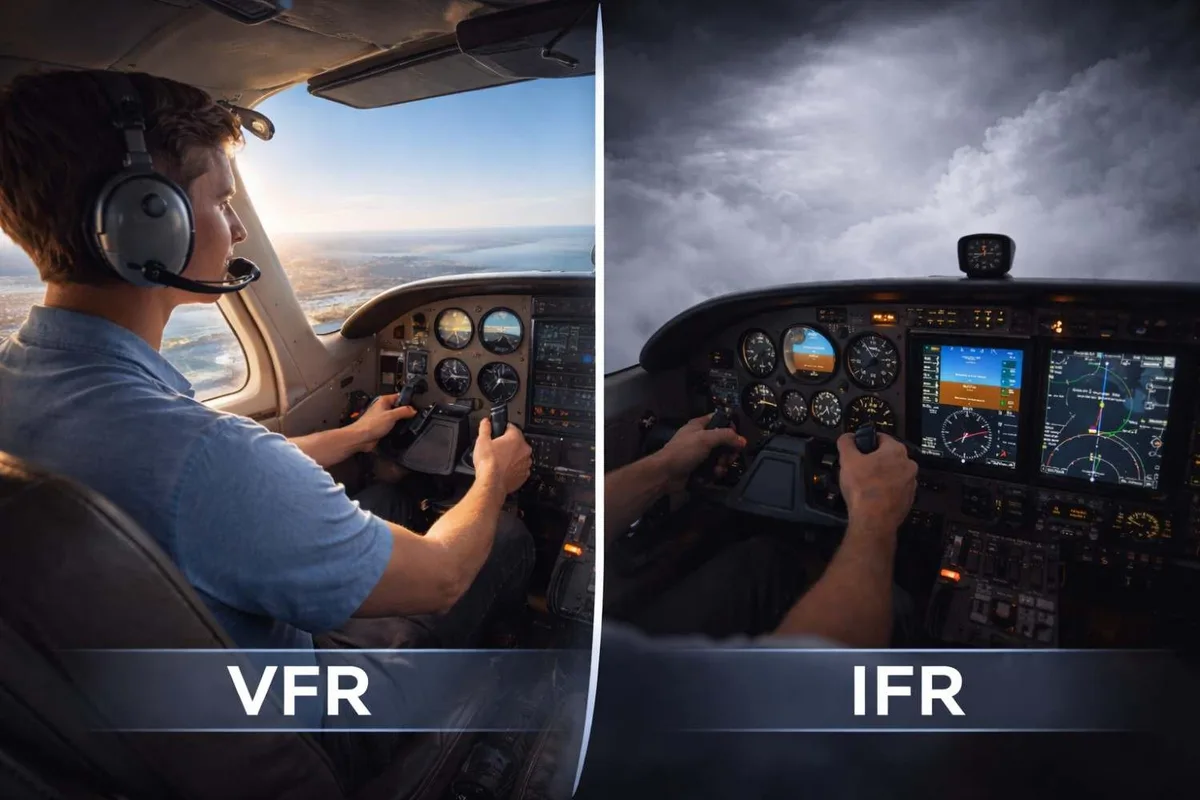
Without an Instrument Rating, pilots are limited to Visual Flight Rules (VFR), meaning weather conditions such as low ceilings, fog, or marine layers can delay or cancel flights. With an Instrument Rating, you’ll develop the skills to safely navigate using aircraft instruments, approved procedures, and communication with Air Traffic Control (ATC), allowing you to fly more confidently in a wider range of conditions.
At a Glance: Instrument Rating Requirements
If you’re wondering how many hours for instrument rating training you’ll need, here’s a quick overview of the FAA minimum requirements:
- 50 hours of cross-country flight time as Pilot-in-Command (PIC)
- 40 hours of actual or simulated instrument time
- 15 hours of instrument instruction with a Certified Flight Instructor – Instrument (CFII)
- One IFR cross-country flight meeting FAA distance and approach requirements
- FAA Instrument Rating Knowledge Test (60 questions, 70% passing score)
- FAA Practical Test (Checkride)
- Typical completion time: 2–4 months at The Flight Academy with consistent training
- Estimated cost: Approximately $10,050 based on FAA minimum training hours
Although these are the FAA minimums, many students continue training beyond the required hours before reaching consistent checkride-level proficiency. The exact timeline depends on training frequency, weather, aircraft availability, and individual progress.
Next, we’ll break down each requirement in detail so you understand exactly what’s required to earn your Instrument Rating.
What Is an Instrument Rating and Why It Matters
What Is an Instrument Rating?
An Instrument Rating allows pilots to operate under Instrument Flight Rules (IFR). Instead of relying primarily on outside visual references, IFR pilots navigate using cockpit instruments, navigation systems, published instrument procedures, and continuous communication with Air Traffic Control.
This rating allows you to legally fly in Instrument Meteorological Conditions (IMC), including clouds, reduced visibility, marine layers, and other weather conditions that would prevent VFR flight.
Unlike a Private Pilot License, which limits operations to visual conditions, an Instrument Rating greatly expands your operational capability. Whether you’re flying for recreation, business, or preparing for a professional aviation career, IFR training develops precision, situational awareness, and decision-making skills that improve overall safety.
In Southern California, this is especially valuable. Marine layers, coastal fog, and low ceilings frequently affect airports around Los Angeles. Pilots with an Instrument Rating can continue operating safely using published IFR procedures instead of waiting for weather to improve.
An Instrument Rating is also a major stepping stone toward advanced certifications such as Commercial Pilot and Airline Transport Pilot (ATP). Many professional aviation careers require pilots to earn this rating early in their training.
Why Most Pilots Earn an IFR Rating
Although many pilots initially pursue an Instrument Rating to fly in poor weather, the benefits extend far beyond that.
Improved safety. IFR training teaches pilots to maintain aircraft control without relying on outside visual references. You’ll learn to interpret instruments accurately, manage workload, and make sound decisions even when visibility deteriorates unexpectedly.
Greater flexibility. Weather delays become less restrictive. Instead of canceling flights due to low ceilings or haze, Instrument Rated pilots can often continue safely under IFR, provided conditions remain within aircraft and pilot limitations.
Career progression. Most Commercial Pilot, Certified Flight Instructor (CFI), Corporate Aviation, and Airline career paths require an Instrument Rating. Earning it early provides a strong foundation for future certificates and ratings.
Stronger flying skills. Even when flying in visual conditions, Instrument Rated pilots typically develop greater precision in navigation, aircraft control, radio communication, and cockpit workload management.
Ultimately, earning an Instrument Rating isn’t simply about meeting FAA requirements—it’s about becoming a safer, more capable, and more confident pilot.
Do You Meet the Prerequisites?
FAA Prerequisites for an Instrument Rating
Before beginning IFR training, you must meet the eligibility requirements outlined in 14 CFR 61.65(a). Applicants must:
- Hold (or be concurrently applying for) a Private Pilot Certificate in the appropriate aircraft category and class
- Read, speak, write, and understand English
- Hold a valid third-class medical certificate or qualify under BasicMed where applicable
- Receive the required ground and flight training from an authorized instructor
- Pass both the FAA Knowledge Test and Practical Test
Most pilots begin Instrument training shortly after earning their Private Pilot Certificate. Starting while your radio communication, navigation, and aircraft control skills are still fresh often leads to faster progress and greater confidence throughout training.
What Is a CFII (And Why It Matters)
A Certified Flight Instructor – Instrument (CFII) is specifically qualified to provide Instrument Rating training.
FAA regulations require applicants to complete at least 15 hours of instrument flight training with a CFII. Beyond meeting the regulatory requirement, instructor guidance is essential because instrument flying demands precise aircraft control, standardized procedures, accurate navigation, and effective cockpit workload management.
During training, your CFII will teach you how to:
- Interpret IFR charts and procedures
- Fly solely by reference to instruments
- Communicate efficiently with Air Traffic Control
- Execute instrument approaches and missed approaches
- Handle abnormal and emergency scenarios safely
Students training at The Flight Academy in Van Nuys also gain valuable experience operating within one of Southern California’s busiest airspace environments. Frequent ATC communication, nearby Class B airspace, and access to multiple IFR-capable airports help prepare students for real-world instrument flying.
Flight Hour Requirements (What You’ll Actually Need to Log)
FAA Flight Hour Requirements for an Instrument Rating
One of the most common questions pilots ask is, “How many hours are required for an Instrument Rating?”
Under 14 CFR 61.65(d), the FAA establishes minimum aeronautical experience requirements for Instrument Rating applicants. These requirements ensure every pilot develops sufficient cross-country experience, instrument proficiency, and instructor-guided training before attempting the practical test.
Minimum FAA requirements include:
- 50 hours of cross-country Pilot-in-Command (PIC) flight time
- 40 hours of actual or simulated instrument time
- 15 hours of instrument instruction with a CFII
- 3 hours of instrument training within the two calendar months preceding the practical test
These are minimum requirements only. Many pilots complete between 50 and 60 hours of instrument time before demonstrating consistent checkride-level proficiency.
Cross-Country Flight Time Requirements
To qualify for the Instrument Rating, you’ll need at least 50 hours of cross-country flight time as Pilot-in-Command.
You’ll also complete one IFR cross-country flight that includes:
- At least 250 nautical miles total distance
- An instrument approach at each airport
- Three different types of instrument approaches (such as ILS, RNAV/GPS, and VOR)
For Southern California pilots, these flights often involve airports throughout the Los Angeles Basin and surrounding regions, providing practical experience with navigation, IFR flight planning, and Air Traffic Control communication in complex airspace.
Instrument Time Requirements
In addition to cross-country experience, the FAA requires applicants to log at least 40 hours of actual or simulated instrument time. This requirement ensures pilots develop the skills necessary to safely control and navigate an aircraft when outside visual references are unavailable. These minimum requirements are established under 14 CFR 61.65(d).
Your instrument time may include:
- Actual instrument flight in Instrument Meteorological Conditions (IMC)
- Simulated instrument flight using a view-limiting device (“hood” training)
- Training completed in FAA-approved aviation training devices where permitted
Most students at The Flight Academy complete much of their instrument training under simulated conditions. Southern California’s generally favorable weather provides an ideal environment for practicing IFR procedures while your instructor maintains visual separation and overall flight safety.
Although the FAA minimum is 40 hours, many pilots require closer to 50–60 hours of instrument time before consistently demonstrating checkride-level proficiency. Training beyond the minimum often leads to greater confidence and stronger decision-making in real-world IFR operations.
Simulator Credit for Instrument Training
Not all instrument training must take place in an aircraft. The FAA allows portions of your IFR training to be completed using approved Aviation Training Devices (ATDs), Flight Training Devices (FTDs), and Full Flight Simulators, provided the training is conducted by an authorized instructor.
Depending on the type of device used, you may receive credit for:
- Up to 10 hours in a Basic Aviation Training Device (BATD)
- Up to 20 hours in an Advanced Aviation Training Device (AATD) or approved Flight Training Device
- Additional credit may be available in certain FAA-approved Part 142 training programs
Simulator training is particularly valuable for practicing procedures that would be expensive or impractical to repeat in the airplane, including:
- Holding pattern entries
- Instrument approach sequencing
- Missed approaches
- Emergency procedures
- Partial-panel operations
- Abnormal IFR scenarios
Because instructors can pause, reset, and repeat scenarios instantly, approved simulators often accelerate learning while reducing overall training costs.
Training with a CFII
The FAA requires at least 15 hours of instrument flight instruction with a Certified Flight Instructor – Instrument (CFII). These lessons focus on developing the practical skills needed to safely operate under Instrument Flight Rules.
During your dual instruction, you’ll learn how to:
- Fly precision and non-precision instrument approaches, including ILS, RNAV (GPS), and VOR approaches
- Execute holding patterns and holding entries
- Navigate efficiently along IFR airways and direct routing
- Interpret ATC clearances and communicate effectively with controllers
- Manage cockpit workload during high-demand situations
- Handle emergency procedures, including partial-panel operations and unusual-attitude recovery
Training in the busy Southern California airspace surrounding Van Nuys Airport gives students valuable experience operating near Class B, Class C, and Class D airspace while communicating with multiple Air Traffic Control facilities. This real-world environment builds confidence long before the checkride.

Choosing Your Training Path
Part 61 vs. Part 141 Instrument Rating Training
One question many student pilots ask before beginning IFR training is whether they should complete their Instrument Rating under Part 61 or Part 141. Both training paths satisfy FAA requirements and lead to the same Instrument Rating. The primary difference is how the training is organized.
Part 61 Training
Part 61 offers greater scheduling flexibility and allows instructors to tailor lessons to each student’s pace and availability. This option is ideal for pilots balancing training with work, school, or family commitments.
Most students at The Flight Academy complete their Instrument Rating under Part 61 because it provides:
- Flexible scheduling
- Personalized lesson pacing
- One-on-one instructor attention
- The ability to progress according to individual proficiency
Part 141 Training
Part 141 schools follow an FAA-approved syllabus with a highly structured curriculum. Because of this standardized training environment, some programs permit a reduced minimum of 35 hours of instrument training for an initial Instrument Rating.
Part 141 programs are commonly chosen by:
- Full-time aviation students
- Accelerated flight academies
- University aviation programs
It’s important to understand that the reduced hour requirement does not mean Part 141 training is easier. Both training paths require pilots to demonstrate the same level of knowledge, skill, and proficiency before earning an Instrument Rating. The best choice depends on your learning style, availability, and long-term training goals.
Ground School and the FAA Knowledge Test
Ground Training and the Instrument Rating Knowledge Test
Flight training is only one part of becoming an Instrument Rated pilot. Before taking your practical test, you’ll also need to complete ground training and pass the FAA Instrument Rating Knowledge Test, as required under 14 CFR 61.65.
The knowledge test evaluates your understanding of IFR operations, regulations, navigation, weather, and decision-making. It consists of:
- 60 multiple-choice questions
- 2.5-hour testing time
- 70% minimum passing score
- Results that remain valid for 24 calendar months
Before scheduling the exam, you’ll need an instructor endorsement confirming you’re prepared to take the test.
Topics Covered During Ground School
Ground school prepares you for both the FAA Knowledge Test and real-world IFR flying. Training typically includes:
- FAA regulations and IFR operating procedures
- Air Traffic Control communications and clearances
- Navigation systems, including VOR, GPS, RNAV, and onboard avionics
- Instrument approach procedures and IFR charts
- En route navigation and chart interpretation
- Weather analysis, including marine layers, icing, fog, and thunderstorms
- Aircraft systems used during instrument flight
- Aeronautical decision-making and risk management
- Spatial disorientation and human factors
- IFR flight planning and fuel management
For pilots training in the Los Angeles area, ground instruction also emphasizes local weather patterns such as coastal fog and marine layers, helping students understand how these conditions affect IFR planning and decision-making.
A strong foundation in ground school makes every flight lesson more productive and prepares you for the practical application of IFR procedures during flight training.
Flight Training – What You’ll Do in the Airplane
Building Real-World IFR Skills
Once you’ve completed the required ground training and passed the FAA Knowledge Test, you’ll begin applying that knowledge in the airplane. This is where pilots develop the practical skills needed to safely operate under Instrument Flight Rules (IFR).
Unlike Private Pilot training, where visual references outside the aircraft are your primary source of navigation, Instrument Rating training teaches you to rely on your flight instruments, navigation systems, published procedures, and Air Traffic Control instructions. Every lesson builds confidence while preparing you for real-world IFR operations.
Under 14 CFR 61.65(c), your instrument flight training covers the knowledge and flight proficiency required to safely conduct IFR operations.
Throughout your training, you’ll progressively learn how to:
- Complete comprehensive IFR preflight planning
- Obtain and correctly interpret ATC clearances
- Fly solely by reference to aircraft instruments
- Navigate using VOR, GPS, RNAV, and other navigation systems
- Track courses and intercept airways accurately
- Fly precision and non-precision instrument approaches
- Execute missed approaches safely
- Perform holding procedures and holding pattern entries
- Manage abnormal situations and partial-panel operations
- Maintain aircraft control during unusual-attitude recoveries
Learning Through Repetition
Instrument flying is built on consistency and repetition. During each lesson, you’ll repeat common IFR procedures until they become second nature.
You’ll spend significant time wearing a view-limiting device (commonly called “the hood”) while your instructor monitors the surrounding airspace. This allows you to safely simulate Instrument Meteorological Conditions (IMC) while practicing aircraft control using only your instruments.
As your proficiency increases, training becomes more complex. You’ll begin combining navigation, communication, weather interpretation, aircraft systems management, and decision-making—all while maintaining precise aircraft control.
This gradual increase in workload prepares you for the demands of real IFR flying.
Training in Southern California Airspace
One advantage of earning your Instrument Rating at The Flight Academy is training from Van Nuys Airport (KVNY), one of the busiest general aviation airports in the United States.
Students gain experience operating in complex Southern California airspace that includes nearby:
- Class B airspace surrounding Los Angeles International Airport (LAX)
- Class C airports throughout the LA Basin
- Busy Class D airports including Van Nuys and Burbank
- Numerous IFR-capable airports for cross-country training
Operating in this environment develops valuable skills that many pilots don’t experience until much later in their flying careers. Students quickly become comfortable communicating with Air Traffic Control, managing higher workloads, and adapting to real-world IFR routing.
This practical experience helps build confidence long before the FAA practical test.
The Instrument Rating Checkride
Your Final Step Toward Becoming Instrument Rated
After completing all required flight training, ground instruction, and aeronautical experience, you’ll take the FAA Instrument Rating Practical Test, commonly called the Instrument Rating Checkride.
The checkride is conducted by a Designated Pilot Examiner (DPE) or FAA Inspector using the FAA’s Instrument Rating Airman Certification Standards (ACS). The goal isn’t to achieve perfection—it’s to demonstrate that you can safely plan, manage, and complete an IFR flight while making sound aeronautical decisions.
What Happens During the Oral Exam?
The checkride begins with an oral examination that typically lasts around two hours, although the exact duration varies depending on the examiner and the applicant’s experience.
During the oral portion, you’ll discuss topics such as:
- FAA regulations and IFR operating rules
- Weather analysis and go/no-go decision making
- Flight planning and alternate airport requirements
- Aircraft systems and required IFR equipment
- Navigation systems and approach procedures
- Reading and interpreting instrument approach charts
- Risk management and emergency procedures
Rather than asking for memorized answers, examiners often present realistic scenarios that require you to explain how you would evaluate weather, choose routes, manage fuel, or respond to equipment failures during an IFR flight.
The Flight Portion of the Checkride
After successfully completing the oral examination, you’ll move to the flight portion of the practical test.
During the flight, you’ll demonstrate your ability to safely perform the procedures practiced throughout your training.
Typical maneuvers include:
- Normal and instrument departures
- En route navigation
- Holding pattern entries and holding procedures
- Precision approaches such as ILS
- Non-precision approaches such as RNAV (GPS) and VOR
- Missed approaches
- Partial-panel operations
- Recovery from unusual attitudes
- Landing using IFR procedures
The examiner evaluates more than aircraft control. They also observe your situational awareness, workload management, communication skills, judgment, and ability to make safe decisions throughout the flight.
If you successfully complete both the oral and flight portions, you’ll receive a temporary airman certificate while the FAA processes and mails your permanent certificate.
How Long Does It Take to Earn an Instrument Rating?
Typical Training Timeline
Although every student’s progress is different, most pilots at The Flight Academy complete their Instrument Rating in approximately 2 to 4 months when training consistently.
Your timeline depends on several factors, including:
- How often you fly each week
- Instructor and aircraft availability
- Weather conditions
- Your previous flight experience
- Individual learning pace
Students who fly multiple times each week generally retain skills more effectively, reducing the amount of review required between lessons and helping lower overall training costs.
While FAA minimums establish the required experience, many Part 61 students ultimately log closer to 50–60 hours of instrument time before they’re fully prepared for the checkride. This additional experience helps develop the consistency and confidence expected during real IFR operations.
Estimated Cost of an Instrument Rating
The estimated cost of earning an Instrument Rating at The Flight Academy is approximately $10,050 based on FAA minimum training requirements.
This estimate generally includes:
- Aircraft rental
- Certified Flight Instructor – Instrument (CFII) instruction
- Ground training
- Required flight lessons
- Minimum FAA training hours
Actual costs vary because every student progresses at a different pace. Pilots who train consistently often complete the rating more efficiently, while long breaks between lessons can increase both training time and overall cost.
Planning your training schedule in advance is one of the best ways to stay on budget while meeting all FAA Instrument Rating requirements.
Instrument Rating Training at The Flight Academy (Van Nuys, Los Angeles)
Train in One of Southern California’s Premier Flight Training Environments
Once you understand the requirements for earning an Instrument Rating, the next step is choosing a flight school that prepares you for more than just passing the FAA checkride.
At The Flight Academy, Instrument Rating training is designed to help students develop the confidence, precision, and decision-making skills required for real-world IFR flying. Rather than simply meeting FAA minimums, our instructors focus on building consistent proficiency that prepares students for flying in a variety of operational environments.
Located at Van Nuys Airport (KVNY), one of the busiest general aviation airports in the United States, students gain valuable experience communicating with Air Traffic Control while operating within the complex Southern California airspace system.
This challenging environment allows pilots to become comfortable managing real IFR operations from the very beginning of their training.
Modern Aircraft and IFR-Capable Avionics
Students complete Instrument Rating training in well-maintained aircraft equipped for IFR operations, including Piper Archers and other aircraft within The Flight Academy’s fleet.
Training aircraft are equipped with modern avionics that allow students to become proficient using today’s navigation and communication systems, including:
- GPS and RNAV navigation
- VOR navigation systems
- Instrument approach procedures
- IFR communication equipment
- Electronic flight instruments and avionics
Learning in modern aircraft helps students transition more easily into future commercial training and real-world instrument operations.
Why Train in Van Nuys?
Training at Van Nuys offers advantages that many smaller airports simply cannot provide.
Students regularly gain experience with:
- Busy Class D airspace operations
- Frequent Air Traffic Control communication
- Nearby Class B airspace surrounding Los Angeles International Airport (LAX)
- Multiple IFR-capable airports throughout Southern California
- Real-world IFR routing and sequencing
- Complex traffic patterns and busy radio environments
These experiences help students build confidence handling high-workload situations while improving communication, situational awareness, and cockpit management.
Many graduates find that training in this environment makes transitioning to more advanced ratings and professional flying significantly easier.
Staying Current After You Earn Your Instrument Rating
Maintaining IFR Currency
Earning your Instrument Rating is only the beginning. To continue acting as Pilot in Command under Instrument Flight Rules, pilots must also remain IFR current.
Under 14 CFR 61.57(c), pilots must complete the following within every six calendar months:
- Six instrument approaches
- Holding procedures and holding pattern tasks
- Intercepting and tracking courses using electronic navigation systems
These requirements may be completed during actual instrument conditions, simulated instrument flight with a qualified safety pilot, or in certain FAA-approved Aviation Training Devices (ATDs), Flight Training Devices (FTDs), or Full Flight Simulators where permitted.
If a pilot does not meet these currency requirements within the initial six-month period, the FAA provides an additional six calendar months to regain currency by completing the required tasks.
After that period expires, pilots must complete an Instrument Proficiency Check (IPC) with a qualified instructor before acting as Pilot in Command under IFR again.
Even when legally current, many experienced pilots choose to complete annual proficiency training to maintain sharp instrument flying skills and improve overall safety.
Frequently Asked Questions
What are the prerequisites for an Instrument Rating?
To begin Instrument Rating training, you must hold (or be concurrently applying for) a Private Pilot Certificate in the appropriate aircraft category and class, meet English language requirements, hold a valid medical certificate or qualify under BasicMed where applicable, and complete the required ground and flight training before passing the FAA Knowledge Test and Practical Test.
How many hours are required for an Instrument Rating?
The FAA minimum requirements include 50 hours of cross-country Pilot-in-Command time, 40 hours of actual or simulated instrument time, and at least 15 hours of instruction with a Certified Flight Instructor – Instrument (CFII). Many pilots ultimately complete between 50 and 60 hours of instrument time before reaching checkride-level proficiency.
How long does Instrument Rating training take?
At The Flight Academy, most students complete their Instrument Rating within approximately 2 to 4 months when training consistently. The exact timeline depends on lesson frequency, weather conditions, instructor availability, and individual progress.
What is the approximate cost of an Instrument Rating?
The estimated cost is approximately $10,050 based on FAA minimum training requirements. Actual costs vary depending on the number of flight hours required to reach proficiency.
What’s the difference between Part 61 and Part 141 Instrument Rating training?
Part 61 training offers greater scheduling flexibility and personalized instruction, while Part 141 follows a structured FAA-approved syllabus with a reduced minimum training hour requirement for eligible programs. Both training paths lead to the same FAA Instrument Rating.
Can I use a flight simulator for Instrument Rating training?
Yes. The FAA permits portions of Instrument Rating training to be completed in approved Aviation Training Devices (ATDs), Flight Training Devices (FTDs), and Full Flight Simulators, depending on the type of device and applicable regulations.
Do I need a medical certificate to fly under IFR?
Yes. Most pilots need at least a valid third-class medical certificate or qualify under BasicMed where applicable for eligible IFR operations.
How do I stay current after earning my Instrument Rating?
To remain IFR current, pilots must complete six instrument approaches, holding procedures, and navigation tasks every six calendar months under FAA currency requirements. Pilots who allow currency to lapse beyond the FAA grace period must complete an Instrument Proficiency Check (IPC).
Your Next Step Toward Becoming an Instrument-Rated Pilot
Earning an Instrument Rating is one of the best investments you can make in your aviation journey. Beyond satisfying FAA requirements, it develops the skills, confidence, and judgment needed to operate safely in a wider range of weather conditions while preparing you for future certificates and professional aviation opportunities.
Whether your goal is safer personal flying, commercial aviation, or eventually becoming an airline pilot, Instrument Rating training provides the foundation for nearly every advanced certificate you’ll earn throughout your career.
At The Flight Academy, our experienced CFIIs provide structured, individualized instruction designed to prepare students for both the FAA checkride and real-world IFR operations. From your first instrument lesson through your practical test, you’ll train in one of Southern California’s most dynamic flying environments while receiving personalized instruction focused on long-term proficiency—not simply meeting minimum requirements.
If you’re ready to take the next step, contact our team, speak with one of our instructors, or schedule a discovery flight to learn how Instrument Rating training can help you become a safer, more capable pilot.
Disclaimer
This content is provided for informational and educational purposes only and does not constitute flight instruction, operational approval, or regulatory guidance. All flight training is conducted in accordance with applicable FAA regulations and must be completed with a certified flight instructor. Individual training requirements, timelines, costs, and aircraft availability may vary.
Ready to put this into practice?
Start with our Instrument Rating (IR) Course at Van Nuys (KVNY) or book a Discovery Flight at Van Nuys Airport (KVNY) — or call 818-516-8010.
Frequently Asked Questions — Instrument Rating Requirements: Your Path to IFR
What Is an Instrument Rating?
An Instrument Rating allows pilots to operate under Instrument Flight Rules (IFR) . Instead of relying primarily on outside visual references, IFR pilots navigate using cockpit instruments, navigation systems, published instrument procedures, and continuous communication with Air Traffic Control.
Do You Meet the Prerequisites?
Before beginning IFR training, you must meet the eligibility requirements outlined in 14 CFR 61.65(a) . Applicants must:
What Happens During the Oral Exam?
The checkride begins with an oral examination that typically lasts around two hours, although the exact duration varies depending on the examiner and the applicant’s experience.
How Long Does It Take to Earn an Instrument Rating?
Although every student’s progress is different, most pilots at The Flight Academy complete their Instrument Rating in approximately 2 to 4 months when training consistently.
Why Train in Van Nuys?
Training at Van Nuys offers advantages that many smaller airports simply cannot provide.
What are the prerequisites for an Instrument Rating?
To begin Instrument Rating training, you must hold (or be concurrently applying for) a Private Pilot Certificate in the appropriate aircraft category and class, meet English language requirements, hold a valid medical certificate or qualify under BasicMed where applicable, and complete the required ground and flight training before passing the FAA Knowledge Test and Practical Test.