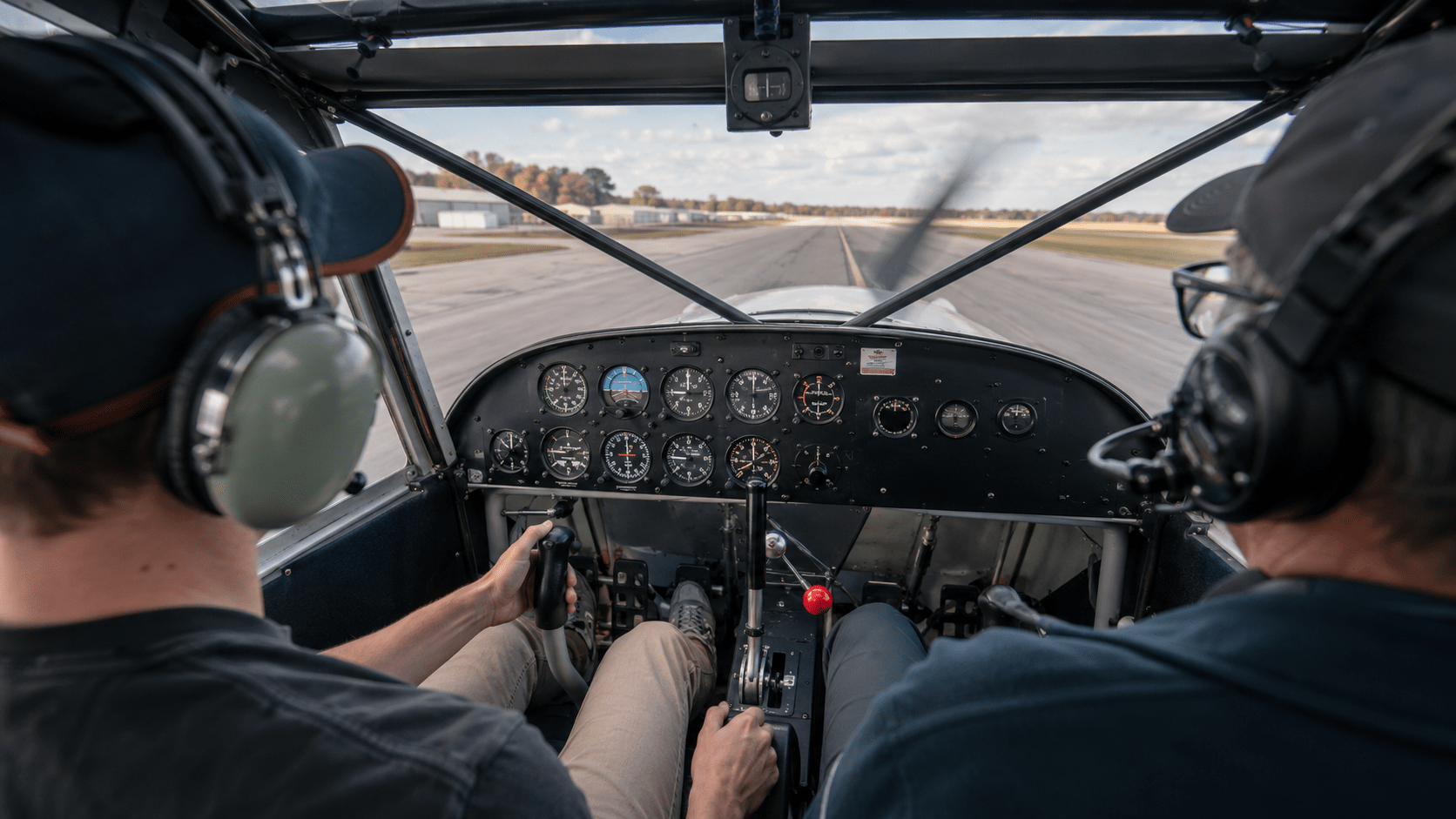
- A tailwheel endorsement is a one-time logbook endorsement issued by an authorized instructor after you complete the required flight training and demonstrate proficiency in tailwheel operations.
- Training is proficiency-based, so the number of flight hours varies with your experience, proficiency, and progress during training.
- Tailwheel endorsement cost depends on factors such as aircraft rental, instructor time, and the number of hours needed to reach proficiency.
- Training includes normal and crosswind takeoffs and landings, wheel landings when appropriate, and go-around procedures.
- Tailwheel training can benefit pilots interested in backcountry flying, classic aircraft, taildragger operations, or developing stronger stick-and-rudder skills.
Is a tailwheel endorsement worth it? For many pilots, yes, especially if you want to develop stronger stick-and-rudder skills or gain experience operating tailwheel aircraft. The value goes beyond the logbook endorsement. You gain hands-on experience managing an aircraft that requires active coordination during taxiing, takeoffs, landings, and ground operations.
What a Tailwheel Endorsement Actually Is
A tailwheel endorsement is not a separate pilot rating. It is a logbook endorsement required under 14 CFR 61.31(i) before a pilot can act as pilot in command of a tailwheel airplane.
To earn the endorsement, you must complete the required flight training with an authorized instructor and demonstrate proficiency in tailwheel operations. Training covers ground handling, takeoffs and landings, crosswind operations, and other tailwheel-specific procedures.
Tailwheel aircraft require active rudder control, particularly during taxiing, takeoffs, and landing rollouts. The training helps you develop the directional control and stick-and-rudder skills needed to operate a tailwheel airplane safely.
Once you demonstrate the required proficiency, your instructor records the endorsement in your logbook.
What the Training Covers
Tailwheel training focuses on the control skills that distinguish tailwheel aircraft from tricycle-gear aircraft. Your training may include:
- Ground Handling: Develop directional control while taxiing, turning, and positioning the aircraft. You will practice active rudder use and tailwheel-specific ground handling.
- Wheel Landings: Practice touching down on the main landing gear before the tailwheel settles onto the runway. Training focuses on airspeed, aircraft attitude, runway alignment, and rudder control.
- Three-Point Landings: Practice landing with the aircraft in the appropriate attitude as the main landing gear and tailwheel approach the runway. Your instructor will help you develop consistent control and coordination.
- Crosswind Work: Practice maintaining runway alignment and directional control in crosswind conditions. This requires precise rudder inputs and careful attention to wind and aircraft alignment.
- Short-Field and Grass-Strip Operations: Learn techniques for operating from shorter and unpaved surfaces when appropriate for the aircraft and training environment. These exercises emphasize planning, aircraft control, and operating within the aircraft’s capabilities.
How Many Hours Does It Take?
There is no fixed number of flight hours required for a tailwheel endorsement. Training is proficiency-based. You must complete enough instruction and practice to demonstrate the required tailwheel skills to your instructor.
Most pilots complete tailwheel training in approximately 5 to 10 hours of flight time, although the actual time varies by pilot.
Several factors can affect how quickly you reach proficiency:
- Previous flight experience: Pilots with more flight experience may adapt to tailwheel operations more quickly.
- Rudder and directional control: Your familiarity with active rudder use can affect your progress.
- Training frequency: Flying regularly can help you retain skills between lessons.
- Aircraft experience: The type of tailwheel aircraft and your familiarity with its handling characteristics can affect training time.
- Takeoffs, landings, and ground handling: Your progress depends on how consistently you perform these tailwheel-specific skills.
- Weather and training conditions: Wind and other conditions can affect which skills your instructor can safely cover during a lesson.
The goal is not to reach a set number of hours. Your instructor determines when you have demonstrated the proficiency needed to safely operate the tailwheel aircraft.
What Does It Cost and What Drives the Cost?
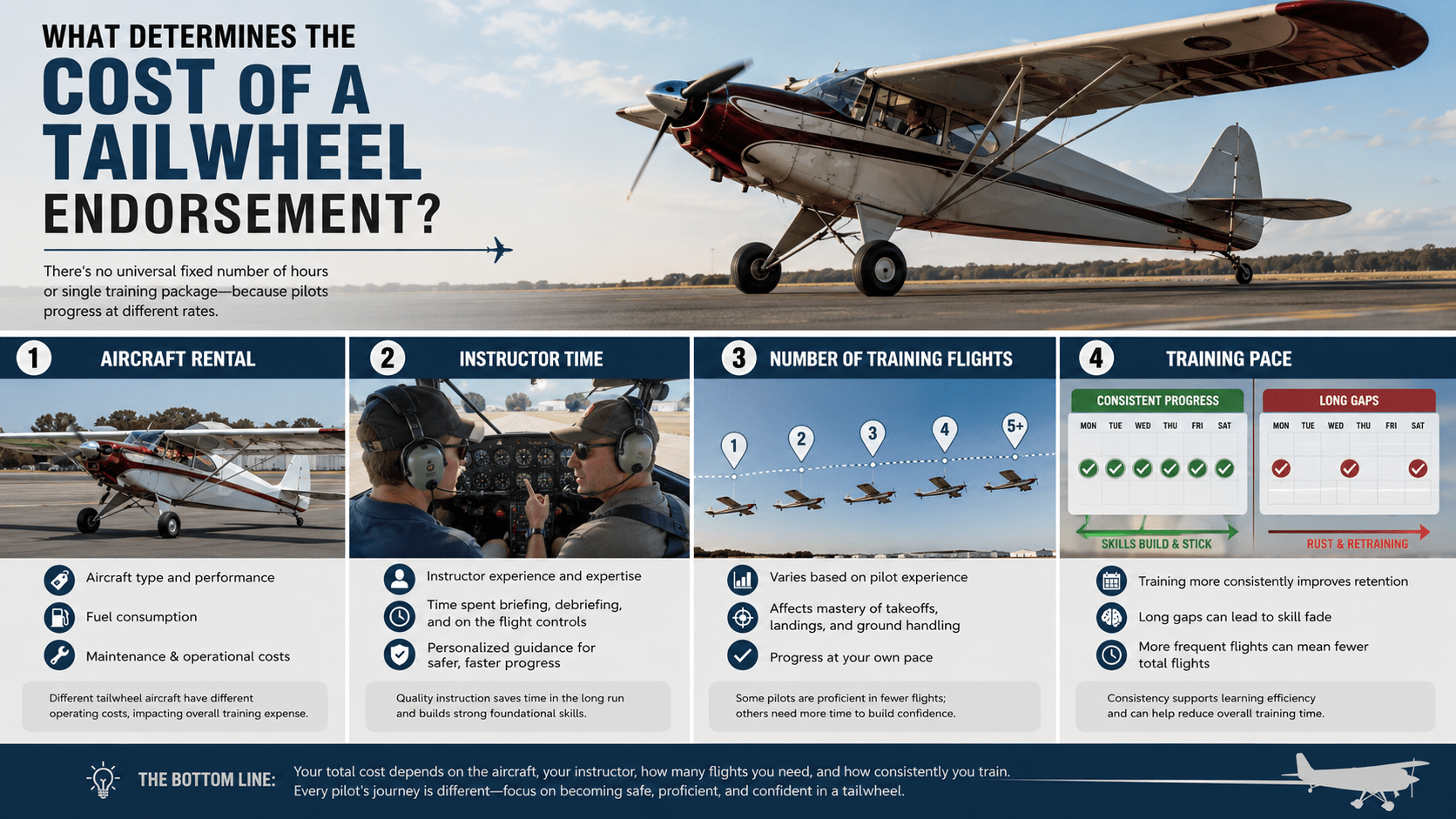
Tailwheel endorsement cost varies because training time differs from one pilot to another.
The main cost drivers are aircraft rental and instructor time. The aircraft you train in affects the rental rate, while the number of lessons you need affects total instructor and aircraft time.
Your training pace also matters. Flying consistently can help you retain the skills you develop between lessons. Longer gaps between flights may require additional practice before you reach proficiency.
When comparing training options, look at the aircraft used, instructor time, and expected training requirements rather than focusing on one price. The total cost depends on how much training you need to demonstrate proficiency.
Ground Loops, and Why Tailwheel Training Is Really About the Rudder
One of the more demanding parts of tailwheel training is maintaining directional control during ground operations. Tailwheel aircraft can become harder to control when a swerve develops during taxiing, takeoff, or the landing roll.
A ground loop is an uncontrolled turn that can occur during taxi, takeoff, or the after-landing roll. The FAA explains that a ground loop can start when a pilot allows an initial swerve to continue.
Rudder control plays a central role in correcting a developing swerve. Tailwheel training gives pilots practice maintaining runway alignment and responding with the appropriate rudder input during takeoffs and landings.
This makes advanced tailwheel training more than a logbook requirement. You develop more precise directional control and learn to recognize and correct deviations before they become larger problems.
What It Actually Does for the Rest of Your Flying
A tailwheel endorsement does more than give you another qualification.
Tailwheel training develops stick-and-rudder skills through repeated practice with directional control, takeoffs, landings, and crosswind operations. These skills can carry over to other airplanes because pilots must manage control inputs and maintain aircraft alignment in many types of flight.
- Directional control: You practice using the rudder to maintain control during taxiing, takeoffs, and landing rollouts.
- Crosswind control: You learn to manage the aircraft’s tendency to weathervane and maintain runway alignment in crosswind conditions.
- Takeoff and landing technique: You practice normal and crosswind takeoffs and landings, wheel landings, and go-around procedures required under 14 CFR 61.31(i).
- Aircraft control: You build experience making timely control inputs while monitoring the aircraft’s direction and movement on the runway.
For pilots who want to sharpen their aircraft-control skills, that practical experience can be one of the strongest reasons to pursue tailwheel training.
What It Unlocks
For some pilots, the value of tailwheel training comes from the types of flying it can support.
Tailwheel experience can be especially relevant to pilots interested in:
- Backcountry and bush flying: Tailwheel skills can support operations from appropriate short or unimproved surfaces when the aircraft and operating conditions allow.
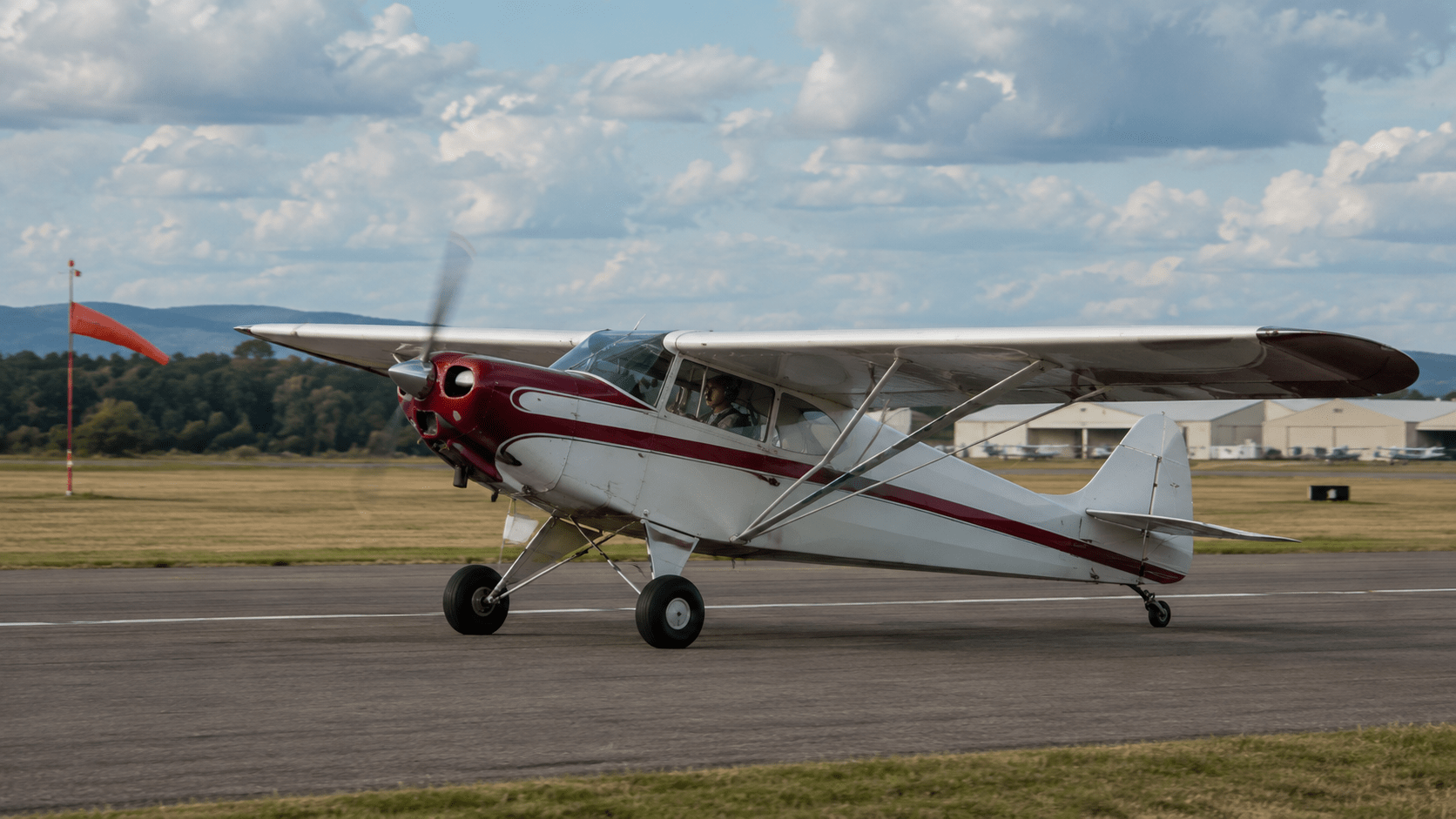
- Classic aircraft: Tailwheel training can prepare pilots for conventional-gear aircraft, including vintage aircraft such as the 1940 Piper J3 Cub.
- Taildragger ownership: Training gives pilots practical experience with the ground handling, takeoffs, and landings required to operate a tailwheel aircraft.
- Vintage and warbird operations: Many vintage and warbird aircraft use tailwheel landing gear. The training and experience required will depend on the specific aircraft.
- Grass and short-field operations: Tailwheel training can include techniques for grass strips and short fields when appropriate for the aircraft and training environment.
Tailwheel training can also complement other aircraft qualifications. If you are building toward other endorsements, you can include tailwheel experience as part of your broader flight training.
For pilots considering a tailwheel aircraft, training can also provide practical experience before making an ownership decision. Insurance requirements vary by insurer and aircraft, so confirm any training or experience requirements with your insurer before purchasing or operating a tailwheel aircraft.
Who It Is Not For
Not every pilot needs a tailwheel endorsement.
If you plan to fly only aircraft that do not require tailwheel privileges, the endorsement may not serve a specific flying goal. It makes more sense when you plan to fly tailwheel aircraft or want training that develops the specific control skills those aircraft require.
A tailwheel endorsement is not a shortcut to advanced pilot training. It focuses on tailwheel operations, including directional control, takeoffs, landings, and ground handling. Pilots still need regular practice and sound judgment to maintain proficiency.
For pilots interested in taildraggers, classic aircraft, backcountry flying, or stronger stick-and-rudder skills, tailwheel training can be a practical addition to their flying.
Choosing Where to Train
The aircraft you train in matters. So does your instructor’s tailwheel experience.
Tailwheel aircraft can have different handling characteristics. Before training, confirm which aircraft you will fly and how the lessons address its specific ground handling, takeoff, and landing characteristics.
Instructor experience matters as well. A qualified instructor should be able to demonstrate proper tailwheel techniques, explain the aircraft’s handling characteristics, and help you develop consistent directional control.
A safety-first training environment should remain the priority. The goal is to build the skills needed to operate a tailwheel aircraft safely, not simply complete the logbook endorsement.
For pilots considering tailwheel training, The Flight Academy uses a restored 1940 Piper J3 Cub. This gives students hands-on experience in a classic tailwheel aircraft while training with an instructor. Start your tailwheel endorsement training with The Flight Academy.
Frequently Asked Questions
Is tailwheel a rating or an endorsement?
Tailwheel is an endorsement, not a separate pilot rating. Under 14 CFR 61.31(i), a pilot must receive the required training and a logbook endorsement before acting as pilot in command of a tailwheel airplane.
How hard is it to get a tailwheel endorsement?
The difficulty varies by pilot and aircraft. Pilots with strong rudder control and aircraft-handling skills may progress faster. Pilots with less experience may need more practice. The training focuses on proficiency in tailwheel operations rather than a fixed number of hours.
Who can give a tailwheel endorsement?
An authorized flight instructor must provide the required training and determine that the pilot has the proficiency needed to act as pilot in command of the tailwheel airplane. FAA guidance identifies 14 CFR 61.31(i) as the regulation governing the additional training and endorsement.
Can a student pilot train in a tailwheel aircraft?
Yes. A student pilot can receive flight training in a tailwheel airplane with a qualified flight instructor. The training must follow the applicable FAA requirements, and the student must meet the requirements that apply to any solo flight before acting as pilot in command.
If you are working toward a private pilot certificate, tailwheel training can complement that training when it matches your goals. The Flight Academy also offers private pilot training for students working toward their private pilot certificate.
How much studying is involved?
Tailwheel training focuses heavily on flight practice, but pilots still need to understand the aircraft’s handling characteristics, operating procedures, and control techniques. Your instructor will cover the knowledge needed for the aircraft you fly. The amount of preparation can vary with your previous experience and familiarity with tailwheel operations.
Does a tailwheel endorsement expire?
The tailwheel endorsement does not have a set expiration period. It does not, however, replace other FAA requirements that may apply to a particular flight. Pilots must still meet applicable currency and qualification requirements and should maintain proficiency in the aircraft they plan to fly.
What aircraft are used for tailwheel training?
Tailwheel training can use different aircraft, and the aircraft’s handling characteristics can affect the training experience. The Flight Academy conducts its tailwheel training in a restored 1940 Piper J3 Cub. You can also see the aircraft in The Flight Academy’s fleet.
CTA
Ready to see whether tailwheel flying fits your goals?
The Flight Academy offers tailwheel training in a restored 1940 Piper J3 Cub. You can build practical tailwheel skills while training in a classic aircraft with a certified flight instructor.
Start Tailwheel Endorsement Training in the 1940 Piper J3 Cub
Disclaimer: This content is provided for informational and educational purposes only and does not constitute flight instruction, operational approval, or regulatory guidance. All flight training is conducted in accordance with FAA regulations and must be completed with a certified flight instructor. Individual training requirements, costs, and timelines may vary.