
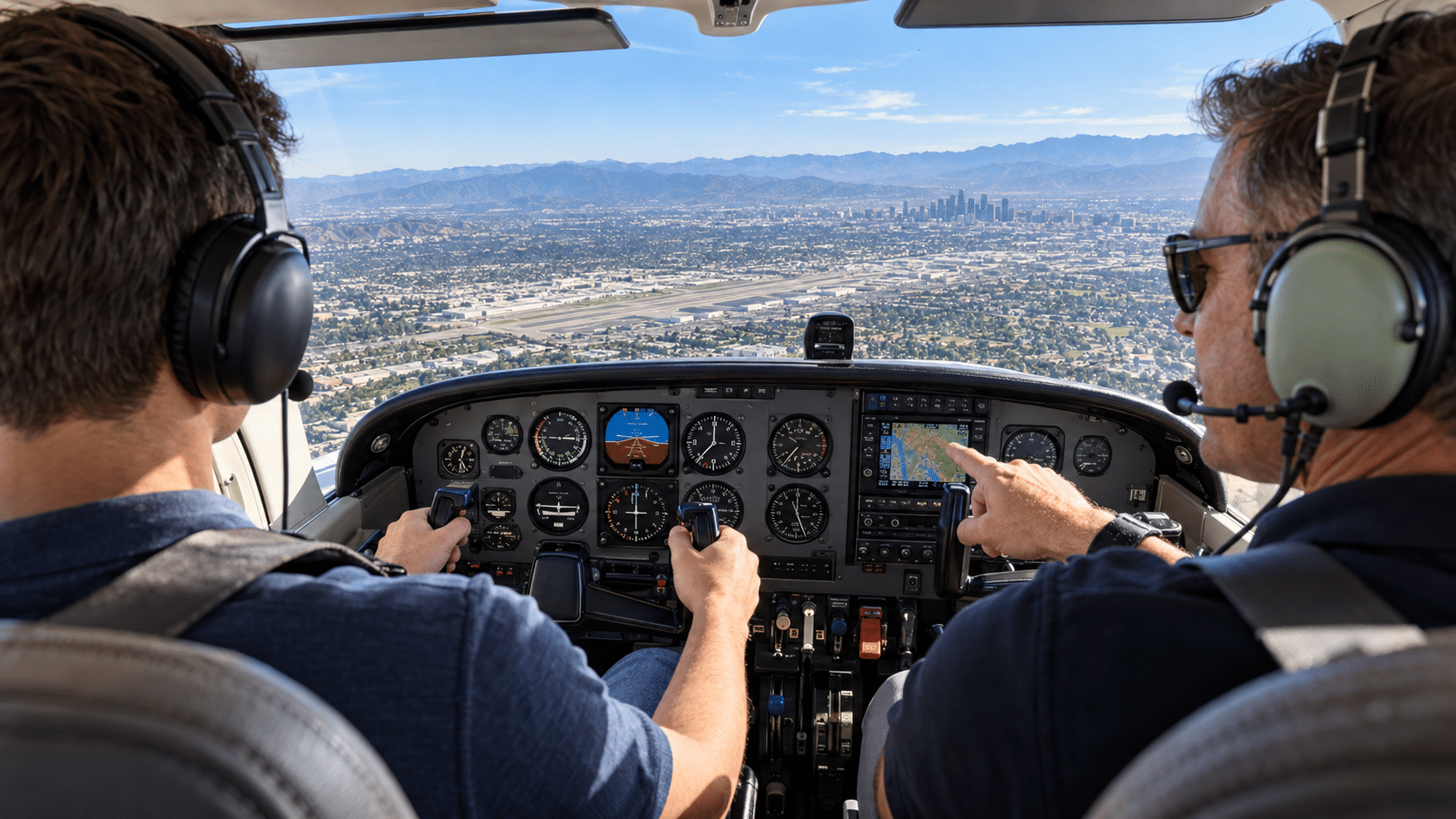
That is why spin training focuses on recognizing the conditions that lead to a spin, experiencing a developed spin under controlled conditions, and practicing the recovery sequence with a certified flight instructor. The goal is not to make pilots comfortable with unnecessary risk. It is to replace uncertainty with a practiced response that can be applied when an aircraft departs controlled flight.
Upset recovery training addresses a broader situation. It teaches pilots how to recognize and return an aircraft to normal flight after an unplanned unusual attitude. At The Flight Academy in Van Nuys, safety-first instruction gives pilots a structured way to build these skills while becoming more confident in their ability to respond.
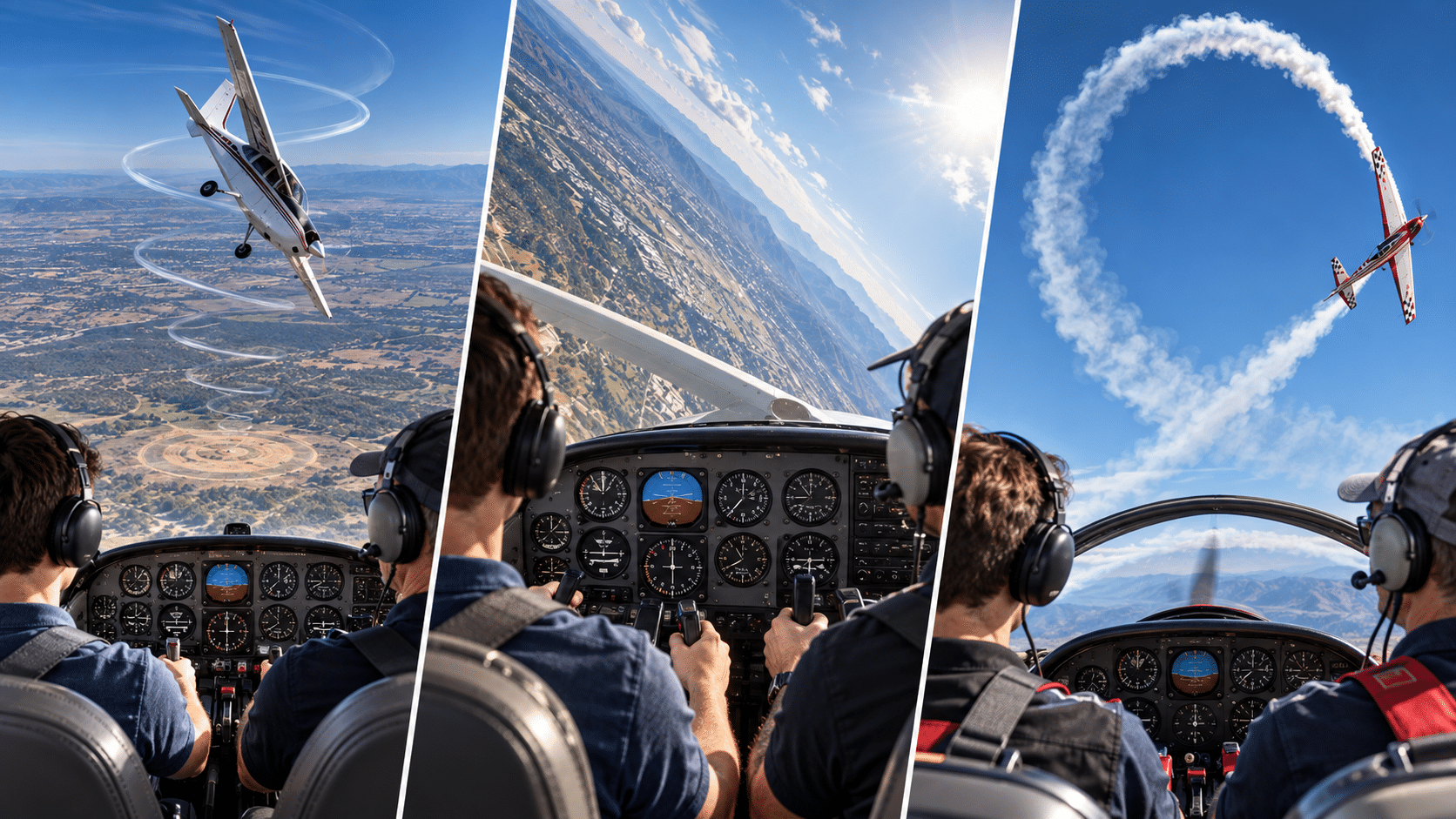
Spin Training, Upset Recovery, and Aerobatic Training: What’s the Difference?
Spin training, upset recovery training, and aerobatic training all involve aircraft control, but they do not have the same purpose. Knowing what each type of training covers helps you choose the right one for your experience and goals.
Spin Training
Spin training focuses on recognizing, entering, and recovering from a developed spin. The training starts with the aerodynamics of stalls and spins, including how a stalled aircraft can develop into a spin. With an instructor supervising the flight, the pilot then practices a controlled spin entry and the appropriate spin recovery procedure.
The purpose is not to perform an impressive maneuver. It is to give the pilot experience recognizing a spin and applying the correct recovery procedure in a controlled training environment.
Upset Recovery Training
Upset recovery training covers a broader range of situations than spin training. It teaches pilots how to recognize and recover from an unintended unusual attitude and return the aircraft to normal flight.
An upset can develop because of distraction, weather, wake turbulence, or an unexpected control input. The pilot must first recognize the aircraft’s attitude and then respond with appropriate aircraft control and energy management rather than relying on an instinctive reaction.
These skills also connect directly to instrument flying, where pilots must be prepared to recognize and recover from unusual attitudes. Pilots who want to build that broader instrument skill set can also explore The Flight Academy’s Instrument Rating course.
Aerobatic Training
Aerobatic training is a separate discipline because the maneuvers are intentional. Pilots deliberately perform maneuvers such as loops and rolls to develop precision, aircraft control, and awareness of the airplane’s attitude.
The Flight Academy’s Pitts Special S-2B is a fully aerobatic aircraft. Its role in this context is important because it shows how aerobatic training differs from spin and upset recovery training. Aerobatics can develop related aircraft-control skills, but a pilot seeking spin training is specifically learning to recognize and recover from a developed spin. A pilot seeking upset recovery training is practicing responses to an unplanned unusual attitude.
The distinction is straightforward:
| Training | Primary focus |
|---|---|
| Spin training | Recognizing, entering, and recovering from a developed spin |
| Upset recovery training | Recovering from an unplanned unusual attitude and returning to normal flight |
| Aerobatic training | Deliberate maneuvering that develops precision and aircraft control |
Why Pilots Avoid This Training—And Why That’s the Reason to Do It
Many pilots feel nervous about intentionally entering a spin. That reaction is normal. Flying requires respect for the aircraft, and recognizing when a maneuver deserves structured instruction is part of becoming a responsible pilot.
The value of spin training is that it replaces uncertainty with experience. Training is structured around a deliberate sequence:
- Briefing: The instructor explains the exercise and reviews the appropriate recovery procedure before the maneuver begins.
- Aircraft: Training takes place in an aircraft approved for the training being conducted.
- Altitude: Adequate altitude is established before beginning the exercise.
- Supervision: A certified flight instructor demonstrates and supervises the exercise.
- Recovery: The pilot practices the appropriate spin recovery procedure rather than relying on an unfamiliar reaction.
The goal is not to make pilots comfortable with unnecessary risk. It is to develop a practiced response. A pilot who has experienced a developed spin under controlled conditions has a specific recovery procedure to draw on if an unexpected situation arises.
That experience helps replace uncertainty with a clearer understanding of the aircraft and the recovery process.
Who Needs Spin Training?
The need for spin training depends on the pilot’s certificate, training goals, and aircraft experience. Some pilots complete it because it is required for a flight instructor certificate. Others pursue it as additional proficiency training.
Flight instructor applicants: Flight instructor applicants: Pilots pursuing a Certified Flight Instructor (CFI) certificate with an airplane rating must complete the applicable spin training and endorsement requirements. The training prepares future instructors to demonstrate spin awareness and recovery procedures during instruction. Pilots pursuing this certificate can learn more through The Flight Academy’s Certified Flight Instructor (CFI) course.
Private pilots: A private pilot certificate includes stall and spin awareness in the required training. Additional spin training remains an elective for pilots who want more experience with aircraft behavior, spin entry, and spin recovery. This provides a focused opportunity to practice these skills with a flight instructor after earning the certificate.
Commercial pilots: Commercial pilots may pursue spin training or upset recovery training as additional proficiency work, particularly when preparing for flight instructor training or professional flying. The purpose is to strengthen aircraft-control skills beyond the requirements of the commercial certificate itself.
Pilots transitioning to different aircraft: Stall characteristics vary between aircraft. Pilots moving into an aircraft with unfamiliar handling characteristics should complete appropriate transition training. Additional spin awareness and upset recovery practice provides focused experience with aircraft control under instructor supervision.
What Happens During Spin Training?
One of the first questions pilots ask is: What actually happens during spin training?
The lesson follows a structured progression. The instructor first covers the aerodynamics and recovery procedure on the ground, then moves through stall recognition, spin entry, and recovery in an aircraft approved for the training.
1. Ground briefing
Before the engine starts, the instructor reviews the aerodynamic principles behind stalls and spins. The briefing covers:
- Stall development: How an aircraft reaches a stall and the conditions that contribute to a spin.
- Aircraft coordination: Why coordinated and uncoordinated flight matters during stall and spin entry.
- Operating limitations: The aircraft’s approved operating category and limitations for intentional spins.
- Recovery procedure: The control inputs used during spin recovery and the reason for each step.
This briefing gives the pilot a clear understanding of what to expect before the flight portion begins.
2. Aircraft preparation
Not every airplane is approved for intentional spins. The training aircraft must be authorized for the maneuver and operated within its limitations and manufacturer guidance.
Before departure, the instructor reviews the relevant safety procedures and cockpit coordination. This establishes the conditions for a controlled training exercise.
3. Training altitude
Once airborne, the instructor establishes an appropriate altitude before beginning the exercises. The altitude provides sufficient room for the instructor to demonstrate the maneuver, complete the recovery, and return the aircraft to normal flight.
4. Stall recognition and spin entry
The lesson does not begin with a developed spin. Students first practice recognizing the aircraft’s response as it approaches a stall. The instructor focuses on specific cues, including:
- Decreasing airspeed
- Changes in control effectiveness
- Buffet or other aerodynamic warning signs
- Rudder coordination and aircraft attitude
Recognizing these cues gives pilots a better understanding of how a stall develops and what happens as aircraft control deteriorates.
5. Developed spin and recovery
After the instructor determines that the pilot is ready, the exercise progresses to an intentional developed spin. The instructor demonstrates the maneuver and points out the aircraft’s rotation, attitude, and control response.
The pilot then practices the appropriate recovery procedure under direct instructor supervision. The emphasis is on applying the recovery sequence correctly and developing a response through actual practice rather than relying only on a memorized procedure.
6. Debrief and proficiency review
After landing, the instructor reviews the flight with the pilot. The debrief addresses what the pilot experienced, how well the recovery procedure was applied, and which skills need additional practice.
The objective is not aerobatic performance. It is stronger stall and spin awareness, better recognition of aircraft behavior, and a practiced response to a developed spin.
Pilots looking for structured instruction in both areas can explore The Flight Academy’s Spin Awareness & Upset Recovery Training course to review the training available at Van Nuys Airport.
Upset Recovery: Handling What You Didn’t Plan For
Unusual attitudes often develop from situations a pilot did not intend to create. Distraction, turbulence, wake turbulence, and changing weather may all affect the aircraft’s attitude or flight path.
A pilot may spend too long looking inside the cockpit. Turbulence may disrupt the aircraft during a climb. Wake turbulence may disturb the aircraft after departure. An unexpected weather correction may also require a change in pitch or bank.
That is where upset recovery training focuses on practical aircraft-control skills. Pilots practice how to:
- Recognize the upset: Identify changes in pitch, bank, and flight path.
- Maintain aircraft control: Establish control before addressing other tasks.
- Manage pitch, bank, and power: Use appropriate control inputs for the aircraft’s attitude and energy state.
- Return to normal flight: Recover from the unusual attitude and reestablish a stabilized flight condition.
The purpose is to develop a deliberate response instead of relying on an immediate instinctive reaction. With structured practice, pilots gain experience recognizing an unusual attitude and applying the appropriate aircraft-control inputs.
These skills also relate to instrument rating training, where pilots practice unusual-attitude recovery without outside visual references. Pilots interested in developing these skills can explore The Flight Academy’s Instrument Rating (IR) course.
How Long Does Spin Training Take and What Does It Cost?
There is no single number of hours for spin training. The time required depends on the pilot’s experience, proficiency, and training objective. A pilot preparing for the flight instructor requirement has different training needs from a certificated pilot seeking additional proficiency.
A typical training block includes both ground instruction and flight training. Before the flight, the instructor reviews stall and spin aerodynamics, aircraft limitations, and the applicable recovery procedure. Flight time then depends on how much practice the pilot needs to demonstrate the required skills.
The overall cost depends on:
- Aircraft time: Flight hours required for the training.
- Ground instruction: Time spent preparing for the flight exercises.
- Training objective: Required instructor training versus elective proficiency work.
- Pilot proficiency: The amount of practice needed to perform the recovery procedure correctly and consistently.
The priority is proficiency, not rushing through a set number of hours. Pilots should finish the training with a practiced response to a developed spin and a clear understanding of the aircraft’s behavior during the exercise.
Why Train in Van Nuys?
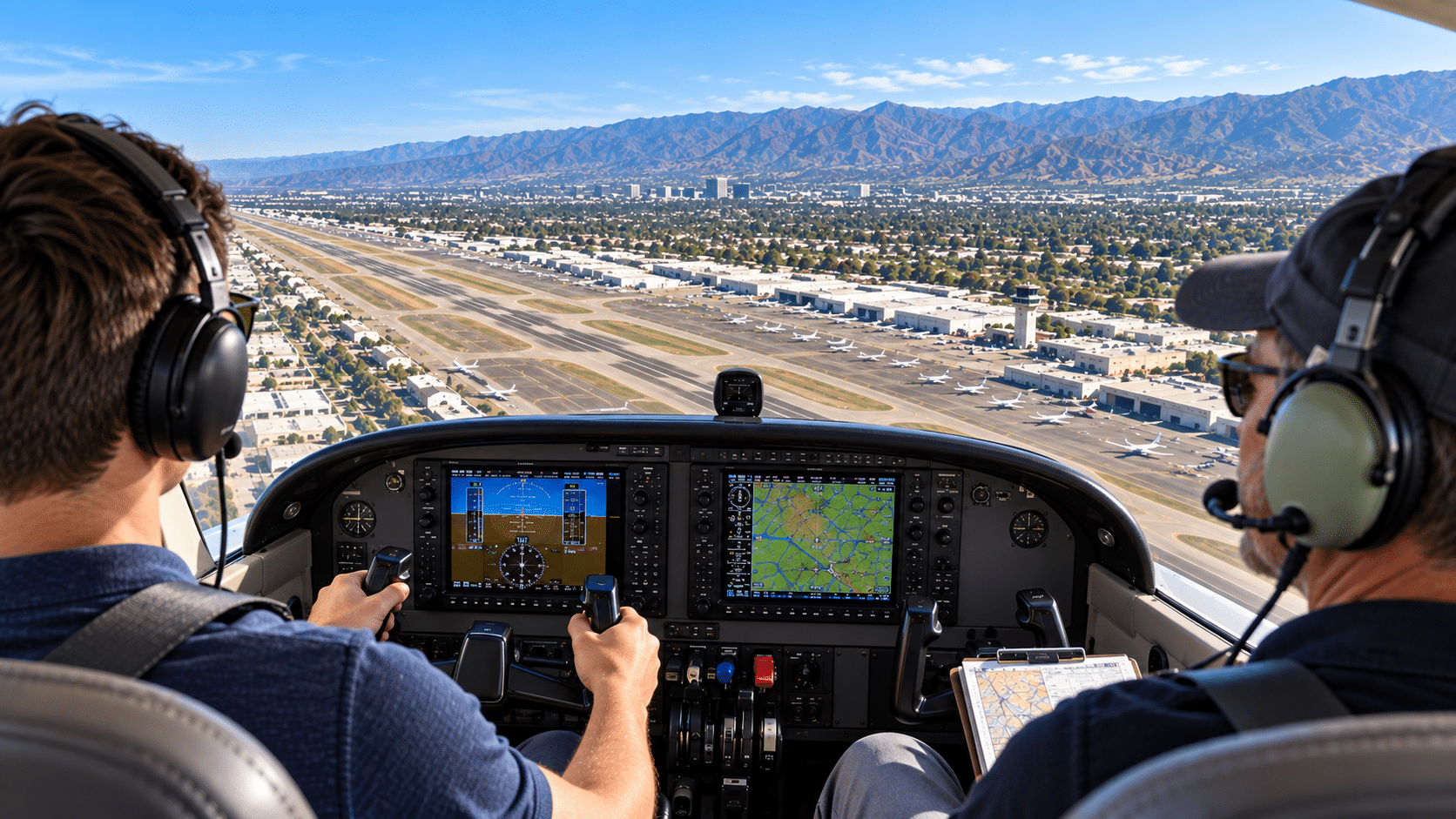
For pilots in the San Fernando Valley and greater Los Angeles area, Van Nuys Airport provides a convenient base for specialized flight training.
Spin and upset recovery exercises require clear air and good visibility. Training at Van Nuys gives local pilots access to these exercises without traveling outside the Los Angeles area.
The Flight Academy is a family-owned, full-service Part 61 flight school based at Van Nuys Airport. Its location provides access to nearby training areas for practicing aircraft-control skills under the supervision of a certified flight instructor.
For pilots seeking spin training in Van Nuys, the location keeps specialized instruction close to home while supporting focused, instructor-supervised training.
Frequently Asked Questions
Is spin training required for a private pilot certificate?
No. Private pilot training includes stall and spin awareness, but intentional spin training is not generally required for the private pilot certificate. Some pilots pursue additional spin training after certification to build experience with spin entry and spin recovery.
Do you need spin training to become a flight instructor?
Yes, for applicable flight instructor applicants. FAA guidance requires the spin training endorsement for flight instructor airplane and flight instructor glider applicants. The training covers stall awareness, spin entry, spins, and spin recovery procedures.
Is spin training dangerous?
The training is deliberately structured around the aircraft’s approved operating limitations. Spin training is conducted at an appropriate altitude, in an aircraft approved for spins, with a certified flight instructor. FAA guidance also calls for the aircraft’s AFM or POH to be consulted for the appropriate spin entry and recovery procedures.
How many hours does spin training take?
There is no fixed number of hours for spin training. Training time depends on the pilot’s experience, proficiency, and training objective. The lesson includes ground and flight instruction, with additional practice based on the pilot’s progress. The focus is demonstrating the required skills and a repeatable spin recovery response.
What is the difference between spin training and upset recovery training?
Spin training focuses on recognizing, entering, and recovering from a developed spin. Upset recovery training is broader, covering recovery from unplanned unusual attitudes that may result from distraction, turbulence, weather, wake turbulence, or other situations.
Can any aircraft be used for spin training?
No. Intentional spin training must be conducted in an aircraft approved for spins and within its published operating limitations. The FAA specifically states that spin training must use an aircraft approved for spins, with the aircraft’s AFM or POH consulted for the appropriate entry and recovery techniques.
Build Confidence Through Professional Spin Training
Spin training gives pilots structured experience recognizing, entering, and recovering from a developed spin under instructor supervision. For pilots preparing for a flight instructor certificate, the training also addresses the applicable FAA spin training and endorsement requirements.
Whether you are pursuing your CFI certificate, building proficiency after earning your private pilot certificate, or strengthening your aircraft-control skills, Spin Awareness & Upset Recovery Training course provides focused instruction in Van Nuys.
This content is provided for informational and educational purposes only and does not constitute flight instruction, operational approval, or regulatory guidance. All flight training is conducted in accordance with FAA regulations and must be completed with a certified flight instructor. Individual training requirements, costs, and timelines may vary.