
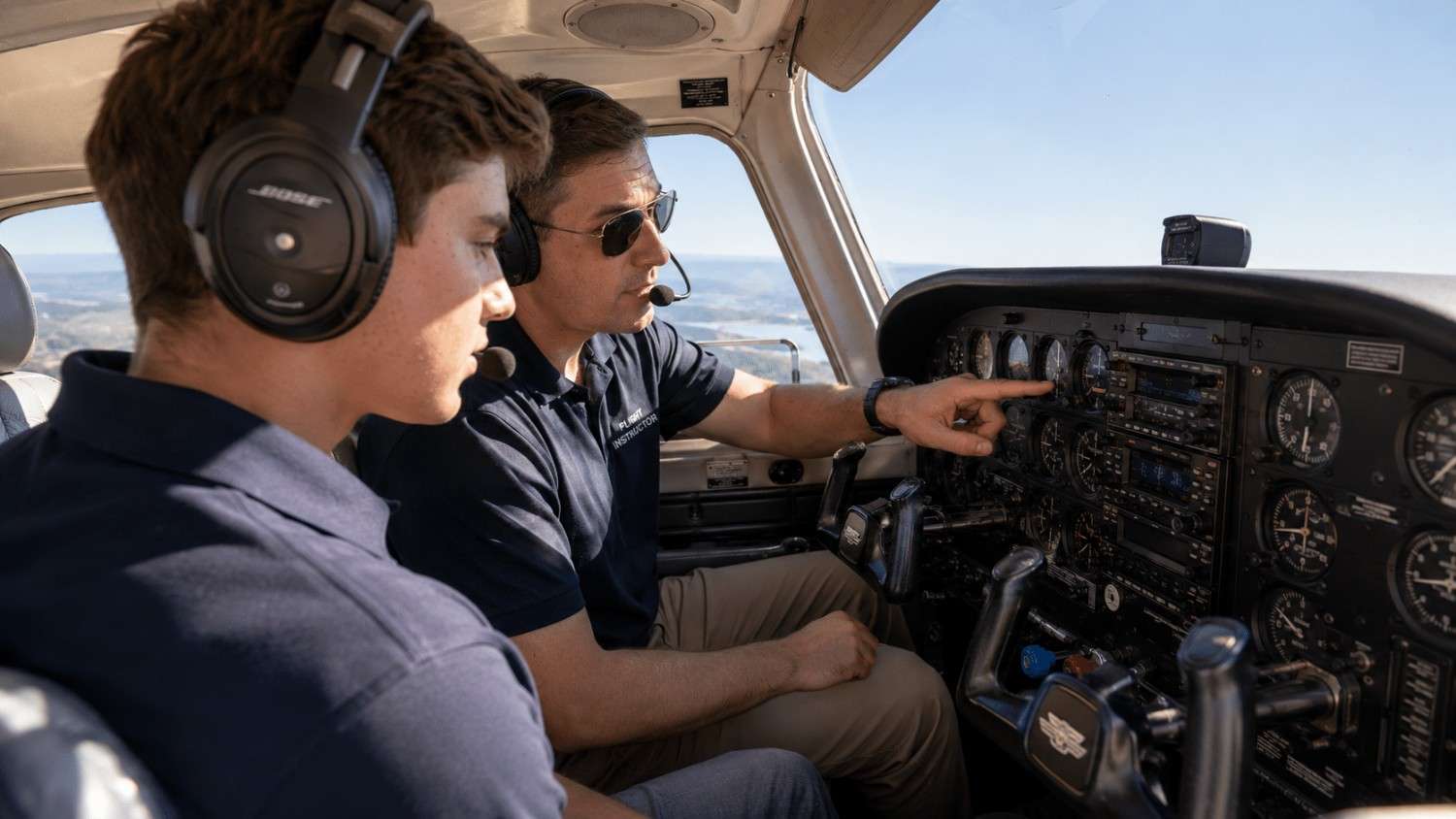
A certified flight instructor (CFI) is an FAA-certificated pilot authorized to teach others how to fly and endorse them for key milestones like solo flights, knowledge tests, and practical exams. If you’ve been asking what is a CFI or what is a certified flight instructor, the simplest answer is this: it’s the person responsible for guiding you from your first lesson through safe, FAA-compliant pilot training.
At The Flight Academy in Van Nuys, students work closely with FAA-certified flight instructors throughout their training progression. For new students, that means having a knowledgeable instructor at every stage. For Commercial Pilots, becoming a certified flight instructor is often the next step after earning a CPL and building experience toward long-term aviation goals. In this guide, we’ll explain what certified flight instructors do, the certification requirements, the differences between CFI, CFII, and MEI certificates, and what to look for when choosing an instructor in the Los Angeles area.
What a CFI Actually Does (Day-to-Day)
A certified flight instructor’s job centers on teaching, evaluating, and mentoring pilots through every stage of training. From student pilots learning basic aircraft control to Commercial Pilots refining advanced maneuvers, certified flight instructors guide the training process from start to finish.
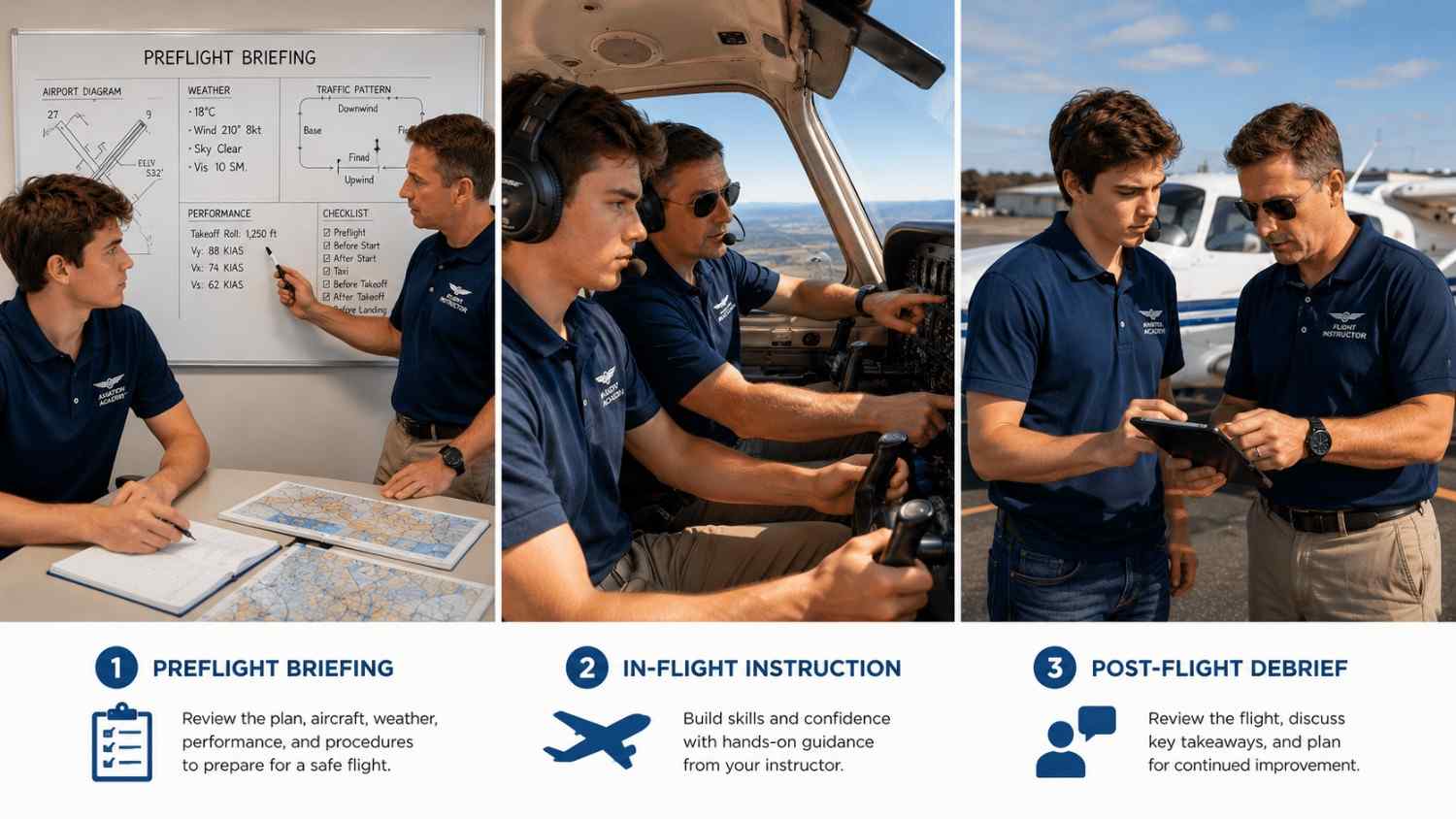
Most lessons begin with a preflight briefing, where the instructor reviews the objective, procedures, and safety considerations for the flight. In the airplane, the CFI demonstrates maneuvers, evaluates performance, and provides real-time coaching. After landing, students complete a post-flight debrief focused on correcting errors and building consistency over time.
CFIs also endorse students for important FAA milestones, including solo flights, knowledge tests, cross-country flights, checkrides, and flight reviews under 14 CFR 61.56. Many FAA-certified flight instructors also conduct ground instruction, simulator or AATD sessions, instrument proficiency checks where qualified, and recurrent training for active pilots.
A typical day often includes 4–8 hours of instruction split between multiple students and aircraft. While flying is part of the role, the core responsibility is teaching and mentorship, not simply logging flight time.
Why CFIs Matter to Every Pilot’s Career
Almost every pilot’s first flight hours are flown next to a certified flight instructor. The instructor’s habits, judgment, and standards often shape how that pilot approaches flying throughout the rest of their career.
A strong CFI does more than teach maneuvers or prepare students for checkrides. They teach the judgment behind procedures, including aeronautical decision-making, risk management, and weather awareness. Those skills become part of how pilots evaluate situations both in training and later in real-world flying.
If you’re researching what is a CFI or what is a CFI in aviation, the role is far more than logging flight time or demonstrating maneuvers. Certified flight instructors help build the safety mindset and discipline behind good decision-making.
For Commercial Pilots, becoming a certified flight instructor is also the most common path toward airline minimums. Most pilots build the gap between roughly 250 hours at the Commercial Pilot level and the 1,500 hours required for an Airline Transport Pilot certificate by working as a CFI and instructing newer students.
For many career-track pilots, this stage begins shortly after reviewing a Commercial Pilot License cost guide and planning the transition from training into professional flight experience.
CFI Requirements: Eligibility and Prerequisites
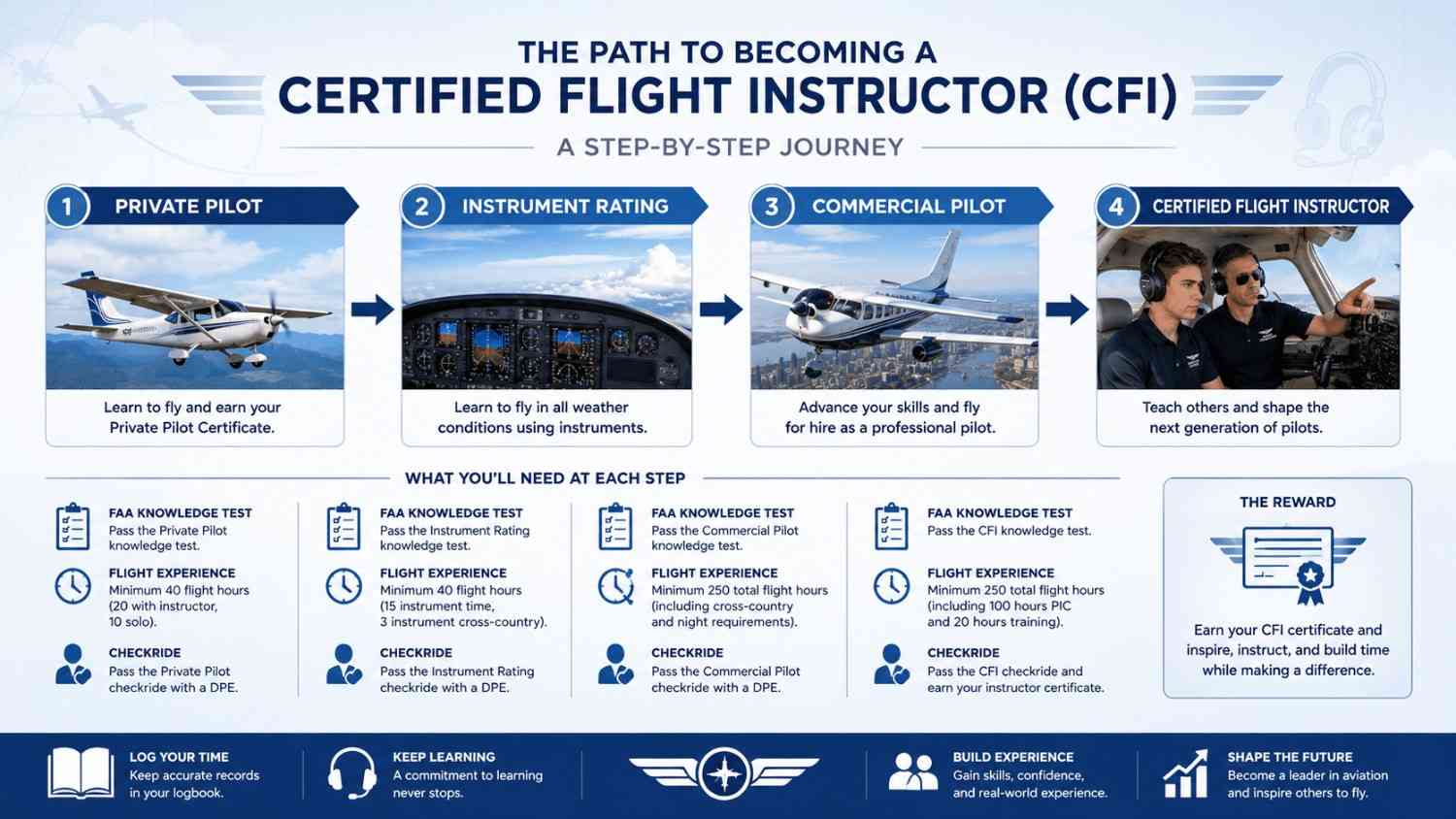
If you’re considering this path, it’s important to understand the certified flight instructor requirements outlined under 14 CFR 61.183 — CFI eligibility.
To qualify, you must:
- Be at least 18 years old
- Read, speak, write, and understand English
- Hold a Commercial Pilot Certificate or ATP Certificate with an Instrument Rating in the category and class sought
- Hold at least a current third-class FAA medical certificate
Applicants must also pass two FAA knowledge tests:
- Fundamentals of Instructing (FOI)
- Flight Instructor Airplane (FIA)
Before the checkride, applicants receive logbook endorsements confirming readiness for both the knowledge and practical tests. The final step is passing the CFI practical test with an FAA inspector or Designated Pilot Examiner (DPE) using the Flight Instructor Airplane ACS standards.
From a flight-time standpoint, the 250 total hours already required for the Commercial Pilot Certificate serve as the practical baseline. No additional FAA minimum flight hours are required specifically for the CFI certificate, although most applicants spend significant additional dual instruction time learning how to teach effectively from the right seat.
CFI vs CFII vs MEI: Three Different Instructor Privileges
As pilots move into instruction, they’ll usually encounter three instructor certificates or ratings: CFI, CFII, and MEI. Each expands what a certified flight instructor is authorized to teach.
- CFI (Certified Flight Instructor): The initial instructor certificate that authorizes teaching Student, Private, and Commercial pilots in single-engine airplanes. For many pilots, this is considered the most demanding instructor checkride because it evaluates teaching ability as much as flight proficiency.
- CFII (Certified Flight Instructor – Instrument): An add-on instructor rating that allows a CFI to teach Instrument Rating students and conduct Instrument Proficiency Checks (IPCs).
- MEI (Multi-Engine Instructor): An instructor rating that authorizes teaching multi-engine operations and the multi-engine portion of Commercial Pilot training.
Most career-track certified flight instructors follow the progression of CFI → CFII → MEI. Once pilots earn the initial FAA certified flight instructor certificate, the additional instructor ratings are typically more focused and faster to complete.
The Training Path: From Commercial Pilot to CFI
For Commercial Pilots, the path toward becoming a certified flight instructor shifts heavily from flying skills to teaching ability and communication.
Most applicants begin by passing two FAA knowledge tests:
- Fundamentals of Instructing (FOI)
- Flight Instructor Airplane (FIA)
Pilots entering instructor training often revisit foundational aeronautical knowledge through a Private Pilot Written Exam guide before moving into advanced instructional concepts and ACS preparation.
From there, applicants build lesson plans for every maneuver and ground subject in the FAA Flight Instructor ACS. Most compile a full binder used throughout training and checkride preparation.
Flight training also changes significantly at this stage. Instead of simply performing maneuvers, CFI applicants practice teaching from the right seat while learning how to demonstrate, explain, and critique each maneuver clearly in real time.
Once applicants receive their logbook endorsements, they schedule the practical test with an FAA inspector or Designated Pilot Examiner (DPE). Ground training is usually heavier than flight training during this phase, with many programs built around 60+ hours of ground instruction and roughly 15–20 flight hours focused on instructional techniques and right-seat proficiency.
The CFI checkride often lasts 6–8 hours between the oral and flight portions because it evaluates the applicant’s ability to teach, not just operate the aircraft.
Renewing the CFI Certificate
Once you earn the certificate, staying current becomes part of the responsibility of being a certified flight instructor. Under 14 CFR 61.197, a flight instructor certificate must be renewed every 24 months.
Renewal options include:
- Completing an FAA-approved Flight Instructor Refresher Course (FIRC), either online or in person, typically around 16 hours
- Maintaining at least an 80% student pass rate for practical tests over the previous 24 months
- Passing an FAA practical test for renewal or an additional instructor rating
- Serving as a check airman or military instructor with the U.S. Armed Forces
Most active FAA certified flight instructors renew through a FIRC because it is the most common and straightforward renewal path. Staying current helps ensure instructors continue teaching with updated FAA standards, procedures, and safety practices.
What to Look for in a CFI
Choosing the right certified flight instructor can have a major impact on both training quality and long-term confidence in the airplane.
- Teaching style fit: Different students learn differently. Some prefer highly structured instruction, while others benefit from discussion-based coaching and repetition. A discovery flight or introductory ground session is often the best way to evaluate compatibility.
- Currency and experience mix: A senior instructor may bring years of operational experience, while newer FAA-certified flight instructors are often closely aligned with current ACS standards and checkride expectations. Both can be excellent depending on your learning style.
- Aircraft and instructor consistency: Training with the same instructor and aircraft on a steady schedule usually helps reduce delays and unnecessary repetition.
- Communication: Strong certified flight instructors explain the reasoning behind procedures, not just the steps themselves. Students should leave lessons understanding both the maneuver and the decision-making behind it.
- Safety culture: Look for flight schools with FAA certified instructors who teach beyond minimum standards, especially in areas like risk management, weather judgment, and conservative go/no-go decision-making.
At The Flight Academy, instructor continuity is a major focus. The same instructor teams often guide students from Discovery Flight through Commercial training at Van Nuys Airport. You can also meet our FAA-certified instructors through the /our-team/ page before starting training.
Train with FAA-Certified Flight Instructors at The Flight Academy
At The Flight Academy, we provide one-on-one instruction with FAA-certified flight instructors at Van Nuys Airport (KVNY). As a family-owned flight school founded by Sam and Moe Tarakji, our training approach centers on consistency, professionalism, and teaching beyond minimum FAA standards.
Our instructor team guides students through every stage of training, from Discovery Flight and Private Pilot training through Instrument, Commercial, and instructor-level certificates. Many students continue working with the same instructors throughout their progression, helping create continuity and familiarity during training.
Curious which CFI you’d train with? Meet our team, book a discovery flight, or contact The Flight Academy in Van Nuys.
Frequently Asked Questions
What does CFI stand for in aviation?
CFI stands for Certified Flight Instructor. A certified flight instructor is an FAA-certificated pilot authorized to provide flight training and endorse students for solo flights, knowledge tests, and practical exams.
What are the requirements to become a Certified Flight Instructor?
Under 14 CFR 61.183, applicants must be at least 18 years old, hold a Commercial Pilot Certificate or ATP Certificate with an Instrument Rating, pass the FOI and FIA knowledge tests, receive instructor endorsements, and complete a practical test.
What’s the difference between a CFI, CFII, and MEI?
A CFI teaches Private and Commercial Pilot training, a CFII teaches Instrument Rating students and instrument procedures, and an MEI teaches multi-engine operations. CFII and MEI are add-on instructor ratings to the initial certified flight instructor certificate.
How long does it take to become a CFI after Commercial Pilot?
Most pilots begin CFI training after reaching the practical baseline of roughly 250 total flight hours required for the Commercial Pilot Certificate. Training is typically ground-heavy, followed by right-seat flight instruction and a multi-hour oral and flight practical test.
How often does a CFI certificate need to be renewed?
An FAA certified flight instructor certificate must be renewed every 24 months under 14 CFR 61.197. Many instructors complete a Flight Instructor Refresher Course (FIRC) to maintain currency.
What should I look for when choosing a flight instructor?
Look for clear communication, strong safety habits, and a teaching style that matches how you learn. Many students also benefit from training consistently with the same instructor and aircraft throughout their progression.
This content is provided for informational and educational purposes only and does not constitute flight instruction, operational approval, or regulatory guidance. All flight training is conducted in accordance with FAA regulations and must be completed with a certified flight instructor. Individual training requirements, costs, and timelines may vary.