
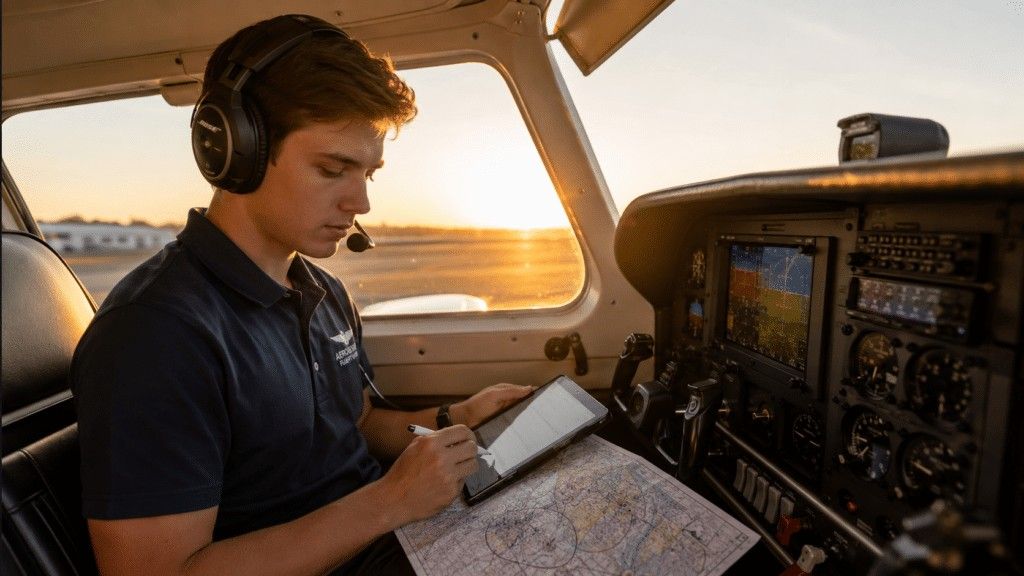
If you’re starting flight training, the private pilot written exam is one of the first major milestones you’ll encounter. You may also hear it called the Private Pilot Knowledge Test, the private pilot exam, or simply the PPL exam — all refer to the same FAA knowledge test required for a Private Pilot License. Alongside the checkride, it’s one of the two major steps in the FAA certification process.
For many new students, the written test is also one of the biggest unknowns. How difficult is it? When should you take it? What’s the best way to prepare? At The Flight Academy in Van Nuys, we help students across Los Angeles and the San Fernando Valley approach the FAA PPL written test with a structured, manageable study plan. With the right preparation, this is a very passable exam, and this guide explains what’s on it, how it’s scored, when to take it, and how students typically prepare for it.

What Is the FAA Private Pilot Written Exam?
The private pilot written exam, officially called the FAA Private Pilot Knowledge Test, is a computer-based multiple-choice exam administered through FAA-authorized PSI testing centers.
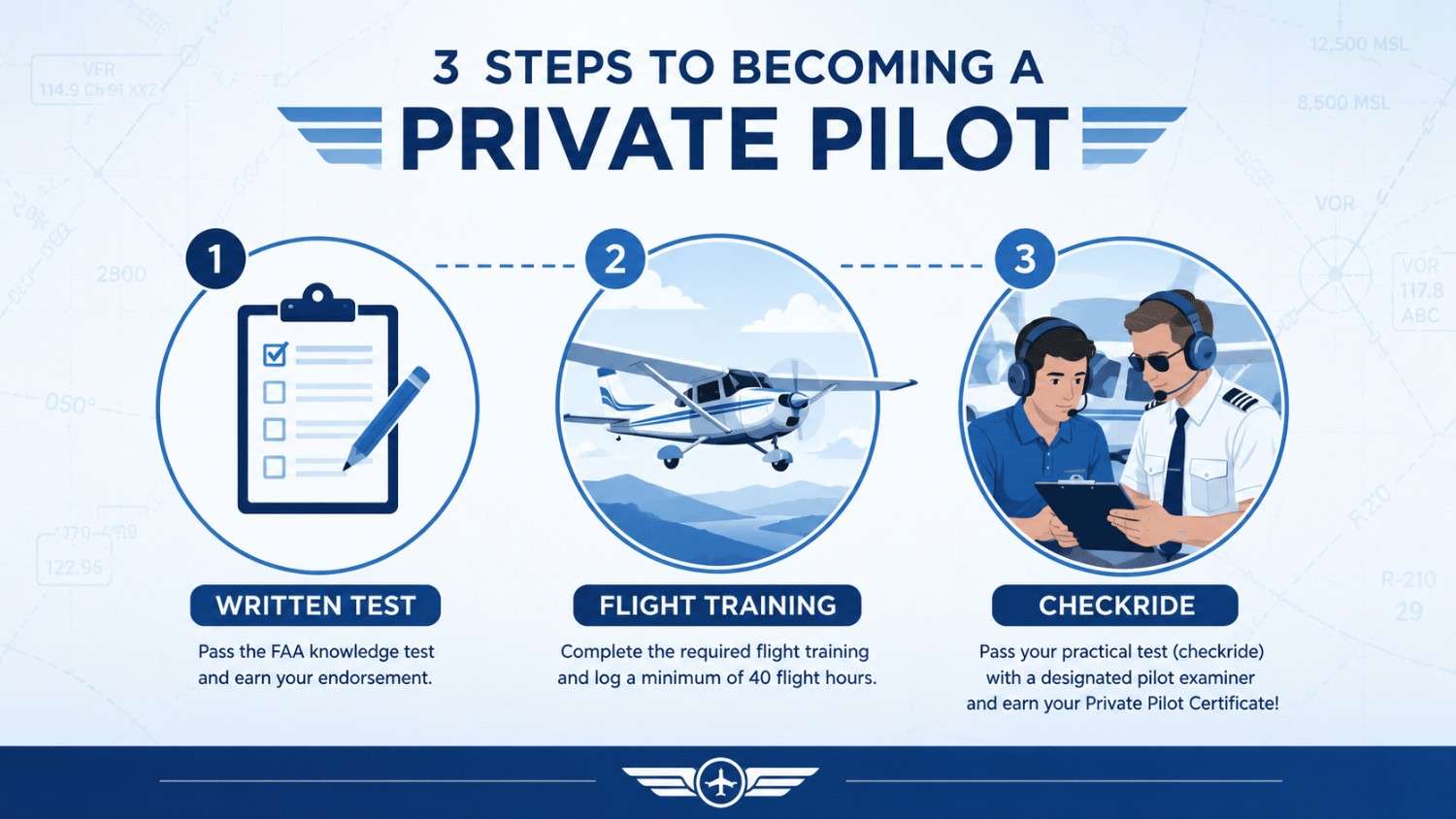
It’s one of three FAA requirements for earning a Private Pilot License:
- The written knowledge test
- Required flight training hours
- The checkride (practical test)
The material covered on the FAA PPL written test comes directly from 14 CFR 61.105, which outlines the aeronautical knowledge areas required for Private Pilot certification. Topics include weather, regulations, navigation, aircraft systems, aerodynamics, and flight planning.
Whether you hear it called the PPL written test or the written test for private pilots license, they all refer to the same FAA knowledge exam. After completion, you’ll receive an Airman Written Test Report on AC Form 8080-2, or the equivalent digital test report, showing your score and any deficient subject areas identified during testing.
Exam Structure: Questions, Time, and Scoring
Once you understand what the test covers, the next step is understanding how the exam itself works. For many students, knowing the format ahead of time removes a lot of the stress around the testing process.
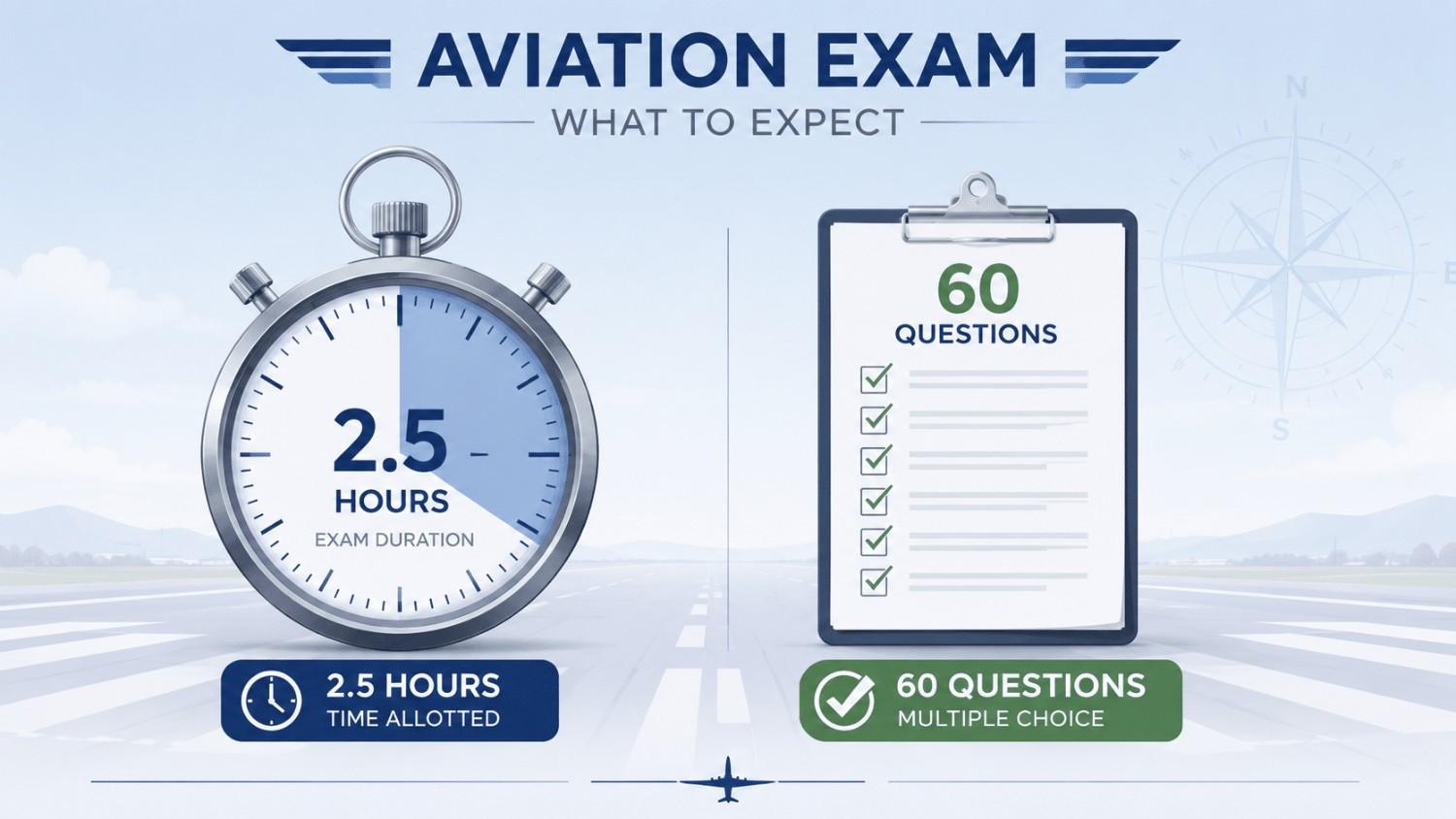
The private pilot exam includes:
- 60 multiple-choice questions
- 150 minutes (2 hours and 30 minutes) total testing time
- A minimum passing score of 70%
For students asking how many questions are on the FAA written exam, the answer is 60. In practical terms, you can miss up to 18 questions and still pass the PPL exam.
Most students finish well before the time limit, especially after completing timed practice tests during private pilot written exam prep. Your score is provided immediately after submission, along with a test report showing your raw score and any deficient subject-area codes.
Those subject codes matter, even on a passing private pilot license exam. Instructors and examiners often use them to identify weak areas before the checkride oral portion, making them a useful study tool instead of just a pass/fail report.
Topics Covered on the Written Exam
Once you understand the structure of the test, the next step is knowing what subject areas actually appear on the exam.
The private pilot written exam is based on the aeronautical knowledge requirements outlined in 14 CFR 61.105. The test focuses not only on memorization, but also on applying knowledge to real-world flight situations and decision-making.
You can expect questions covering topics such as:
- Federal Aviation Regulations (FARs) related to private pilot operations and limitations
- Accident reporting requirements under NTSB Part 830
- Aeronautical charts, including sectionals, terminal area charts, and the Chart Supplement
- Radio communication procedures
- Weather theory, METARs, TAFs, and forecast interpretation
- Safe aircraft operation and collision avoidance
- Density altitude and aircraft performance
- Weight and balance calculations
- Aerodynamics, aircraft systems, and powerplants
- Stall awareness, spin entry, spins, and spin recovery
- Aeronautical decision-making (ADM) and judgment
- Preflight planning requirements under FAR 91.103
A major part of successful pilot exam preparation is understanding why an answer is correct, not just memorizing it. That deeper understanding becomes especially important later during the oral portion of the private pilot exam and throughout real-world flight training.
Eligibility and the Instructor Endorsement
Before scheduling your private pilot license exam, there are a few FAA requirements you’ll need to meet.
You must:
- Be at least 15 years old to take the test
- Present a valid photo ID with your signature and home address
- Receive an instructor endorsement confirming you’re prepared for the exam
That endorsement is required before taking the FAA PPL written test. It confirms that you’ve completed the necessary ground instruction and are ready to sit for the knowledge exam.
Acceptable forms of endorsement include:
- A logbook entry from your instructor
- A signed instructor statement
- A graduation certificate from an FAA-approved ground school or home-study course
At The Flight Academy in Van Nuys, the endorsement process is built into standard ground training. Our instructors guide students through the required material and provide the endorsement once they’ve demonstrated readiness for the PPL written test, not simply course completion.
When Should You Take the Written Exam?
Timing your private pilot exam correctly can make a major difference in how smoothly training progresses.
Most flight schools recommend completing the PPL exam before the solo cross-country phase of training, usually around the 20–30 hour range of dual instruction. At that stage, topics from the written test — including regulations, weather interpretation, and cross-country planning — begin connecting directly to what students are doing in the airplane.
There are two important reasons not to wait too long, or take it too early:
- A passing score is valid for 24 calendar months
- The material directly supports later stages of flight training and cross-country preparation
If you complete the test too early and don’t finish your checkride within that 24-month window, the written exam must be retaken. On the other hand, delaying the test too long can slow training momentum once navigation and flight-planning lessons become more advanced.
At The Flight Academy in Van Nuys, instructors map the timing of each private pilot license exam to the student’s training pace, helping keep both ground knowledge and flight training progressing together.
How to Prepare: A Realistic Study Plan
One of the most common questions students ask is how to study for the private pilot written exam without feeling overwhelmed. The key is consistency, not cramming.
Most students who pass the test on the first attempt spend roughly 40–60 hours on focused study over a 4–8 week period. A structured approach to private pilot written test prep usually looks something like this:
- Weeks 1–2: Read through the Pilot’s Handbook of Aeronautical Knowledge (PHAK) and begin reviewing the Airplane Flying Handbook (AFH), both available free through the FAA.
- Weeks 3–4: Work through a structured ground school course, either online, in person, or a combination of both.
- Weeks 5–6: Begin working FAA-style practice questions. Focus on understanding why answers are correct instead of memorizing them.
- Weeks 7–8: Take full-length timed practice tests until you’re consistently scoring 85% or higher. That margin gives you a comfortable buffer for the real exam.
A major part of successful private pilot written exam prep is steady repetition over time. Focused one- or two-hour study sessions are usually far more effective than occasional marathon study days. For most students, that’s the best way to study for private pilot written exam success while still retaining the material for flight training and the future checkride oral.
Best Study Resources (Free and Paid)
Building a strong private pilot written exam study guide usually means combining FAA references with structured study tools that fit your learning style.
Free FAA Resources
- Pilot’s Handbook of Aeronautical Knowledge (FAA-H-8083-25)
- Airplane Flying Handbook (FAA-H-8083-3)
- FAR/AIM available online through the FAA
- Aviation Weather Center for METAR and TAF practice
- FAA Airman Knowledge Testing Supplement used during the actual test
Free Third-Party Resource
- AOPA Free Student Membership with access to a private pilot test prep course
Paid Study Options
- Video-based ground school programs such as King Schools, Sporty’s, Gleim, and Gold Seal
- Question-bank apps like Sporty’s Study Buddy, Gleim, and ASA for repetition and timed practice
At The Flight Academy, our private pilot written exam prep follows the same sequence many successful students use: FAA reference materials first, structured ground school second, then question-bank repetition and full practice exams. Before endorsement, instructors review weak subject areas to help students feel fully prepared for the test.
Test Day: What to Expect at the PSI Center
Once you’re consistently scoring well on practice exams, the next step is scheduling your FAA PPL written test through the PSI testing website. Before scheduling, you’ll also need an FAA Tracking Number (FTN) created through IACRA.
On the day of your private pilot exam, plan to:
- Arrive 15–30 minutes early
- Bring a valid photo ID, your instructor endorsement, and your FTN
- Use the FAA Airman Knowledge Testing Supplement provided at the testing center
You’re allowed to bring:
- A non-programmable calculator
- A flight computer such as an E6B or approved electronic version
- A plotter
You’re not allowed to bring:
- Phones or smartwatches
- Personal notes or study materials
After completing the private pilot license exam, you’ll receive a printed test report with your score and subject-area codes. Keep that report in a safe place — your Designated Pilot Examiner (DPE) will need it during the checkride process.
What If You Don’t Pass the First Time?
If you don’t pass the private pilot written exam on the first attempt, you can retake it after completing additional instruction and receiving a new instructor endorsement. There’s no fixed waiting period, but your instructor must review the deficient subject areas listed on the test report before signing you off again.
There’s also no limit on the number of attempts for the PPL written test. Most students who follow a consistent study plan and focus on the missed subject codes pass successfully on the next attempt.
At The Flight Academy, instructors use the subject-area codes from the failed report to run focused remediation sessions before retesting.
Get FAA-Compliant Ground Instruction at The Flight Academy
At The Flight Academy at Van Nuys Airport (KVNY), we focus on helping students build real understanding, not just complete requirements. Our training approach centers on safety, FAA compliance, and preparing students beyond minimum standards.
Our team provides in-person ground school and one-on-one support throughout pilot exam preparation, including instructor endorsement when students are ready. You’ll work with FAA-certified instructors who connect the written material directly to real-world flying and flight training.
Ready to start the journey? Book a Discovery Flight through learn to fly or talk to our instructors through contact about the next ground school cohort at The Flight Academy in Van Nuys.
Frequently Asked Questions
How many questions are on the FAA Private Pilot written exam?
The private pilot written exam includes 60 multiple-choice questions, and you’ll have 150 minutes (2.5 hours) to complete it. Most students finish well within the time limit, especially after practicing with timed exams.
What score do I need to pass the Private Pilot written exam?
You need a minimum score of 70% to pass the private pilot exam. That means you can miss up to 18 questions and still pass, although most instructors recommend scoring higher on practice tests before test day.
How long is the Private Pilot Knowledge Test valid?
A passing score is valid for 24 calendar months from the month you take the test. If you don’t complete the checkride within that window, the exam must be retaken.
Do I need an instructor endorsement to take the written exam?
Yes. Before scheduling the test, you must receive an instructor endorsement confirming that you’ve completed the required ground training and are prepared for the exam.
What’s the best way to study for the Private Pilot written exam?
The best way to study for private pilot written exam success is with a structured plan: FAA reference materials first, followed by ground school, practice questions, and timed exams. Most students aim for practice-test scores of 85% or higher before test day.
Can I retake the Private Pilot written exam if I fail?
Yes. You can retake the test after completing additional instruction and receiving a new endorsement. Most students improve quickly once they focus on the deficient subject areas listed on the test report.
This content is provided for informational and educational purposes only and does not constitute flight instruction, operational approval, or regulatory guidance. All flight training is conducted in accordance with FAA regulations and must be completed with a certified flight instructor. Individual training requirements, costs, and timelines may vary.