
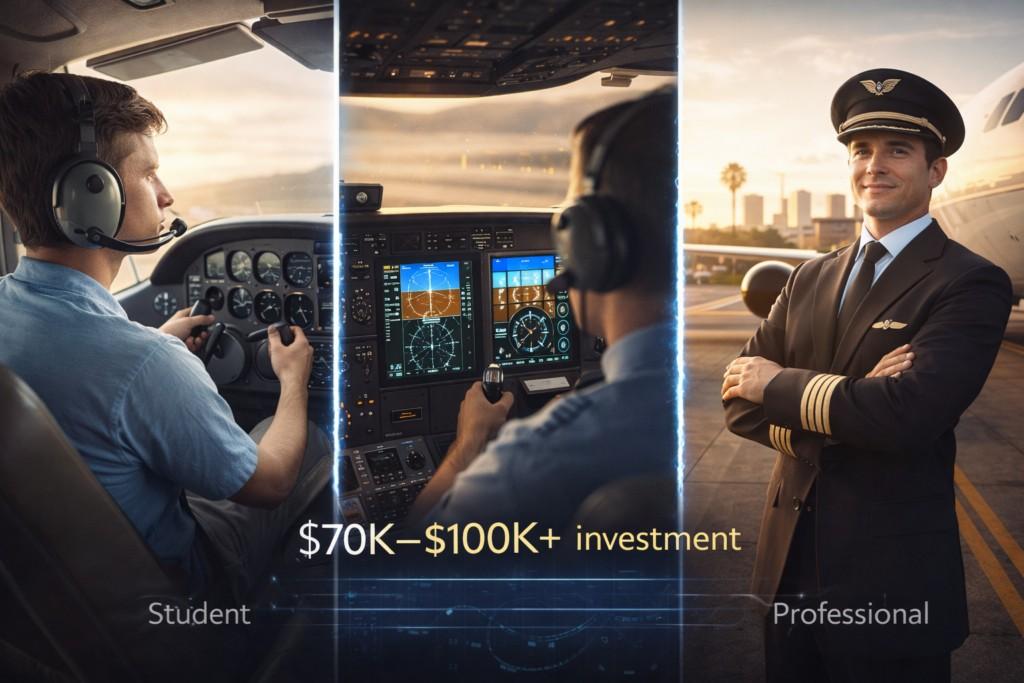
What “Becoming a Commercial Pilot” Actually Includes
When people research commercial pilot training cost, they often think it only refers to the CPL. In reality, becoming a commercial pilot is a step-by-step process that builds your skills and flight experience over time.
The typical path includes:
- Private Pilot License (PPL) – Learn the fundamentals of flight and aircraft control
- Instrument Rating (IR) – Learn to fly using instruments in low visibility conditions
- Commercial Pilot License (CPL) – Qualify to fly for compensation or hire
- Multi-Engine Rating (optional but recommended) – Gain experience operating multi-engine aircraft
- CFI / CFII (Certified Flight Instructor) – Build flight hours while teaching other students
The CPL is one step in this process. Most pilots continue training to build flight hours, often by becoming instructors.
Understanding this sequence gives you a clear view of the cost to become a commercial pilot and how each stage contributes to your training.
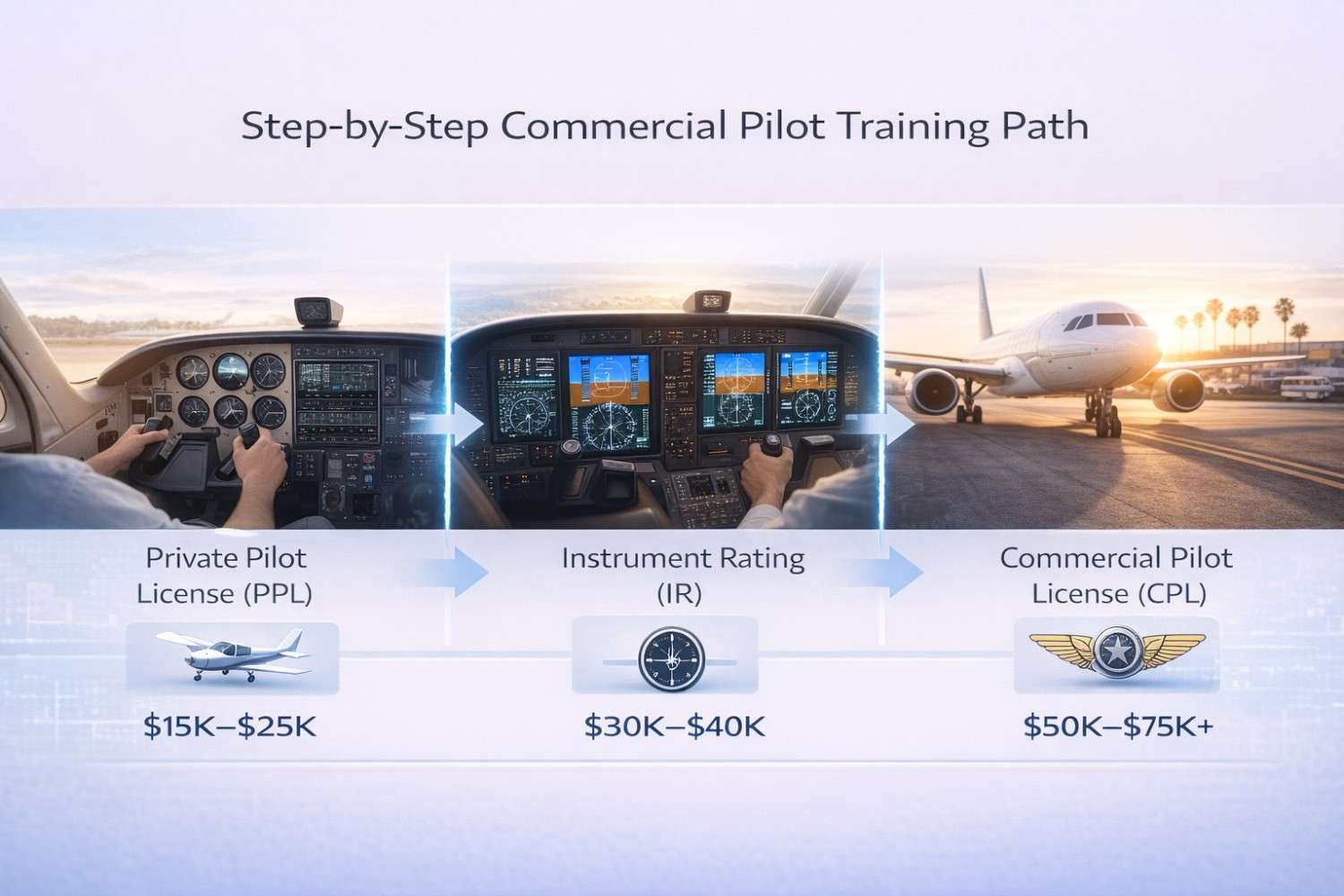
Commercial Pilot License Cost Breakdown in California (Step-by-Step)
Private Pilot License (PPL): $15,000–$20,000
The Private Pilot License is your first major step and where you learn the core skills of flying. This includes aircraft control, navigation, communication, and safety procedures, leading up to your first solo flight.
Most students complete their PPL in 50 to 70 flight hours, depending on how regularly they train. Flying consistently, ideally a few times per week, helps reduce total hours and keeps your overall training cost lower.
The typical range of $15,000 to $20,000 reflects differences in training pace, aircraft, and individual progress.
Instrument Rating (IR): $10,000–$15,000
The Instrument Rating teaches you to fly using instruments alone. This is essential for operating in low visibility conditions and advancing in aviation.
This phase requires focus and repetition. Students who maintain a steady training schedule tend to complete it more efficiently, while long gaps can lead to additional time in the aircraft.
You can expect to invest around $10,000 to $15,000 for this portion of your training.
Commercial Pilot License (CPL – Single Engine): $15,000–$25,000
The CPL is where training shifts toward professional-level flying. You will refine precision maneuvers, decision-making, and overall flight performance.
To qualify, you need at least 250 total flight hours, which is why this stage can vary more than others. If you train consistently leading up to this point, you may require fewer additional hours.
The CPL portion of the commercial pilot license cost typically ranges from $15,000 to $25,000.
Multi-Engine Add-On: $5,000–$10,000 (Optional but Recommended)
A multi-engine rating allows you to operate aircraft with more than one engine and is often expected for airline or corporate career paths.
Training is relatively short but focused, covering performance differences and engine-out procedures.
Costs generally fall between $5,000 and $10,000, making it a practical addition for students planning to expand their opportunities.
CFI / CFII: $5,000–$10,000
After earning your CPL, many pilots choose to become instructors to build flight time while staying active in aviation.
This step not only helps you gain experience. It also deepens your understanding by teaching others. At The Flight Academy, the CFI add-on is approximately $4,000, with total training typically ranging from $5,000 to $10,000.
For many students, this is a practical and efficient next step in becoming a commercial pilot.
What Does Commercial Pilot Training Actually Cost in Total?
When you add up each stage of training, the total commercial pilot license cost depends on your career goals and the ratings you choose to pursue.
- Single-engine training path (PPL + IR + CPL + CFI): approximately $85,000–$100,000
- With a Multi-Engine Rating: approximately $100,000–$130,000
- Accelerated or intensive training programs: $130,000 and above
These estimates reflect the complete training path from zero flight experience to a career-ready commercial pilot certificate in California. They include typical training costs such as instructor time, aircraft rental, and testing fees. Your total investment may vary based on your training schedule and progress.
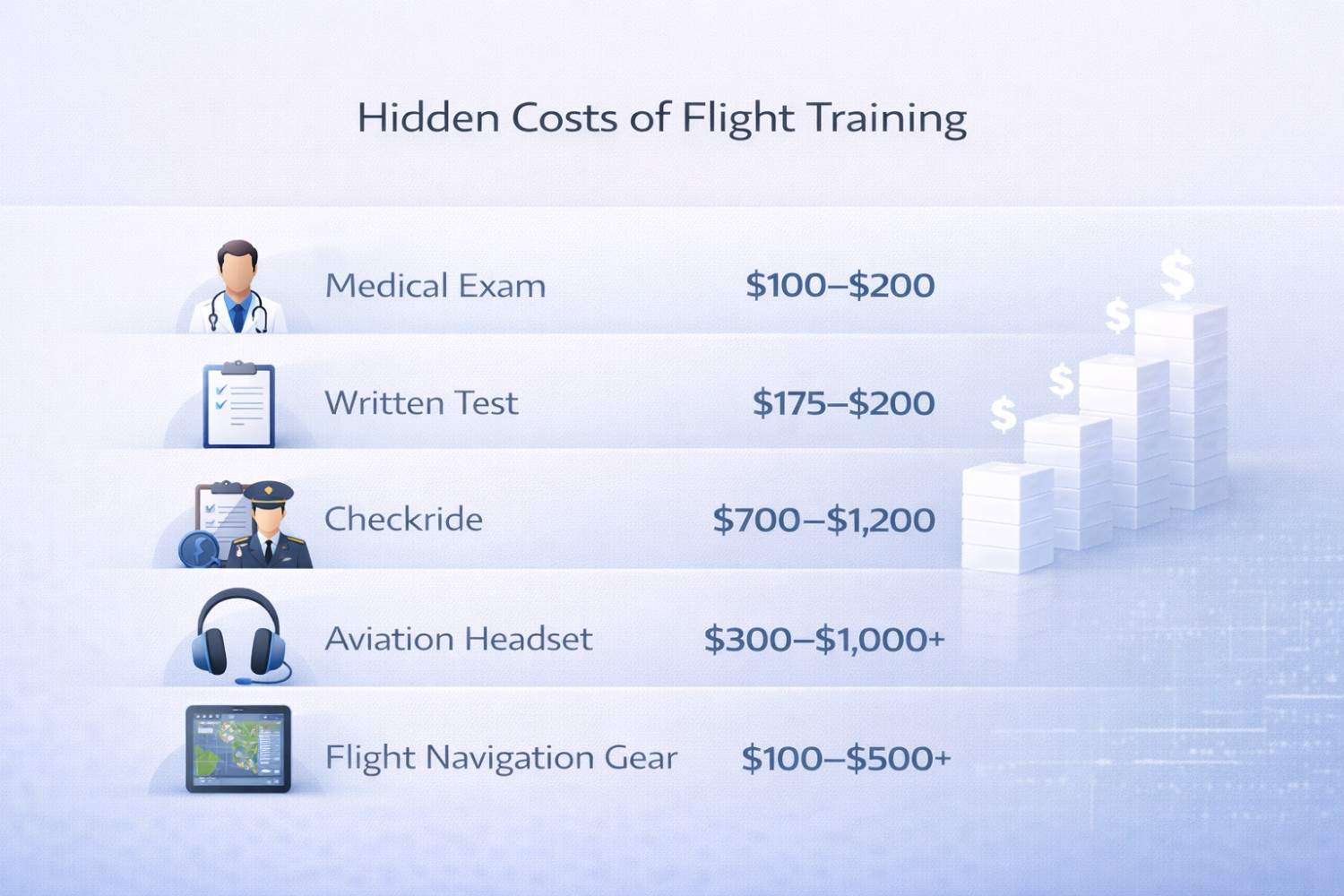
Hidden Costs Most Students Don’t Expect
While flight hours make up the majority of your training investment, there are several additional expenses to plan for.
Common extra costs include:
- FAA Medical Exam: ~$150 to $200
- Written Test Fees: ~$175 per exam
- Checkride (DPE) Fees: approximately $700–$2,100 per checkride. Most students complete 4 to 6 checkrides across all ratings.
Equipment:
- Aviation headset: $300 to $1,000
- iPad and aviation apps: $500 to $1,000
- Pilot gear (kneeboard, logbook, charts, and study materials):approximately $1,500–$2,500
- TSA Security Threat Assessment (required for international students):approximately $130 to $150
These items can add several thousand dollars to your total commercial pilot license cost.
It’s also important to account for additional training if needed. Gaps between lessons or inconsistent scheduling can lead to extra flight time to regain proficiency, increasing your overall investment.
What Affects the Total Cost of Pilot Training?
Training Frequency and Consistency
How often you fly plays a major role in your total training cost.
Students who train 2 to 3 times per week tend to retain skills more effectively and complete each phase with fewer hours. Infrequent training can lead to relearning skills, which adds time and expense.
Part 61 vs Part 141 Training in California
Flight training in California can be completed under either Part 61 or Part 141 FAA regulations. Understanding the differences between these training paths can help you choose the option that best fits your goals, schedule, and learning style.
- Part 141 programs follow a structured, FAA-approved curriculum with defined stage checks. Because of this structured approach, students may qualify for certain certificates with fewer minimum flight hours. For example, a Commercial Pilot License (CPL) under Part 141 requires 120 hours of total flight time, compared with 250 hours under Part 61. Students who complete training efficiently within an approved Part 141 program may reduce their overall training costs.
- Part 61 offers greater flexibility, with no required stage checks or fixed lesson sequence. This makes it a good option for students balancing flight training with work, school, or other commitments. However, because the minimum flight hour requirement is higher, inconsistent training may increase both the time and cost required to complete the program.
At The Flight Academy, we help students determine which training path best aligns with their schedule, goals, and timeline. With Southern California’s favorable flying weather, both Part 61 and Part 141 can be effective options. Regardless of the path you choose, consistent training remains one of the most important factors in managing your overall commercial pilot license cost.
Location and Weather (SoCal Advantage)
Where you train has a direct impact on both timeline and cost.
In Southern California, especially at a flight school Van Nuys, you benefit from reliable flying weather throughout the year. Fewer cancellations mean you can maintain a steady training schedule.
Compared to regions with frequent weather delays, training in a flight school Los Angeles environment helps you progress more efficiently.
Aircraft and Instructor Rates
Aircraft rental and instructor rates vary depending on the school and equipment used.
- Newer aircraft with modern avionics can improve training efficiency
- Experienced instructors can identify and correct issues more quickly
This helps you progress with fewer unnecessary hours.

How to Pay for Flight Training
Flight training is a significant investment, but there are several ways to make it more manageable.
At The Flight Academy, students have access to financing through Stratus Financial.
Other financing options include:
- Sallie Mae student loans
- AOPA Aviation Finance
- Meritize
- GI Bill® benefits for eligible veterans
- Aviation scholarships offered by organizations such as the Experimental Aircraft Association (EAA), Women in Aviation International (WAI), and the Organization of Black Aerospace Professionals (OBAP)
Many students combine financing with pay-as-you-go training to maintain flexibility while managing costs over time. At The Flight Academy, we’re happy to discuss your financing options and help you create a training plan that aligns with your budget and timeline.
Training at a Flight School in Van Nuys: What to Expect
Training at a flight school Van Nuys gives students access to a dynamic and realistic aviation environment.
Van Nuys Airport is one of the busiest general aviation airports. It provides valuable experience in active airspace early in your training. Combined with Southern California’s favorable weather, this allows for steady progress throughout the year.
At The Flight Academy, typical timelines are:
- Full time: approximately 15 months to 2 years
- Part time: approximately 3 to 5 years
Training is centered on safety, FAA compliance, and personalized instruction, whether your goal is a career in aviation or to learn to fly Los Angeles.
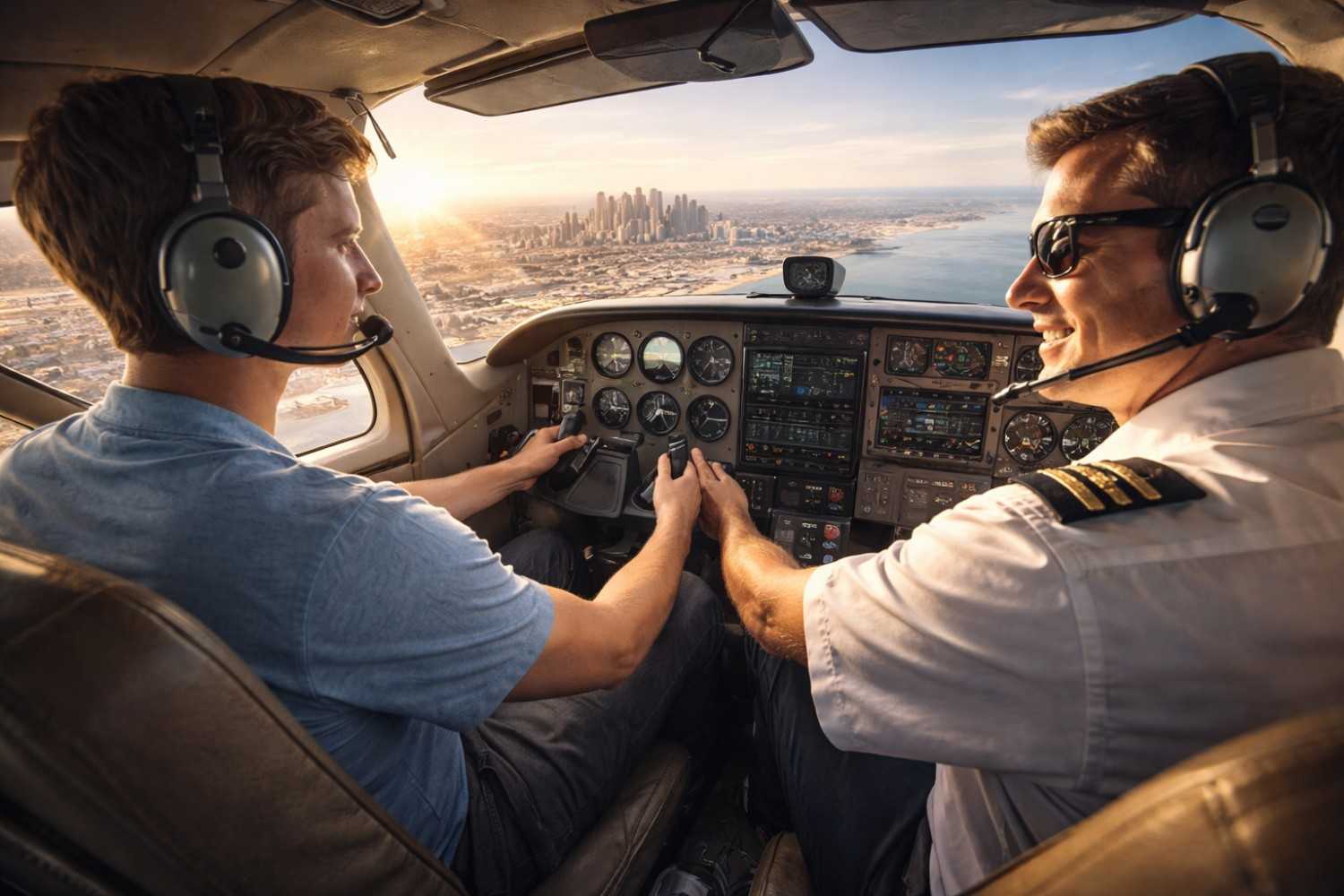
Frequently Asked Questions
What are your actual rates for PPL, IR, CPL, and CFI?
Current program rates for Private Pilot, Instrument Rating, and Commercial Pilot training are listed on The Flight Academy website, as they can vary slightly based on aircraft and training pace. In general, they align with typical industry ranges. PPL is about $15K to $20K, IR is about $10K to $15K, and CPL is about $15K to $25K. For students continuing their training, the CFI add-on is approximately $4,000. This makes it one of the more efficient next steps after completing your commercial license.
Do you offer any financing options?
Yes. We offer financing through Stratus Financial, which is a common option for students training at a flight school Van Nuys or in the greater Los Angeles area. Some students also explore lenders such as Sallie Mae, aviation scholarships, or VA benefits if eligible. We can walk you through these options so you can plan your training based on your budget and timeline.
What is a realistic timeline from zero to commercial pilot?
Your timeline depends on how consistently you train. For full time students training in a pilot training Los Angeles environment, most complete their training in about 15 months to 2 years. Part time students balancing work or school typically take 3 to 5 years, especially if there are gaps between lessons.
How much does a CPL cost in California?
The total cost of earning a Commercial Pilot License (CPL) in California typically ranges from $70,000 to $100,000 when starting with no flight experience. This includes your Private Pilot License ($15,000–$20,000), Instrument Rating ($10,000–$15,000), Commercial Pilot License ($15,000–$25,000), as well as testing fees, equipment, and other training expenses. If you add a multi-engine rating, the total investment typically ranges from $100,000 to $130,000. For a personalized cost estimate, contact our team.
Can I finance commercial pilot training?
Yes. The Flight Academy offers financing through Stratus Financial, and many students also use Sallie Mae, AOPA Aviation Finance, or Meritize to help pay for training. Eligible veterans may also qualify for GI Bill® benefits, while aviation scholarships from organizations such as the Experimental Aircraft Association (EAA), Women in Aviation International (WAI), and the Organization of Black Aerospace Professionals (OBAP) can help reduce overall training costs. Contact our team to discuss the financing options that best fit your budget and training goals.
How long does commercial pilot training take in Los Angeles?
Students training full-time at our flight school Van Nuys typically complete the path from Private Pilot License through Commercial Pilot License in approximately 15 months to 2 years. Part-time students balancing work, school, or other commitments generally complete training in 3 to 5 years. Southern California’s favorable flying weather helps minimize schedule interruptions, allowing many students to maintain consistent progress throughout the year.
Final Thoughts: Is Becoming a Commercial Pilot Worth the Cost?
The total commercial pilot license cost represents a meaningful investment, but one that opens the door to long term opportunities in aviation.
With a clear plan and consistent training, the process becomes more manageable. Understanding the full scope of training and the factors that influence cost helps you move forward with confidence.
Start with a Discovery Flight in Los Angeles
If you are considering your first step, a discovery flight Los Angeles experience is a simple way to get started.
You will meet an instructor, see the aircraft up close, and experience what training is actually like. From there, you can decide how you want to move forward at your own pace.
Take the Next Step
Understanding the full commercial pilot license cost is the first step toward making a confident and informed decision about your future in aviation. With the right plan, consistent training, and a supportive environment, the path becomes more manageable, especially in the Van Nuys and greater Los Angeles area, where conditions allow you to train efficiently year round.
If you are exploring your options or just getting started, we are here to help you think through the process and answer your questions. Whether your goal is a career or to learn to fly Los Angeles, starting a conversation is often the best place to begin.
Visit our contact page to get in touch with our team, or book a discovery flight to take your first step in person.