
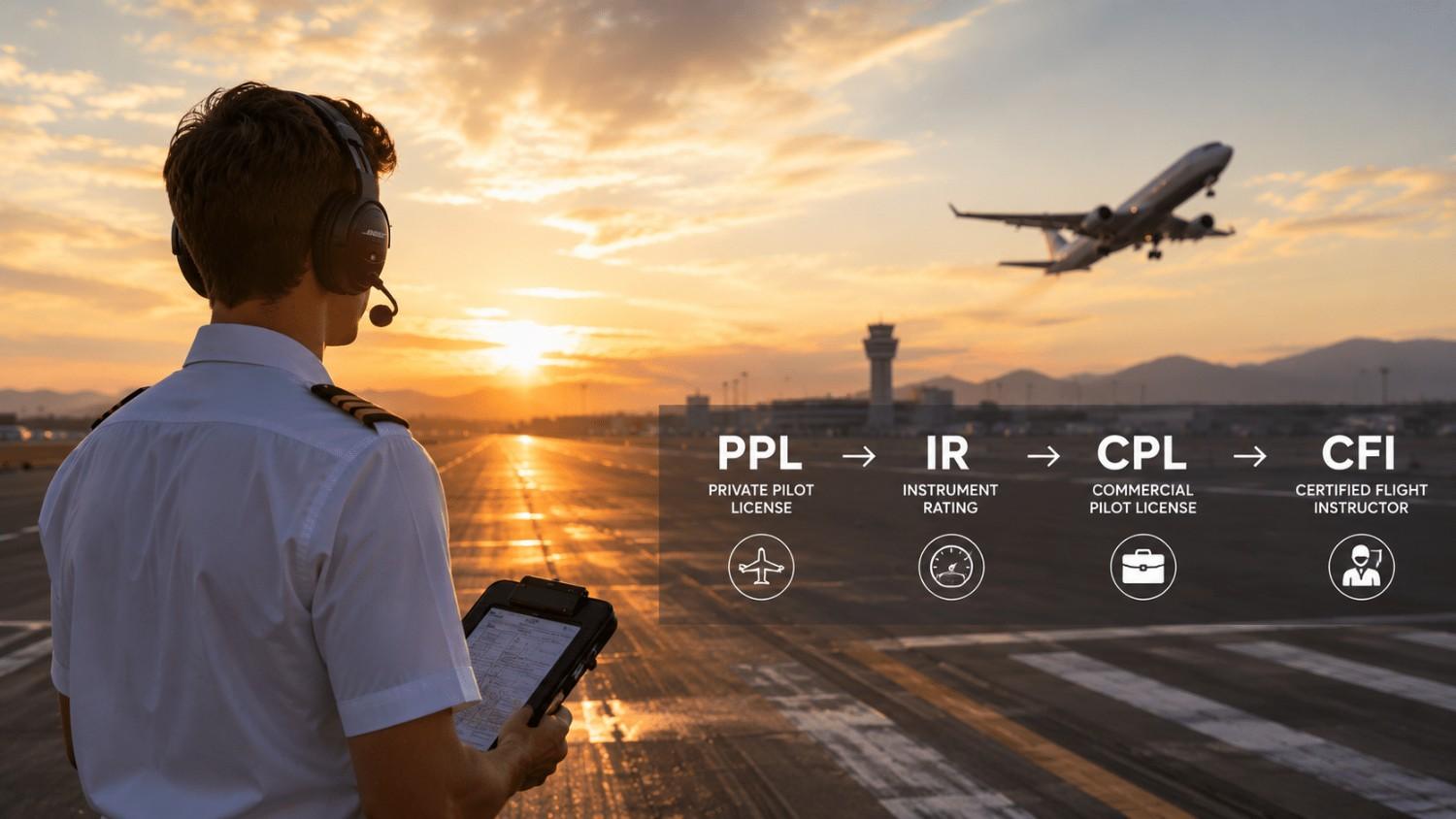
Becoming a professional pilot is one of the most rewarding paths in aviation—but it’s also a serious financial commitment. The commercial pilot license cost typically falls in the five-figure range and, for many career-track students, can reach into six figures. If you’re researching how much does it cost to become a commercial pilot, you’re likely trying to understand not just the final number, but what drives the overall cost to become a commercial pilot.
The reality is that total commercial pilot training cost depends on three primary factors: your training path, the total flight hours you build, and where you complete your training. In this guide, we’ll break down the commercial pilot program cost certificate by certificate, explain the biggest cost drivers, and provide realistic ranges based on published industry averages so you can plan your training with clarity from day one.
What “Becoming a Commercial Pilot” Actually Includes
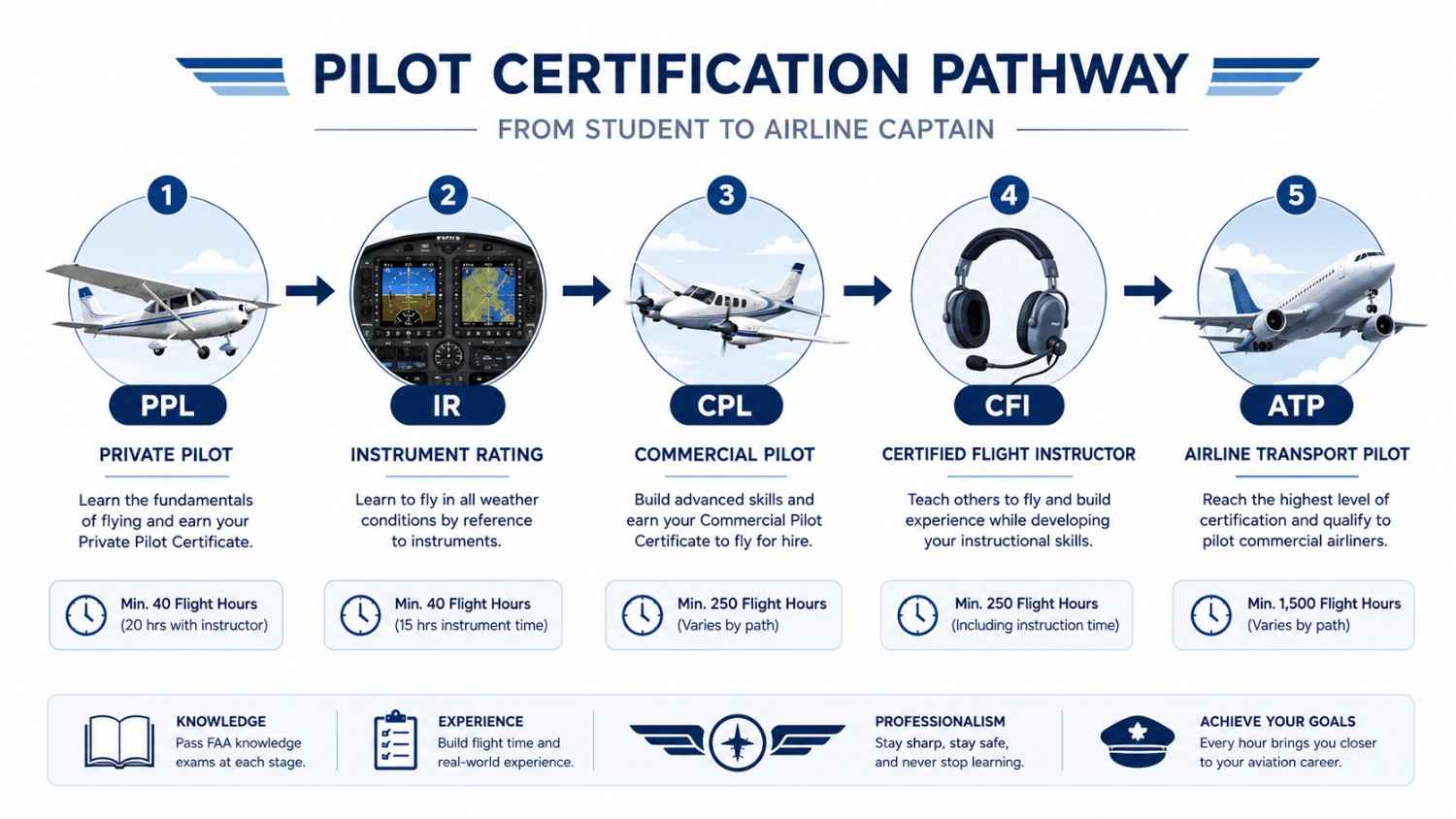
Becoming a commercial pilot isn’t a single certification. It’s a progression of ratings and flight experience that build on each other over time. The standard path typically includes a Private Pilot Certificate (PPL), Instrument Rating (IR), Commercial Pilot Certificate (CPL), and Certified Flight Instructor (CFI). Many career-focused students also add a Multi-Engine Rating (ME) as part of their training path. Students beginning at zero hours often start with the private pilot written exam guide before moving into flight training.
While a CFI certificate is not required to earn a Commercial Pilot Certificate, it’s the most common way pilots build flight hours after completing CPL training. Many pilots work as instructors to gain experience, log hours toward airline minimums, and offset part of their ongoing commercial pilot training cost. Instrument proficiency also becomes increasingly important throughout commercial training, especially for students reviewing Instrument Rating requirements.
For most airline-track students, the long-term goal is an Airline Transport Pilot (ATP) certificate, which requires 1,500 total flight hours. Understanding how each certification fits into the larger training timeline helps clarify the real cost to become a commercial pilot and why training expenses are typically spread across multiple stages rather than a single program.
Cost by Certificate / Rating (Industry Averages)
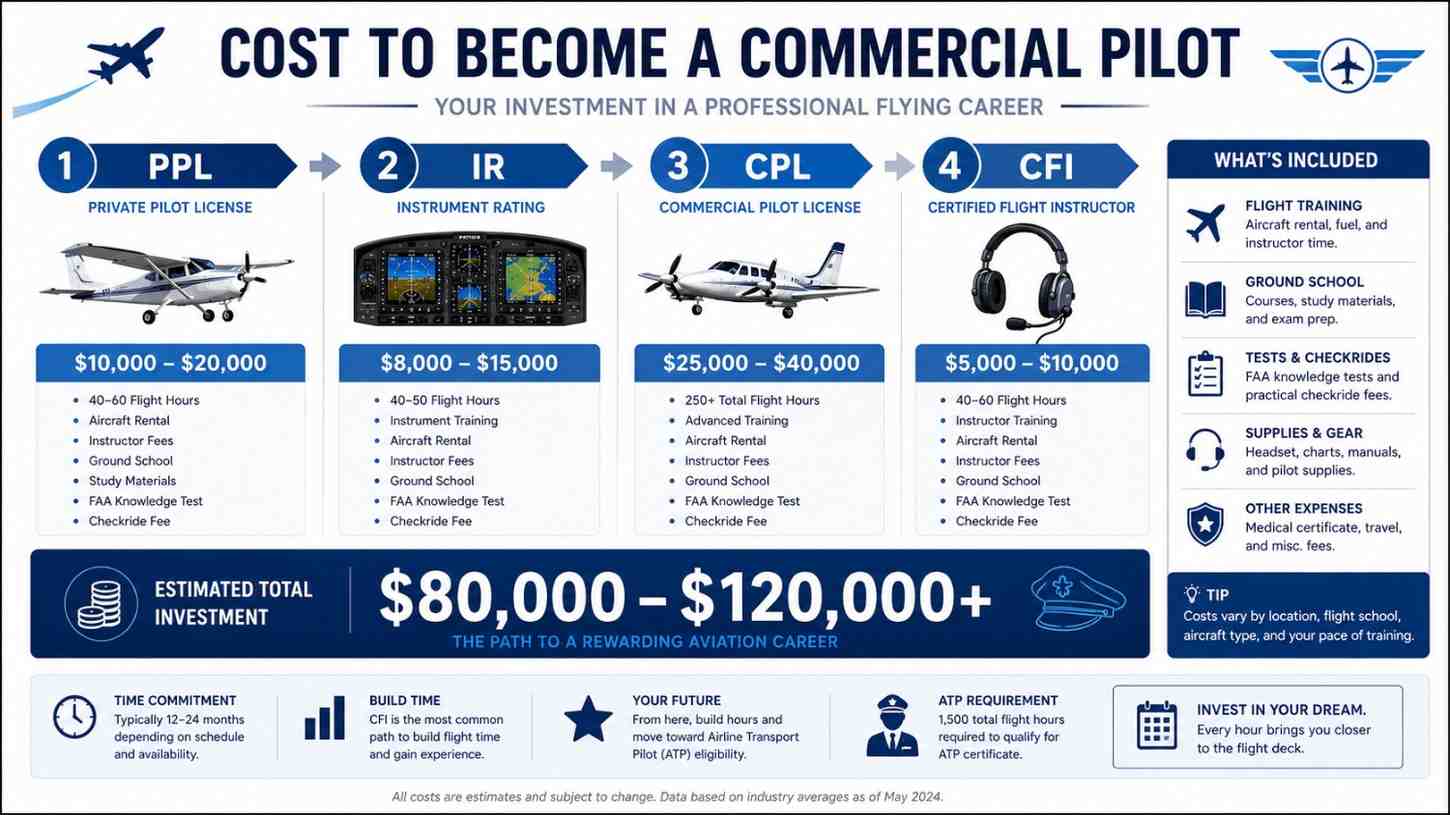
To understand the full commercial pilot license cost, it helps to break the training process into individual certifications and ratings. Based on published U.S. flight-training averages, here’s what most students can realistically expect.
Private Pilot Certificate (PPL)
The Private Pilot Certificate is the first major step in flight training and usually the first significant financial investment. While the FAA minimum under Part 61 is 40 flight hours, most students complete training closer to 60–70 hours depending on training consistency, proficiency, and scheduling.
That places the average PPL cost between $15,000 and $25,000 nationally. Building strong fundamentals early can also help reduce unnecessary training time later in the process.
Instrument Rating (IR)
The Instrument Rating allows pilots to fly under Instrument Flight Rules (IFR) and in a wider range of weather conditions. Training becomes more structured at this stage and often includes simulator or approved training-device time.
Most students spend between $10,000 and $18,000, driven largely by the FAA’s 40-hour instrument-time requirement and the additional flight time many pilots need to reach checkride readiness.
Commercial Pilot Certificate (CPL)
This is the phase many students focus on when researching commercial pilot training cost, but it’s important to separate the CPL training itself from the total cost to become a commercial pilot.
The CPL portion typically ranges from $20,000 to $35,000. However, the larger cost driver is usually the FAA Part 61 requirement of 250 total flight hours under 14 CFR 61.129. A significant portion of overall training expenses comes from building flight time between ratings rather than structured classroom instruction alone.
Multi-Engine + Instructor Ratings (ME, CFI, CFII, MEI)
For students pursuing long-term professional aviation careers, additional ratings are common after CPL completion.
- Multi-Engine Rating: roughly $5,000–$10,000
- CFI / CFII / MEI: roughly $5,000–$10,000 each
The CFI certificate is especially valuable because it allows pilots to begin building hours professionally while gaining real-world instructional experience.
Total Cost Range (Zero to CFI)
When combined, the full commercial pilot program cost becomes much clearer. A realistic zero-to-CFI pathway typically falls within these national ranges:
- $80,000–$120,000+ for flexible Part 61 training
- $90,000–$125,000 for structured Part 141 programs
These figures reflect national averages and can vary based on aircraft type, training frequency, location, instructor availability, and how efficiently students progress through each stage of training.
Required Flight Hours and the 250-Hour CPL Standard
To understand why commercial pilot training cost varies so much, it helps to look at the flight-hour requirements behind the Commercial Pilot Certificate.
Under 14 CFR 61.129, the Commercial Pilot Certificate requires 250 total flight hours in a Part 61 program, including specific cross-country, night, and instrument requirements. Part 141 schools can reduce that requirement to around 190 hours, but the structured curriculum often offsets the difference.
Since most students finish their PPL around 60–70 hours, that leaves roughly 180 additional hours to build before the CPL checkride. Those hours, often flown solo or with minimal instruction, are where a large portion of the commercial pilot license cost comes from, with aircraft rental driving much of the expense.
There are ways to manage this. Students can split time-building flights with another pilot, use approved simulators or AATD credit where eligible, and plan cross-country flights strategically. Small decisions at this stage can have a meaningful impact on the final total.
Additional Expenses Beyond Tuition
Flight training quotes do not always include every expense involved in commercial pilot training. Several additional costs should be factored into your planning from the beginning.
- FAA medical exam: $120–$200
- Pilot gear (headset, iPad with ForeFlight, flight bag, charts): $1,500–$2,500
- FAA written tests: about $175 each, with multiple exams required
- Checkride fees: $700–$2,100 each, typically 4–6 total across training
- Test prep materials: $300–$500
- TSA clearance for international students: $130–$150
Altogether, these expenses usually add another $8,000 to $15,000 on top of your flight training. Factoring them in early helps create a more accurate picture of the total cost to become a commercial pilot and reduces unexpected expenses later in training.
Part 61 vs Part 141: Which Path Costs Less?
A common question when comparing commercial pilot school cost is whether Part 61 or Part 141 training is more affordable. The honest answer is that neither path is automatically cheaper.
Part 61 training, common at many flight school Van Nuys students choose for flexible scheduling, allows students to train at their own pace and often pay as they go. Part 141 programs follow a more structured FAA-approved syllabus and often package training into a single program price.
In reality, the biggest difference comes down to how consistently you train. Two students in the same program can see 20–30% differences in total cost simply based on scheduling, training frequency, and continuity.
The Major Cost Drivers Most Guides Skip
The biggest factors behind commercial pilot training cost are not always obvious at the beginning. In most cases, aircraft rental time is the largest variable. Every additional flight hour increases total cost, especially during the time-building phase required for CPL training.
Instructor rates also play a significant role and typically range from $50 to $100 per hour nationally, with coastal metro markets like Los Angeles often trending higher. Location matters as well. Some regions advertise lower hourly pricing, but frequent weather delays can increase total training time and create added re-currency costs.
This is one reason many students pursue pilot training Los Angeles and flight school Van Nuys programs. Southern California’s generally clear weather allows for more consistent scheduling and fewer cancellations than many other parts of the country.
Time-to-completion is another major factor. A student who finishes training in 6–12 months will often spend less overall than someone taking 18–24 months for the same ratings. Fewer training gaps usually mean less re-learning, stronger proficiency retention, and more efficient progress overall.
Financing Options to Plan For
For many students, becoming a commercial pilot involves a mix of savings, financing, and structured planning.
Aviation-focused lenders like Sallie Mae, Meritize, AOPA Finance, and Stratus Financial offer flight training loans, often requiring a cosigner or established credit. Veterans may qualify for GI Bill benefits at approved Part 141 schools, and some programs may also be eligible for 529 education funding.
At many Part 61 programs, including flight school Van Nuys training environments, students prefer a pay-as-you-go approach that spreads costs over time instead of requiring one large upfront payment. Scholarships from organizations like AOPA, EAA, Women in Aviation, and OBAP can also help reduce overall commercial pilot training cost.
Realistic Total: What to Budget
When planning the cost to become a commercial pilot, it helps to think in realistic ranges rather than a single number.
- $85,000–$100,000: Well-paced Part 61 training with a single-engine focus
- $100,000–$130,000: Part 61 or Part 141 training with multi-engine ratings
- $130,000+: Accelerated programs with bundled training or housing
It’s also important to remember that the Commercial Pilot Certificate is not the end of the journey. The additional flight hours needed to reach the 1,500-hour ATP requirement are typically earned through paid flying jobs such as flight instructing, aerial survey work, or other entry-level commercial flying roles.
For many pilots, the commercial pilot license cost is part of a long-term career investment. Entry-level airline positions often start around $55,000–$80,000 annually, while senior major-airline captain positions can exceed $200,000–$350,000+ based on experience and seniority.
Train Toward Your Commercial Pilot Certificate at The Flight Academy
At The Flight Academy, we provide one-on-one instruction at a family-owned flight school Van Nuys students trust for professional, safety-focused training. Based at Van Nuys Airport (KVNY), our team follows a “train beyond minimum standards” philosophy that supports students from their first flight through advanced commercial training.
Training in Southern California also means access to generally clear weather conditions, helping reduce delays and maintain consistent progress throughout training. Students often work with the same instructors across multiple stages, creating continuity from Discovery Flight through commercial pilot training.
Thinking through the cost of your aviation career? Talk to our instructors at The Flight Academy in Van Nuys through learn to fly or reach out through contact and we’ll walk through a training plan that fits your budget and timeline.
Frequently Asked Questions
How much does it cost to become a commercial pilot in 2026?
Most students can expect a total commercial pilot license cost between $80,000 and $120,000+, depending on training pace and location. Structured programs can reach $90,000 to $125,000, especially when multi-engine training is included. Consistency and scheduling play a major role in where you fall within that range.
How many flight hours do you need for a Commercial Pilot Certificate?
Under Part 61, the FAA requires 250 total flight hours for a Commercial Pilot Certificate, while Part 141 programs can reduce that to around 190 hours. Since most students complete their PPL around 60–70 hours, they still need to build roughly 180 additional hours before qualifying for the CPL.
Is Part 61 or Part 141 cheaper for commercial pilot training?
Neither path is automatically more affordable. Part 61 offers flexibility and pay-as-you-go training, while Part 141 programs provide a more structured FAA-approved syllabus with packaged pricing. The biggest factor is how consistently you train, and students often see 20–30% cost differences based on efficiency alone.
Can you finance commercial pilot training?
Yes. Many students use aviation lenders like Sallie Mae, Meritize, AOPA Finance, or Stratus Financial. There are also GI Bill options for eligible schools, 529 plans, and scholarships from organizations like AOPA, EAA, Women in Aviation, and OBAP. Many students also choose to spread costs over time with pay-as-you-go training.
What’s the most cost-efficient way to build hours after PPL?
Training consistently is one of the most effective ways to control commercial pilot training cost. Flying regularly reduces the need for repeat lessons, and sharing flight time with another pilot can help lower hourly expenses. Planning cross-country flights strategically and training in a flight school Van Nuys students choose for consistent weather can also help reduce delays and unnecessary flight time.
How long does it take to go from zero to commercial pilot?
Full-time students can reach the Commercial Pilot Certificate in about 6–12 months, while part-time students often take 18–24 months. Training frequency matters more than anything else, and flying several times per week usually leads to faster, more efficient progress.
This content is provided for informational and educational purposes only and does not constitute flight instruction, operational approval, or regulatory guidance. All flight training is conducted in accordance with FAA regulations and must be completed with a certified flight instructor. Individual training requirements, costs, and timelines may vary.