Multi-Engine Commercial Rating

Multi-Engine Rating Requirements

The FAA does not set a minimum number of flight hours for the multi-engine rating itself. Training continues until you demonstrate proficiency against the applicable Airman Certification Standards for the rating. A realistic range is 10-15 hours of multi-engine flight training. Pilots with recent instrument experience and experience in complex aircraft may complete the add-on closer to 7 hours. The Cost section uses 7 hours as a starting-point estimate, not an average.

Commercial Pilot License (CPL)

Description: 

The multi engine rating adds multi-engine privileges to your Commercial Pilot License and prepares you to operate multi-engine aircraft as a pilot-in-command. It is designed for commercial pilots who want to expand their qualifications for professional flying and build multi-engine experience for future career opportunities.


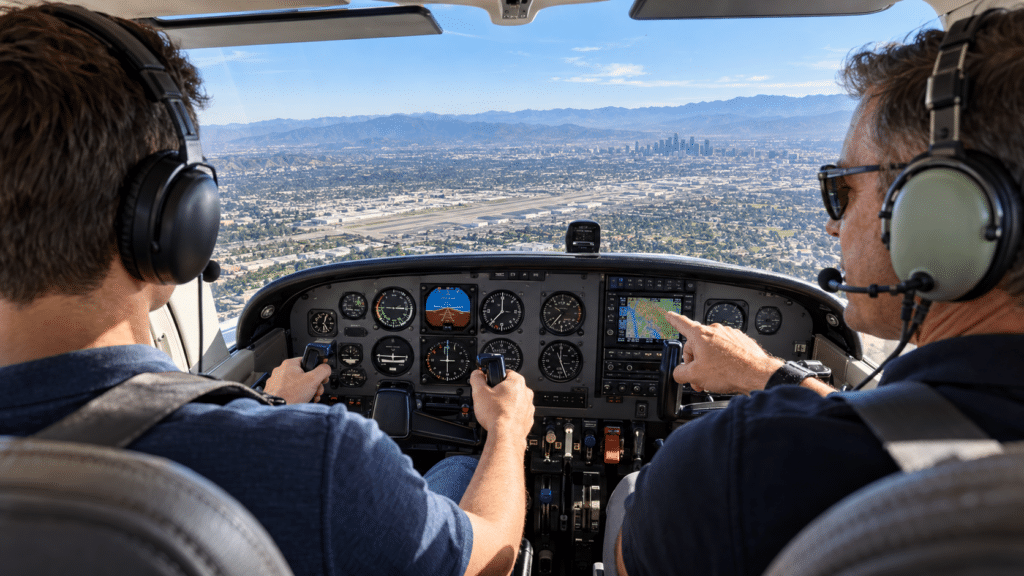
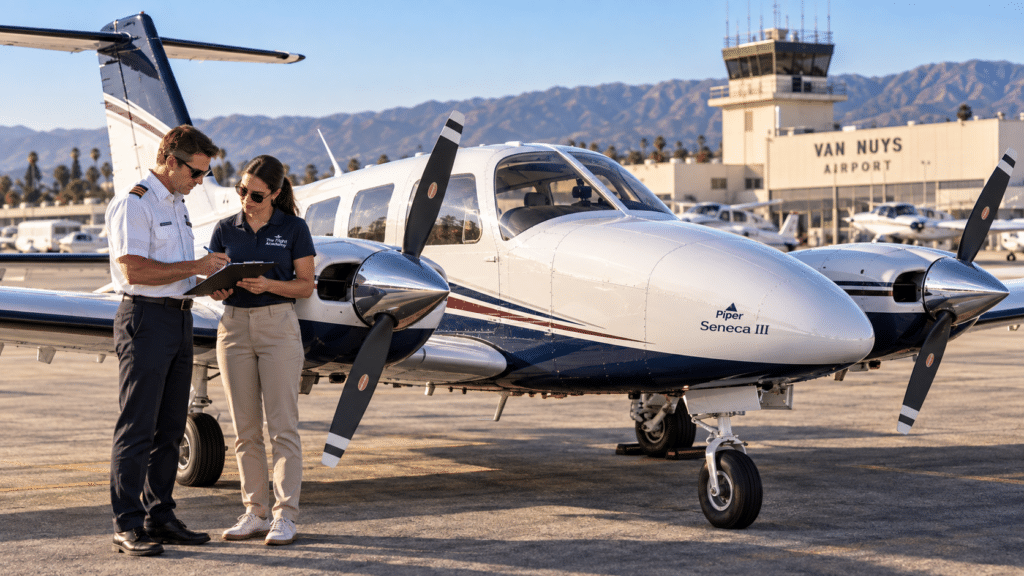
Training takes place in our Piper Seneca III, a twin-engine aircraft used for hands-on multi-engine training. You will work with the aircraft’s systems, performance characteristics, and emergency procedures while developing the skills required for multi-engine operations. Training is conducted at Van Nuys Airport in Van Nuys, California.

32036ea16f818e71dd14883e4d575f2a1978fc64.jpg
72d2aedf8108c238e362028bb93906f79acc6629.jpg

Training Overview:

Ground Training:

  • Multi engine training covers five areas that are central to operating a twin: multi-engine systems, aerodynamics, performance, weight and balance, and emergency procedures.

  • Multi-engine systems: Learn how the Piper Seneca III’s two engines and associated systems affect aircraft operation, checklist use, and cockpit workload.

  • Aerodynamics: Learn how asymmetric thrust and adverse yaw affect aircraft control when one engine is producing power and the other is not.

  • Performance: Study how an engine failure affects takeoff, climb, and landing performance, and how those changes affect flight planning.

  • Weight and balance: Understand how loading affects the aircraft’s handling and available performance, particularly when operating with an engine out.

  • Emergency procedures: Learn the checklist procedures and decision-making required to respond to an engine failure during different phases of flight.

Flight Training: 10-15 hours in multi-engine aircraft, including:

Duration: 1-2 weeks

Typically 1-2 weeks, based on availability. Your timeline depends mainly on how often you can fly and how current you are on instruments. Frequent flying and recent instrument experience can put you toward the shorter end, while less frequent scheduling or less recent instrument experience may extend training toward two weeks.

Multi-Engine Rating Cost:

$450/Hr

Cost based on 7 hours of flight training in our Piper Seneca III at $450/Hr is $3150

This multi engine rating cost covers dual instruction and aircraft rental in the Piper Seneca III for the estimated 7 hours. It does not include the FAA practical test fee or additional flight time. Any training beyond 7 hours is billed at the same $450 per hour rate, based on the time needed to reach proficiency.

Outcome:

You’ll be qualified to act as pilot-in-command in multi-engine aircraft, enhancing employability for corporate or airline roles. From here, many of our pilots build multi-engine time toward airline minimums, or take the next step and earn their Multi-Engine Instructor (MEII) rating to teach in twins while building hours themselves.

Ready to Add Your Multi-Engine Rating?

Contact The Flight Academy to ask about Piper Seneca III availability and discuss when you can start training. We can review your availability and experience and discuss a practical training schedule in Van Nuys, California.

This content is provided for informational and educational purposes only and does not constitute flight instruction, operational approval, or regulatory guidance. All flight training is conducted in accordance with FAA regulations and must be completed with a certified flight instructor. Individual training requirements, costs, and timelines may vary.

Blogs

Our Newest Posts

Spin Awareness and Upset Recovery Training: What It Involves and Who Needs It

High-Performance and Complex Endorsements: Requirements, Training, and Cost

Is a Tailwheel Endorsement Worth It? Hours, Cost, and What the Training Actually Involves